Space research · Science
A simulated lunar network makes the case for listening longer
Demo journalism: A fictional mission study weighs the scientific value of sustained observation against the appeal of a single elaborate landing.
By Elva Norreth · 5 min read
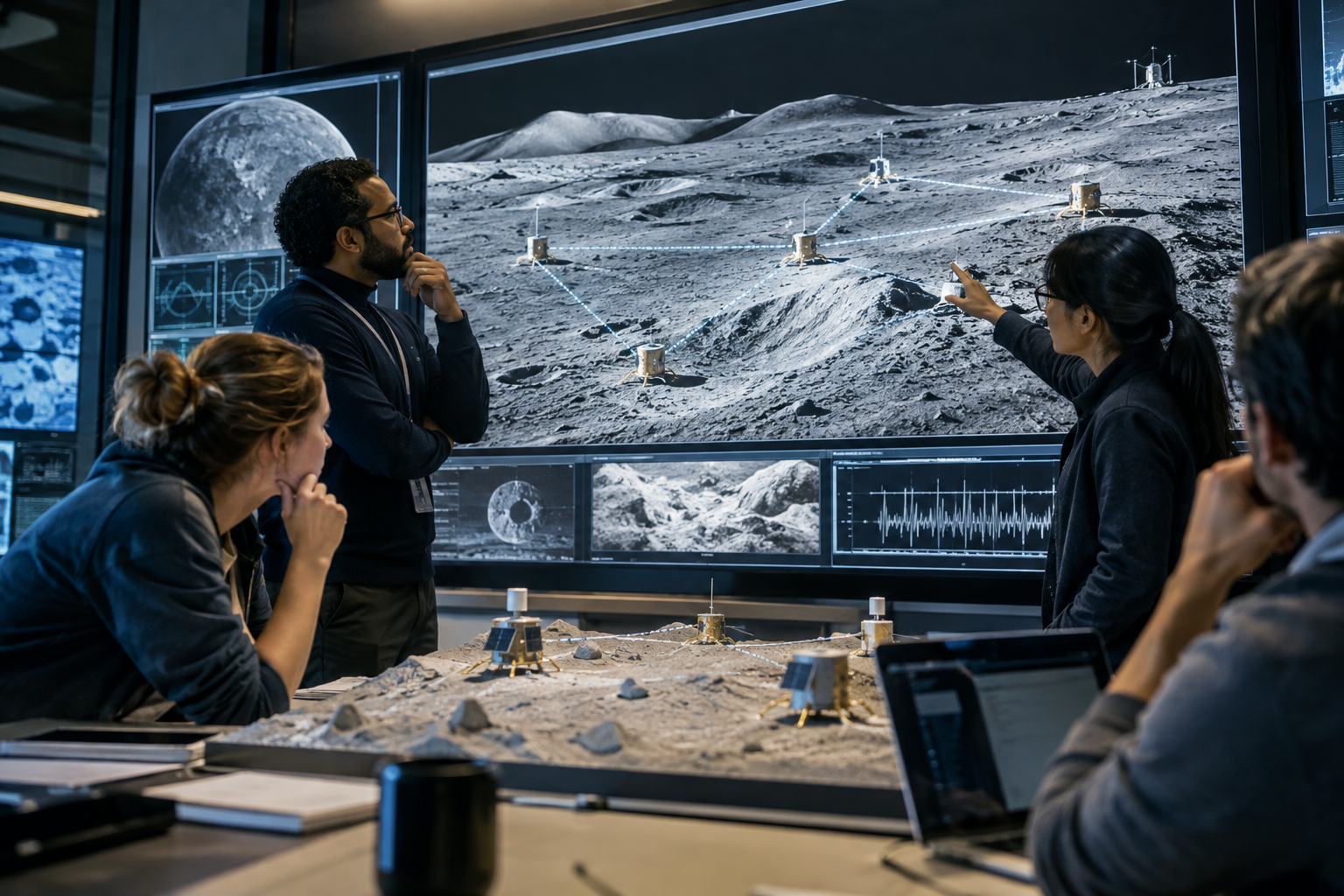
An invented mission study compares a network of 12 modest lunar instruments with a single, more elaborate station. In its simulated observations, geographically separated sensors distinguish overlapping signals more effectively because each records a different arrival time. The exercise is a design comparison, not a discovery, and its conclusions depend on assumptions about instrument sensitivity, placement and the lunar background environment.
The network carries an illustrative budget of $390 million and an intended observing period of 30 months. Its principal vulnerability is coordination: losing timing accuracy can erode the advantage of having instruments far apart. The study therefore allocates resources to calibration and communications rather than adding another sensor type. Its broader argument is that scientific ambition can reside in sustained measurement, not only in more elaborate hardware.