Entertainment · Entertainment
Amazon secures global Emmys streaming rights in six-year agreement
The agreement establishes Amazon’s worldwide streaming rights to the Emmys, while financial terms and arrangements for viewers remain unspecified in the available details.
By Dena Pellwick · 3 min read
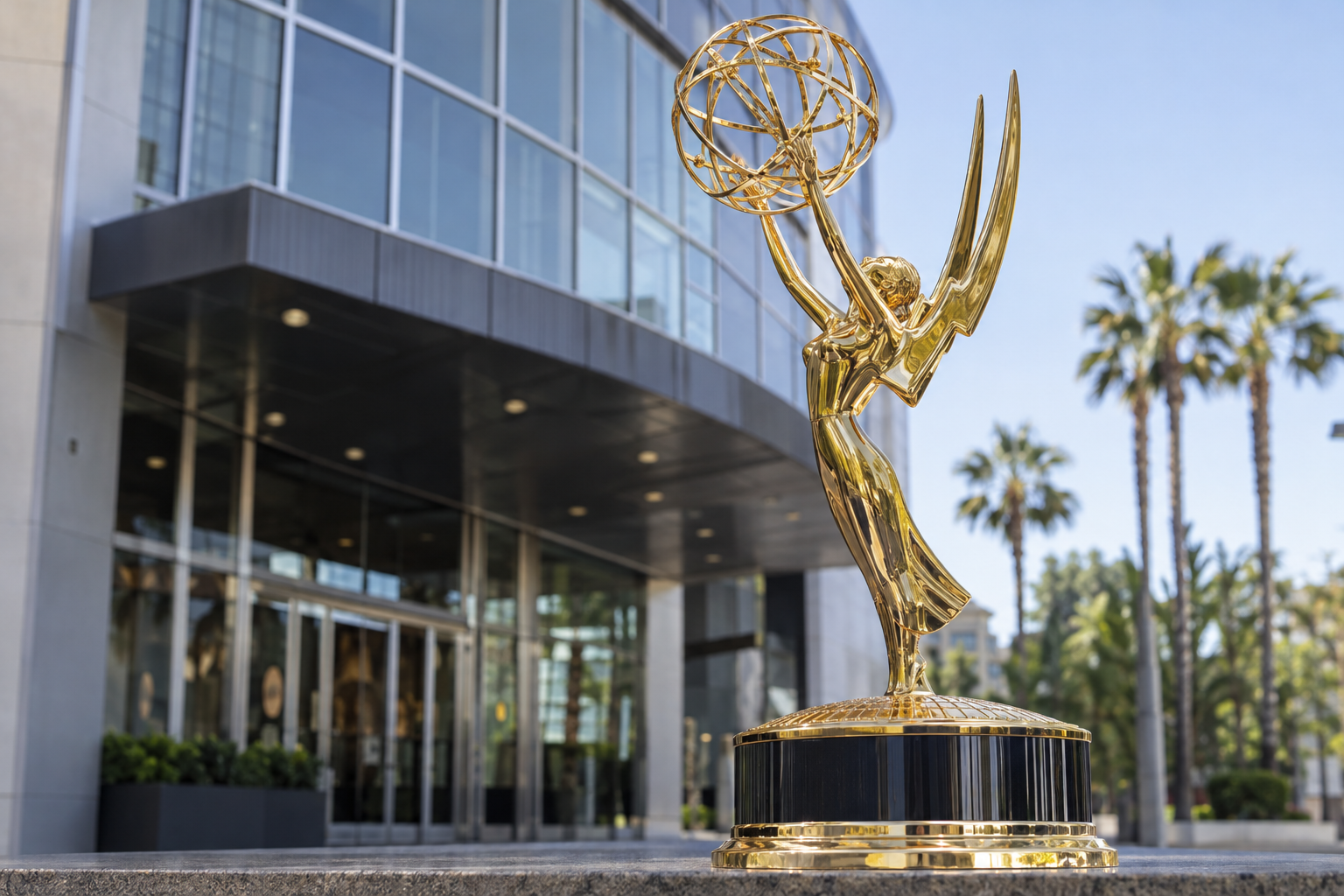
Amazon has secured the rights to stream the Emmys worldwide under a six-year agreement, establishing a long-term arrangement for the awards. The available description identifies both the international scope of Amazon’s rights and their duration. Those elements provide the outline of the agreement, but the available details do not specify its financial value, when coverage will begin or how audiences will gain access to the programming.
The central terms reported are global streaming rights and a six-year commitment. No payment figure accompanies those terms in the available information, leaving the cost of the rights and the financial structure of the transaction unclear. The duration establishes a multi-year horizon for the arrangement, but it does not, by itself, establish how many programmes Amazon will carry, which parts of the Emmys will be included or what obligations accompany the rights.
The geographic scope is important to understanding the agreement. Amazon’s rights are described as global rather than confined to a particular national market. That establishes the breadth of the deal, although it does not explain whether viewers in different countries will encounter the same access arrangements. Worldwide rights and a uniform viewing experience are separate questions: the former is specified, while details about availability, language options and local presentation are not included in the information provided.
Read more: Trump and Putin agree to release Russian diesel as fuel-price pressure mounts
Streaming is the distribution method identified in the available description. That description does not establish whether Amazon’s rights are exclusive, whether other forms of coverage can continue or whether the arrangement includes recordings as well as coverage of the event itself. Those distinctions matter when assessing what Amazon has secured. A global streaming agreement should not automatically be read as a transfer of every distribution right, nor as confirmation that all existing viewing options will change.
The deal comes alongside a separate development in the entertainment business: Paramount’s takeover of Warner Bros in a $110bn Hollywood merger. That transaction provides a broader backdrop of changing corporate arrangements, but it is different in kind from Amazon’s acquisition of streaming rights. The Paramount transaction concerns ownership, while the Emmys agreement concerns permission to distribute programming. There is no basis in the available details to treat the transactions as connected or to assign them a shared commercial strategy.
The figures attached to the transactions also measure different things. The $110bn figure describes the Paramount–Warner Bros merger, whereas the six-year term describes the length of Amazon’s agreement. Neither supplies a basis for estimating the price Amazon will pay. Without a rights fee, audience figures or revenue information, the Emmys deal cannot be assessed in terms of its cost per viewer, its likely financial return or its scale relative to the corporate takeover.
Read more: Hurricane Isaias brings strong winds and flooding to US Gulf Coast
For Amazon, the agreement can be assessed through the scope and duration of the rights it has obtained. For viewers, the more immediate questions concern access: where the coverage will appear, whether payment will be required and what will be available in their market. These are different ways of evaluating the same deal, rather than documented reactions to it. The available information contains no attributed comments from Amazon, the rights seller, viewers or competing distributors explaining their expectations or concerns.
The six-year term gives the arrangement a longer horizon than a deal confined to a single edition of the awards would have. Even so, duration alone says little about the flexibility of the contract. There are no details here about renewal provisions, termination conditions or changes that might be permitted during the agreement. It would therefore be premature to describe the rights as permanently settled or to assume that the viewing arrangements will remain identical throughout the term.
The next practical questions are the start date and the form of Amazon’s coverage. A fuller account of the agreement would need to establish the service carrying the Emmys, the programmes included and the conditions under which audiences can watch. Clarification of exclusivity would also help distinguish Amazon’s position from that of any other distributor. These matters remain outside the available details; no timetable for further information or launch arrangements is specified.
For now, the confirmed outcome is a six-year agreement giving Amazon worldwide streaming rights to the Emmys. Its reach and duration make it a substantial commitment in scope, but its economic significance remains unquantified. The distinction is important: Amazon has secured the rights described, while the price, the precise boundaries of the coverage and the consequences for individual viewers await further detail.