Art · Art
Art Basel Paris to close Friday ahead of renewed protests
The fair’s fifth edition will end at 7pm on October 23 and remain closed through the weekend, with further demonstrations planned in central Paris.
By Calla Brenmoor · 3 min read
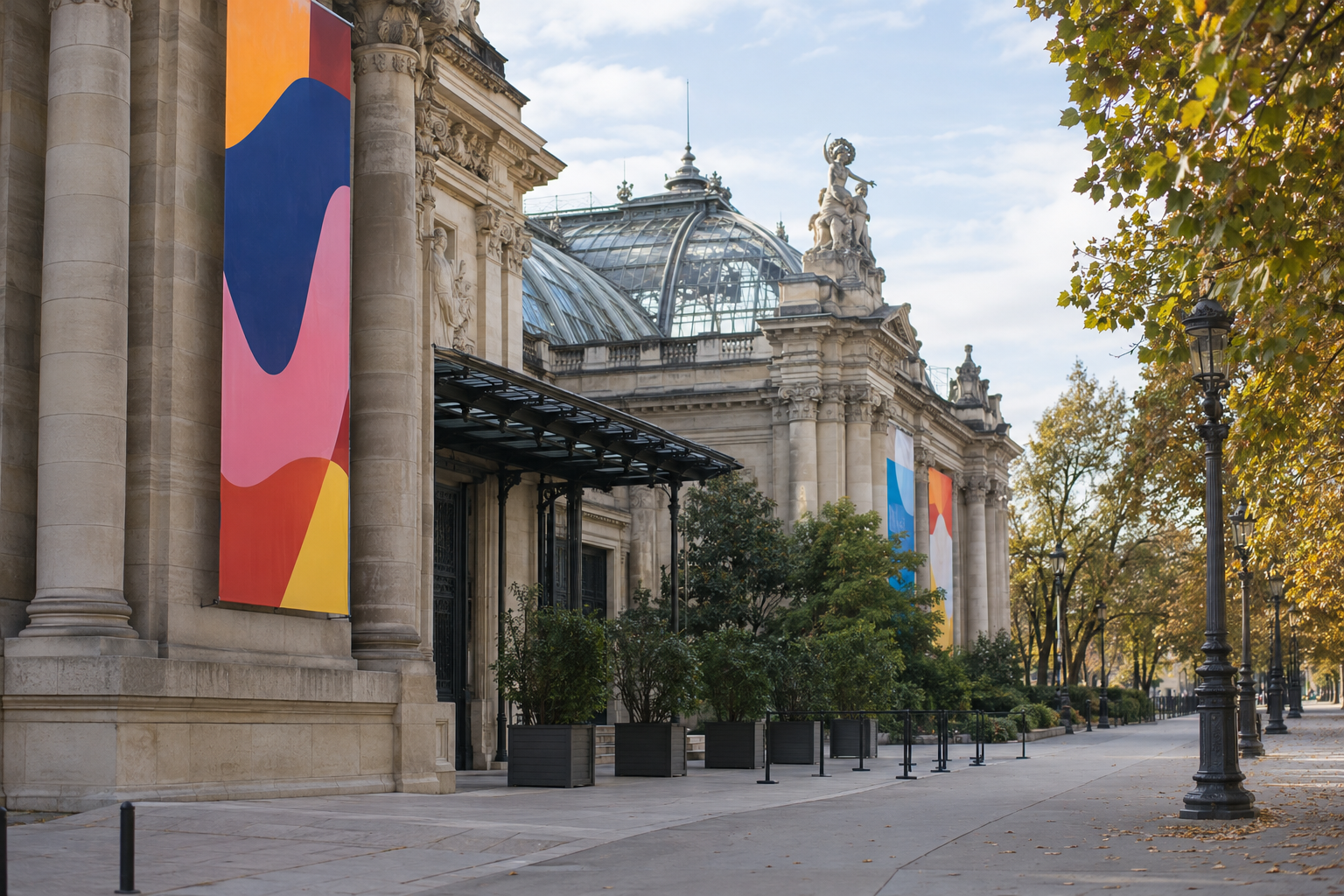
Art Basel Paris will end early on Friday evening as the prospect of renewed demonstrations in central Paris interrupts the fair’s fifth edition at the Grand Palais. The decision follows mass protests across France that were overshadowed by violence last weekend. Organisers have put safety at the centre of their explanation for cancelling weekend access, bringing an early end to an edition that opened earlier this week and had already seen high-value sales.
It will not open on Saturday, October 24 or Sunday, October 25. Those dates establish the practical scope of the change: visitors will have until Friday evening to attend, with the scheduled weekend opening cancelled. The announcement concerns the fair at the Grand Palais, while further protests are planned in the centre of Paris.
The message was co-signed by Karim Crippa, director of Art Basel Paris, and acknowledged the consequences for guests who had intended to visit over the weekend. Management said it regretted being unable to welcome them and recognised the disruption to their plans. It also stressed that the decision had not been taken lightly, saying “the safety of everyone involved in the fair remains our utmost priority.” That explanation places the welfare of participants ahead of maintaining the remaining opening schedule.
Read more: Colombia’s president removes National Museum works over communism claims
The broader unrest has involved demonstrations over the high cost of living and conditions in schools. Last weekend, those protests were overshadowed by riots and looting. At least 2,500 people have been arrested across France, a national figure rather than a count confined to Paris or the area around the fair. The scale of those arrests provides context for the decision, but should not be read as a measure of incidents at the Grand Palais itself.
President Emmanuel Macron has said that only authorised union protests will be permitted in French towns and cities on Saturday. His statement sets out a restriction on demonstrations, rather than a complete prohibition on protest. Alongside the expectation of further demonstrations in central Paris, it forms the immediate public-order backdrop to the fair’s announcement. The organisers’ response is a separate one: ending access on Friday instead of proceeding with the scheduled weekend opening.
The curtailment follows a launch on Tuesday, October 20, with Avant Première, the fair’s super-VIP opening. That session ran between 3-7pm, continuing a format first introduced last year. The early-access event therefore took place before the announcement that the edition would finish on Friday. The sequence matters for understanding the impact of the closure: the fair had already begun welcoming its earliest guests and conducting business, even as the weekend portion of the event will no longer take place.
Read more: Flight disruptions leave thousands of Indian Muslim pilgrims stranded in Saudi Arabia
High-value sales followed the opening, including Julie Mehretu’s Rise of the New Suprematists (2001), offered by White Cube gallery with a price tag of $7.8m. The work provides a concrete example of the commercial activity recorded before the shortened schedule was announced. It also places the decision in a different light from a cancellation before opening: this edition had already produced a prominent transaction, despite the unrest that had affected France during the preceding weekend.
The $7.8m figure is the work’s listed price, and should not be treated as a separately confirmed final transaction value. Nor does that individual work establish the financial performance of the edition as a whole. Its relevance is narrower: it illustrates the asking price attached to one work reported sold before the closure announcement. The reported sales and the subsequent decision to end early describe distinct aspects of the fair—commercial activity during its opening and safety considerations governing its remaining days.
The different concerns surrounding the event are not directly equivalent. Demonstrators have been protesting living costs and school conditions; Art Basel management has addressed the safety of those involved in the fair and the disruption to guests. The organisers’ message does not frame the closure as a position on the protesters’ demands. Instead, it presents a decision about whether to continue receiving visitors over a weekend when further demonstrations are expected, after the violence of the previous weekend.
For visitors, the immediate next step is defined by the revised closing time: the fair ends at 7pm on Friday, October 23, with no access on October 24 or October 25. For the city, attention turns to the planned demonstrations and Macron’s restriction allowing only authorised union protests on Saturday. Art Basel Paris will therefore finish its fifth edition before that weekend unfolds, following an opening that combined a returning VIP format with high-value art sales.