Property markets · Real Estate
Distressed commercial-property sales volume rises 26.4% in first nine months of 2026
Multifamily distressed sales volume increased 62.8% from a year earlier in the first nine months of 2026, but faster growth in nondistressed sales overall and abundant private lending limited distress’s share of the wider market.
By Rian Keswicke · 4 min read
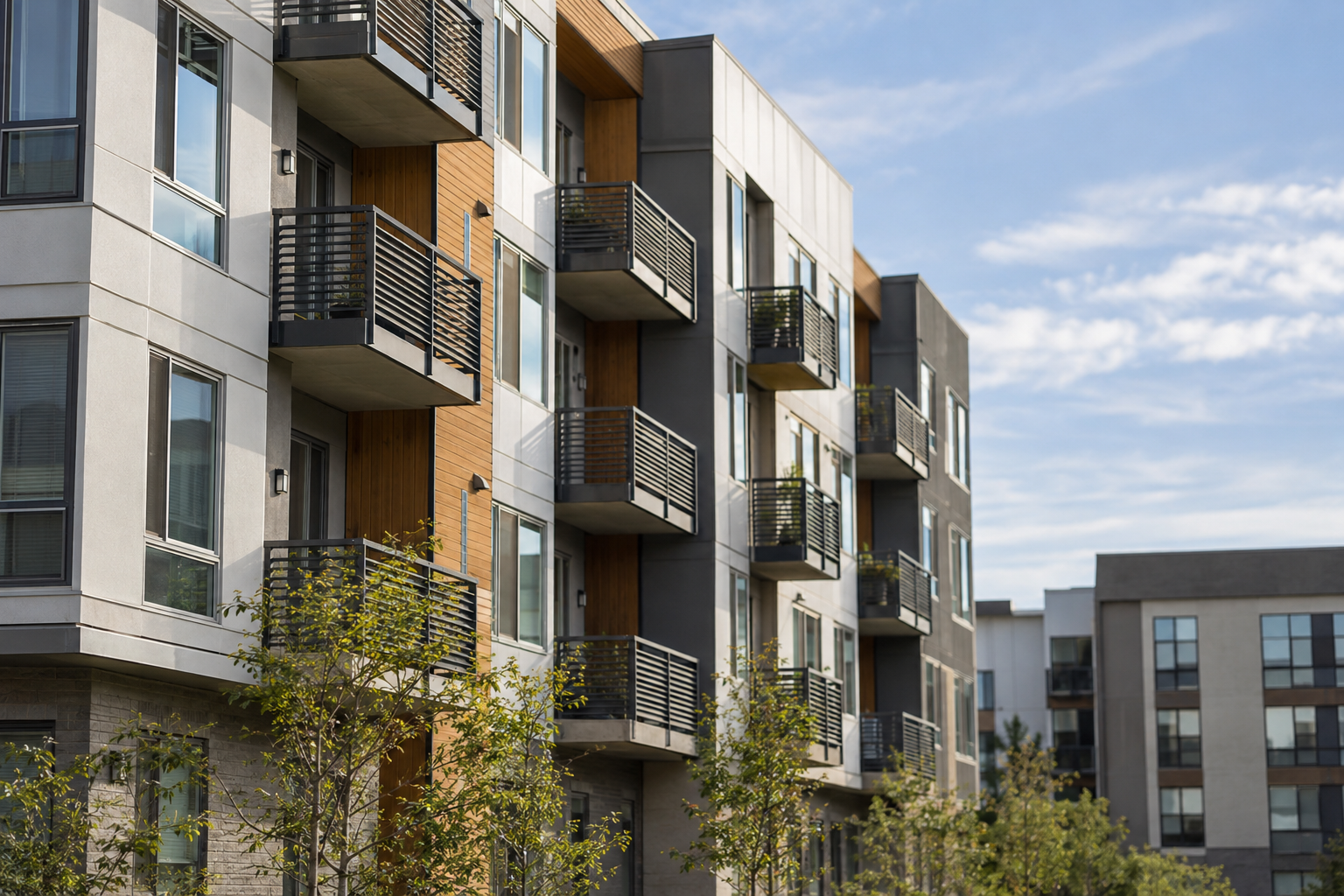
Distressed commercial-property sales increased in the first nine months of 2026, with apartment transactions highlighting the strain on owners who bought when borrowing was cheaper and valuations were higher. Figures drawn from MSCI data show distressed sales volume rose 26.4% compared with the same period last year. Multifamily was the only property sector where distressed sales volume grew faster than nondistressed volume over that period, as mortgage resets exposed some owners to more demanding financing conditions.
Distressed sales volume reached $13.2B across the first three quarters, compared with $10.5B a year earlier. Apartment distressed sales volume increased 62.8%, although the wider investment market expanded strongly too: nondistressed deal volume rose 50.3%. Overall commercial-property transaction volume increased 49.7% to $559.9B, according to MSCI data. The figures therefore point to rising financial pressure rather than a market dominated by forced or troubled sales. Distressed transactions represented 2.4% of total volume over the period, while their third-quarter share fell to 1.5%, the lowest since the middle of 2024.
The financing backdrop remains difficult for borrowers seeking to replace existing debt or obtain new loans. As of October 19, 2026, interest rates had stayed elevated for roughly three years, while persistent inflation limited prospects for relief ahead of the Federal Open Market Committee’s meeting the following week. Jim Costello, MSCI’s head of real estate economics, described a market responding to different pressures across property types, rather than a single financial shock. Demand conditions vary by sector, he said, while financing channels have experienced a succession of disruptions.
Read more: Trump plans NIH women’s health research division after Melania Trump’s push
For apartment owners, the difficulty is particularly acute among those who purchased during the pandemic at high prices supported by low interest rates. Costello said mortgage resets were forcing those buyers to confront changed financing economics. He singled out aggressive purchases in 2022 involving a 3% capitalisation rate for a Class-B apartment building in the Southeast as transactions that lacked fundamental value at that rate. The multifamily figures distinguish that sector from the broader market: its distressed sales volume grew faster than its nondistressed volume in the first nine months of 2026.
Yet access to private lending has kept distressed transactions from accounting for a bigger proportion of overall sales in recent quarters, Costello said. Debt funds have displaced banks and insurance companies as leading providers of commercial-property debt, giving owners more options to work through financing problems. That availability offers a counterweight to the pressure evident in apartment transactions. It also helps explain why distressed sales can rise in dollar terms while accounting for a smaller share of activity in the latest quarter.
Private financing does not necessarily remove the risk that a borrower will ultimately lose a property. Costello said debt funds and private equity approach transactions differently from banks and insurers, allowing more aggressive underwriting. Their potential returns need not depend solely on repayment of the loan: taking ownership of the collateral can also provide a route to profit. The distinction qualifies the apparent reassurance offered by plentiful debt capital. Lenders may be willing to work with owners without assuming that those owners will retain their assets indefinitely.
Read more: Lula and Flavio Bolsonaro trade personal attacks in first runoff debate
Elsewhere, the relationship between growth rates and the scale of distress varies considerably. Distressed industrial sales volume rose 167.6% in the first nine months of 2026 compared with the same period a year earlier, the largest percentage increase among property sectors, but amounted to only $375M. That was less than 1% of the $106B in total industrial transactions. Lodging had the largest distressed share of sales volume, at 8.9%. These measures show why the fastest increase alone does not establish where distress is most prevalent: industrial property recorded a sharp rise in distressed volume that remained small relative to its overall market.
Office properties presented a different pattern. Distressed office transactions totalled $5.1B in the first nine months, representing 7.8% of the sector’s $65B in sales. Long-term tenant leases had delayed pressure on landlords, but lease expirations have begun to expose it. There were also signs of weakness beneath the wider market’s transaction growth. August sales reached $107B, supported by $70B of merger-and-acquisition-type activity. Without those transactions, volume would have fallen 21% from a year earlier, underscoring the importance of large corporate deals to the headline sales figures.
Debt-market indicators suggest refinancing will remain a test. Trepp reported that commercial mortgage-backed securities distress rose 17 basis points to 8.02% in September, its highest level since November 2020. Separately, Newmark found that around 78% of fixed-rate securitised commercial real estate debt maturing through 2028 carried rates below the current yield on the 10-year U.S. Treasury bond. Those borrowers face higher debt costs and possible distress at maturity unless interest rates ease, extending the financing challenge beyond the current sales period.
Costello nevertheless expects plentiful private debt to restrain distressed sales in the near term. The outlook also leaves room for owners to continue waiting rather than transact. A resolution to the war in Iran could lower energy costs, ease inflation and help reduce yields, although that outcome remains uncertain. Costello said the possibility of lower rates was influencing behaviour. For owners approaching refinancing, the choice between waiting and selling remains tied to both the availability of capital and the direction of borrowing costs.