UK markets · Markets
FTSE 100 futures steady ahead of Bank of England rate decision
The Bank of England is expected to raise Bank Rate from 3.
By Sera Wyclen · 3 min read
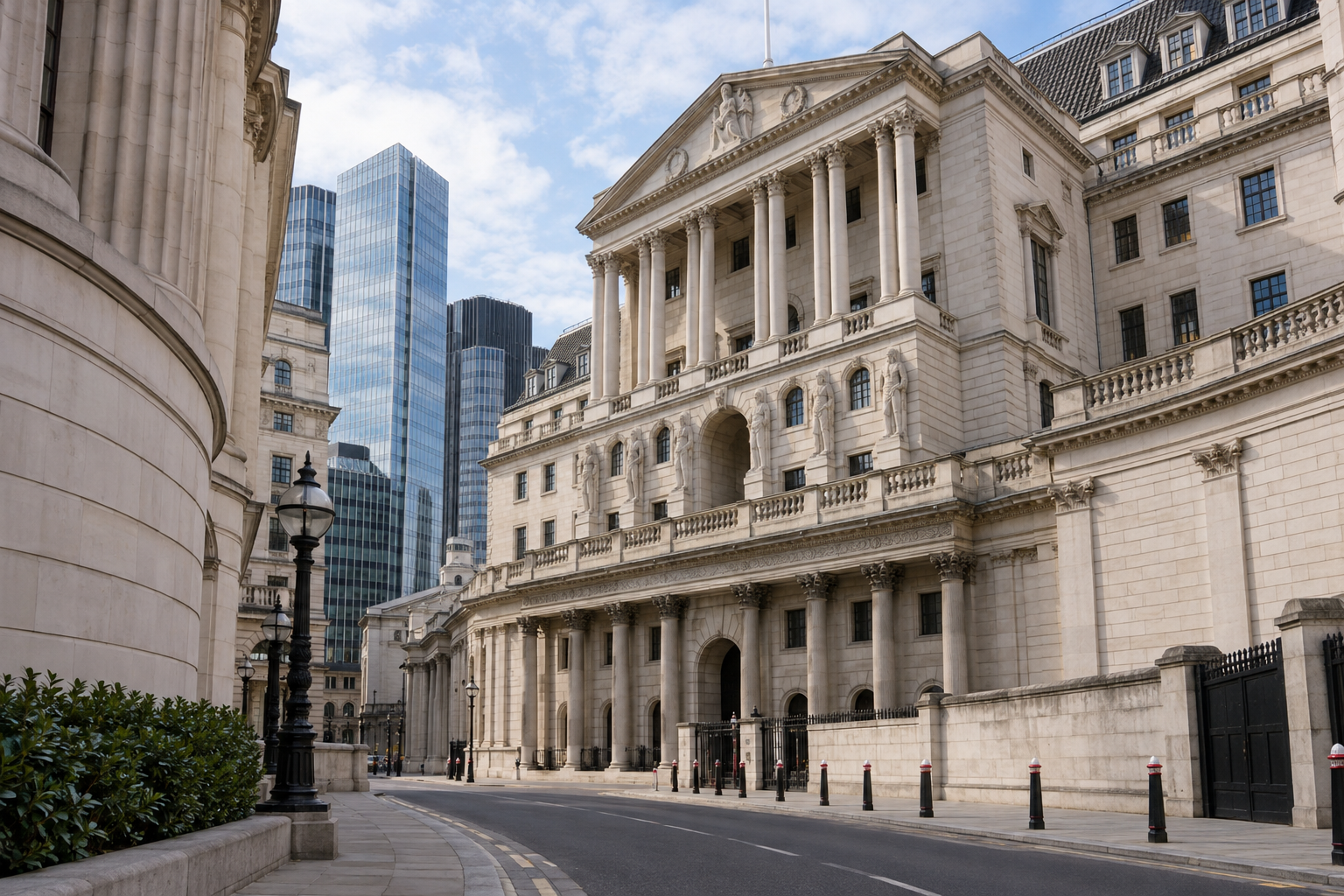
FTSE 100 futures held steady ahead of the Bank of England’s interest-rate decision on Thursday, November 5, with investors preparing for a possible increase in borrowing costs. The prospect of tighter monetary policy kept the UK market outlook cautious despite a generally firmer tone in global equities. Attention centred on whether the central bank would signal further action against inflation or place greater weight on evidence of economic weakness when explaining its decision.
The central bank is expected to increase Bank Rate from 3. UK inflation has climbed to its highest level in 11 months, with cost pressures associated with the Iran war contributing to the rise. Futures prices also indicate that investors see a risk of multiple rate increases next year. That leaves the policy outlook, rather than the immediate decision alone, central to how traders assess the prospects for UK shares.
The inflation backdrop presents a difficult balance for policymakers. Higher costs linked to the war are adding pressure at a time when economic surveys are already weak. An increase in rates would be aimed at tackling inflation, but would also make financing more expensive for households and businesses. The central question for markets is therefore how far the Bank is willing to tighten policy without giving greater weight to the weakness visible in those surveys.
Read more: Nasdaq falls 5.5% on Thursday as AI-stock sell-off spreads to Asia
For investors, the Monetary Policy Report and the distribution of votes on the Monetary Policy Committee will provide evidence about that balance. Both could help determine whether expectations of a sustained tightening cycle remain in place. A decision to raise rates would not, by itself, settle the question of what follows. The accompanying assessment will matter because the market is already allowing for the possibility that the Bank will need to act more than once next year.
The implications extend beyond the immediate response in equity futures. Higher policy rates feed into the cost of mortgages, credit cards and business loans, putting pressure on spending that depends on affordable credit. Companies can also face a squeeze on profit margins as financing becomes more expensive. Businesses with substantial borrowing, and those whose valuations rely heavily on earnings expected well into the future, are particularly exposed to changes in the rates investors use to value those earnings.
The steady futures market thus sits alongside two competing considerations: persistent inflation that could justify further tightening, and weak surveys that could argue for restraint. Neither is resolved by the expectation of a rise to 4%. The firmer international equity backdrop offers a separate influence, but the domestic rate decision remains the main focus for the UK opening. Investors will be looking for evidence that supports, or challenges, the additional increases already reflected as a risk in futures pricing.
Read more: Democrats flip more than 40 House seats in 2026 midterms
Among individual companies, Metro Bank Holdings reported third-quarter lending growth of 37% from a year earlier in the segments it targets. Its net interest margin at the end of the quarter stood at 3. Management maintained its guidance and its goal for return on tangible equity to exceed 13% in Q4 2026, with higher returns sought in subsequent years. The figures put lending growth and profitability alongside the broader market debate over rates.
Metro’s expanding loan book also directs attention to funding costs, the quality of its credit exposures and regulatory capital. Those considerations matter alongside the reported improvement in its margin: lending growth alone does not resolve questions about financing or the resources needed to support expansion. The Bank of England decision provides the wider context for assessing those issues, while management’s unchanged guidance gives investors a company-specific reference point as they evaluate the effect of a potentially tighter policy environment.
Elsewhere, company developments and precious metals helped drive notable share-price gains. Fresnillo advanced 7. Smith & Nephew gained 6.49% as investors reconsidered reductions to its guidance alongside its continuing share repurchases. Associated British Foods rose 6.37%, with earnings, plans to separate Primark and restructuring developments in focus. Those moves illustrate the importance of company and sector factors even while monetary policy dominates the broader UK market agenda.
The next test comes with the rate decision at noon, while investors will also scrutinise the Monetary Policy Report and the committee’s vote. Investors will need to distinguish the expected immediate increase from any indication of a longer sequence of tightening. With inflation elevated and survey evidence weak, the Bank’s explanation of that trade-off will be central to whether investors continue to price in the risk of multiple moves next year or begin to question that outlook.