Ghana · Business
Ghana’s housing investment runs up against finance and land barriers
Access to finance and secure land are major obstacles for developers, while GREDA proposes a technocrat-led housing authority to provide policy continuity.
By Tobin Ellmere · 3 min read
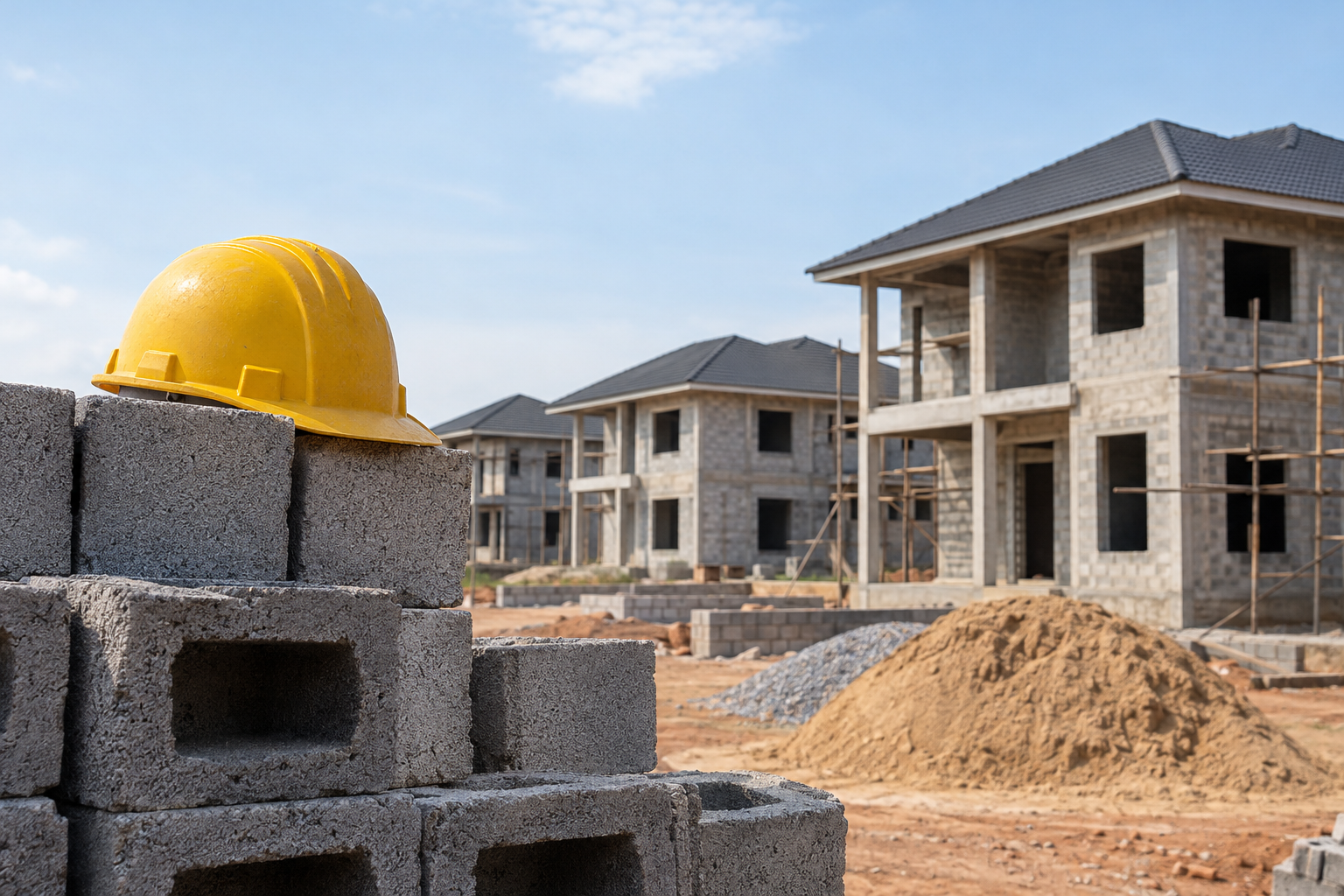
More investment is not making housing affordable in Ghana, while developers face difficulties obtaining finance and securing land. These obstacles put the conditions under which homes are developed at the centre of the affordability debate, alongside investment itself. They also raise a policy question: how to turn investment in housing into homes that people can afford when the businesses expected to build them face constraints of their own.
Samuel Amegayibor, executive director of the Ghana Real Estate Developers Association (GREDA), identified access to finance and secure land as two of the biggest obstacles facing developers. GREDA has also proposed establishing a National Housing Authority, led by technocrats and insulated from political cycles. Its argument is that housing delivery requires consistent policy beyond individual governments’ terms. The proposal places institutional continuity alongside the practical challenges of development.
Those concerns distinguish investment in housing from the delivery of affordable homes. Investment is part of the process, but its presence does not establish that developers can obtain the financing they need or that access to land is sufficiently secure. Amegayibor’s assessment identifies constraints relevant to examining why greater investment is not making housing affordable. It suggests that the debate cannot be confined to whether money is entering housing; it must also consider the conditions under which homes are developed.
Read more: Banks tighten property lending standards as loan demand weakens
The financing issue also raises questions about how affordability is assessed. Developers’ ability to obtain funding and households’ ability to afford a home are related policy concerns, but they are not interchangeable measures of success. Improving the former would not, by itself, demonstrate an improvement in the latter. A housing approach organised around people’s incomes would therefore need to connect the financing of development with the affordability of the resulting homes, rather than treat additional investment as sufficient evidence of progress.
Secure land access represents a separate concern in Amegayibor’s account. Addressing financing alone should not be assumed to resolve that obstacle, just as improving access to land would not necessarily answer developers’ funding needs. The distinction matters for any assessment of a housing initiative: a measure aimed at one constraint should not automatically be taken as a solution to the other. Amegayibor’s diagnosis consequently points towards a broader policy challenge than simply encouraging investment, without establishing which individual intervention would have the greatest effect on affordability.
Alongside those development concerns, GREDA’s proposed authority addresses the organisation of housing policy. The association wants technical leadership and insulation from political cycles, arguing that housing delivery requires continuity across governments. That reasoning focuses on the durability of the framework within which housing is delivered. It does not establish that the proposed institution would be a substitute for finance or secure land. Rather, the stated case for an authority rests on the view that housing delivery requires consistent policy beyond a single administration’s term.
Read more: Nasdaq falls 5.5% on Thursday as AI-stock sell-off spreads to Asia
The investment and affordability perspectives nevertheless set different tests for policy. In Amegayibor’s account, access to finance and secure land are major obstacles facing developers. From an affordability standpoint, the relevant test remains whether the homes delivered are within people’s means. These objectives need not conflict, but evidence of progress on development conditions would not alone settle the affordability question. Any evaluation would need to keep both in view, distinguishing improvements for those supplying homes from improvements for those seeking to obtain them.
The same distinction applies to the proposed authority. Establishing a technocrat-led body would be an institutional change; showing that it improved housing delivery would require an assessment of outcomes. Showing that those outcomes improved affordability would require a further connection to household incomes. GREDA’s proposal is therefore an argument about how housing policy should be organised, not evidence that a particular organisational structure would, on its own, overcome the constraints identified by Amegayibor.
The proposal raises further policy questions about how continuity would work in practice and how a durable framework might address financing and land access. For the proposed authority, relevant questions would include its responsibilities and how its performance would be assessed against housing needs. Those are tests for the proposal rather than established features of it. Technical leadership and insulation from political cycles describe GREDA’s preferred approach, but assessing its contribution to affordability would still require attention to what it ultimately delivered.
These concerns illustrate the distinction between housing investment and affordable outcomes in Ghana. Amegayibor’s diagnosis highlights financing and secure land, while GREDA’s institutional proposal seeks a more consistent policy foundation. Together, they suggest reasons to look beyond investment alone. Whether that approach could make homes more affordable would have to be judged by delivery in relation to people’s incomes, not merely by the creation of an authority or improvements in developers’ operating conditions.