Middle East · World
Houthis claim deadly Riyadh airport strike as Yemen government forces report gains
A Houthi claim of an attack on Riyadh airport comes as the Saudi-led coalition says it has destroyed 82 Houthi military targets in Yemen.
By Ilan Corven · 5 min read
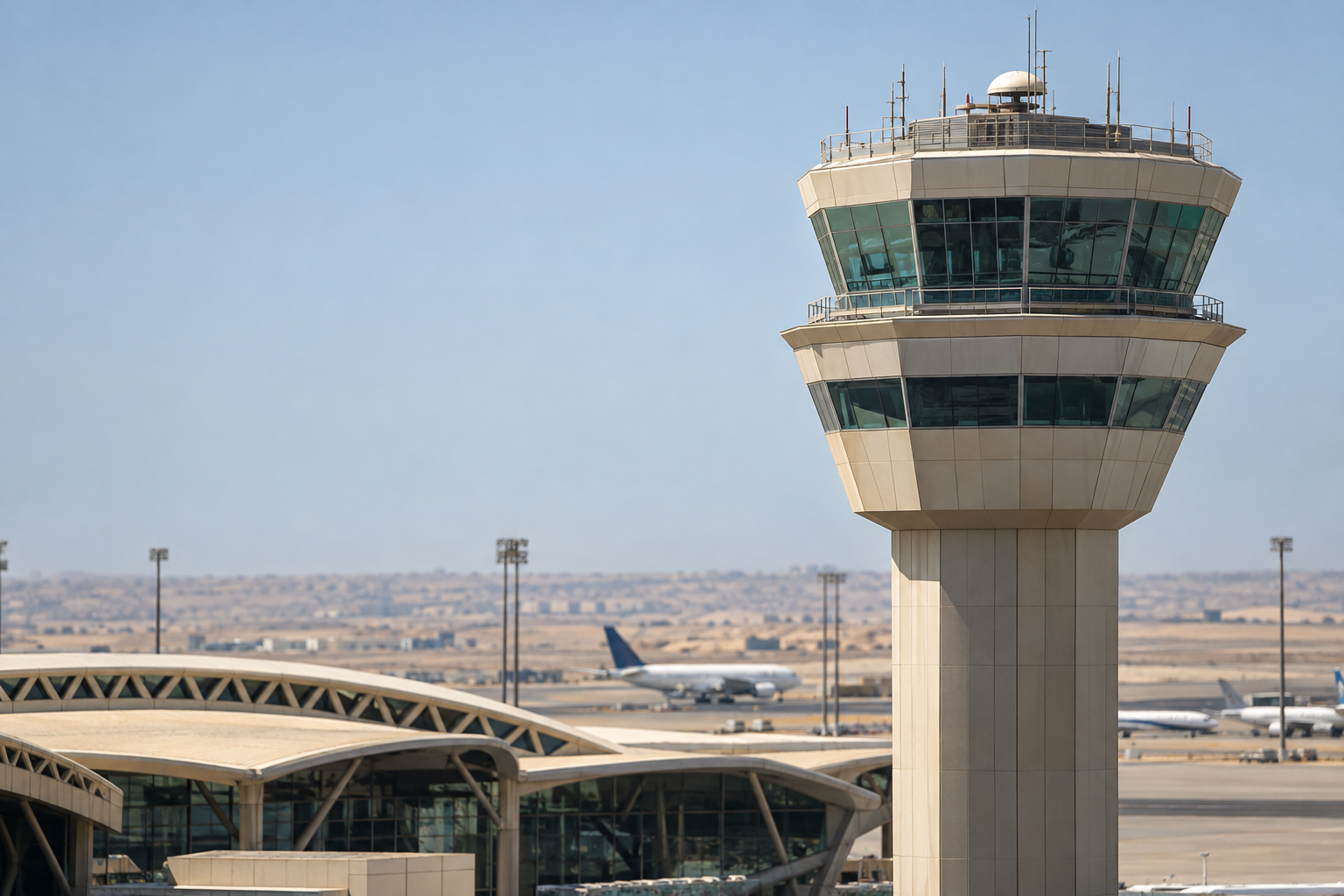
Yemen’s Houthis claimed a strike on Riyadh airport, with three people reported killed, while government forces claimed key heights as fighting with the Saudi-led coalition escalated. The accounts published on October 8 pointed to continuing Houthi attacks alongside a government effort to recover territory. Details of the claimed airport strike and the reported battlefield advances remained limited in the available material, leaving the scale and consequences of the latest fighting unclear.
Coalition spokesperson Turki al-Maliki said 82 Houthi military targets had been destroyed across the Yemeni provinces of Saada, Marib, Al Jawf and Al Hudaydah. He gave no details of casualties or damage, and the claim could not be independently verified. The total was the most specific measure offered in the available material of the coalition’s operations, but it did not establish how those operations had affected Houthi forces or whether they were connected to the government forces’ claimed gains.
The latest fighting followed an announcement by Rashad al-Alimi, the head of Yemen’s internationally recognised government, that military operations were being launched to recover territory still held by the Houthis. Al-Alimi set out that objective in an address on October 4. His announcement provides context for the subsequent report of government forces claiming battlefield gains, although the available account does not identify the heights involved or describe how much territory those forces said they had secured.
Read more: Washington begins direct engagement with Myanmar’s military government
The Houthi claim concerning Riyadh airport placed a reported deadly attack alongside those accounts of advances inside Yemen. Three people were reported killed, but the available details did not identify them or explain the circumstances of their deaths. There was also no description in the available material of the extent of damage at the airport. The reported death toll therefore cannot, on its own, establish the wider impact of the claimed attack, including whether airport operations were affected or what facilities were struck.
The distinction between the Houthi claim of a strike and the limited information about the airport attack is important. The available account offers no detailed sequence of the strike and no explanation of how it was carried out. It consequently provides little basis for assessing the attack beyond its claimed location and the reported death toll. Although the airport claim and the coalition’s account of operations were reported amid the same escalation, the available information does not establish that either action was a response to the other.
The coalition’s figure of 82 targets similarly requires qualification. Al-Maliki described them as Houthi military targets, but the available account did not set out their types or give a breakdown by province. Without that detail, the total cannot show which part of the campaign accounted for the greatest activity or what military capabilities were affected. His assertion that the targets had been destroyed was also not accompanied by the casualty or damage information needed to assess the consequences more closely.
Read more: Trump’s shifting $5,000 dividend promises face voter skepticism
The geographical detail available about the coalition announcement is nevertheless more extensive than that about government forces’ claim of territorial progress. Al-Maliki named Saada, Marib, Al Jawf and Al Hudaydah, placing the claimed operations across several provinces rather than at a single identified battlefield. But the available account did not describe the relationship between those operations and the claimed gains on key heights. Treating the target count as evidence of a particular territorial advance would therefore go beyond what the available material establishes.
Government forces’ claim to have taken key heights addresses a different aspect of the fighting: control of positions rather than the destruction of targets. The description of the heights as key suggests their importance, but the available account supplies no names, locations or explanation of their operational role. It does not establish whether holding those positions would enable further advances. Nor does it indicate how the reported gains changed the extent of territory remaining under Houthi control.
Al-Alimi’s stated objective was broader than the battlefield gains described in the subsequent report. His October 4 address announced operations to retake the remaining Houthi-held territory, while the latest report of government forces’ gains concerned key heights. Those are distinct measures of ambition and reported achievement. The claim of capturing positions does not demonstrate that the wider objective is close to being met, and no timetable for completing the campaign appears in the available account of the government’s announcement.
There was also a visible Houthi security presence in Sana’a during the escalation. Houthi security personnel were documented patrolling a street in the city on October 7. That observation provides a narrow picture of activity there, rather than a measure of the broader military balance. It offers no basis for determining the strength of Houthi forces elsewhere, but sits alongside the reports of the group’s continued attacks and the government’s declared intention to recover territory still under its control.
The accounts emphasise different forms of military activity. The Houthis claimed an attack on Riyadh airport, government forces claimed positional gains, and the coalition presented a total for destroyed military targets. These claims are not directly comparable: a reported strike, control of heights and a target count each describe something different. Read together, they indicate that attacks and ground operations were continuing, but they do not provide a common measure from which to judge which side had gained the greater advantage.
The reported human cost is also much less developed than the accounts of military activity. The airport-strike account included three deaths, whereas al-Maliki supplied no casualty details for the coalition operations he described. That absence should not be read as evidence that there were no casualties, just as the target total cannot be converted into a measure of losses among Houthi personnel. The available figures support a limited account of three reported deaths alongside the airport-strike claim, not a comprehensive assessment of the escalation’s toll.
The available accounts leave unresolved the gap between the government’s stated territorial objective and its reported gains, as well as the significance of the continuing Houthi attacks. Further detail about the claimed gains on key heights would be needed to assess the government’s progress; fuller information about the claimed airport strike would clarify its consequences. For now, the coalition’s unverified target count, government forces’ positional claims and the deaths reported alongside the Riyadh strike claim describe an escalating conflict without resolving the extent of either side’s military success.