Taiwan · Politics
Lai defends higher military spending as a deterrent to war
In his National Day address, Taiwan’s president framed increased defence investment as a way to discourage conflict amid Chinese military pressure.
By Nessa Dalric · 3 min read
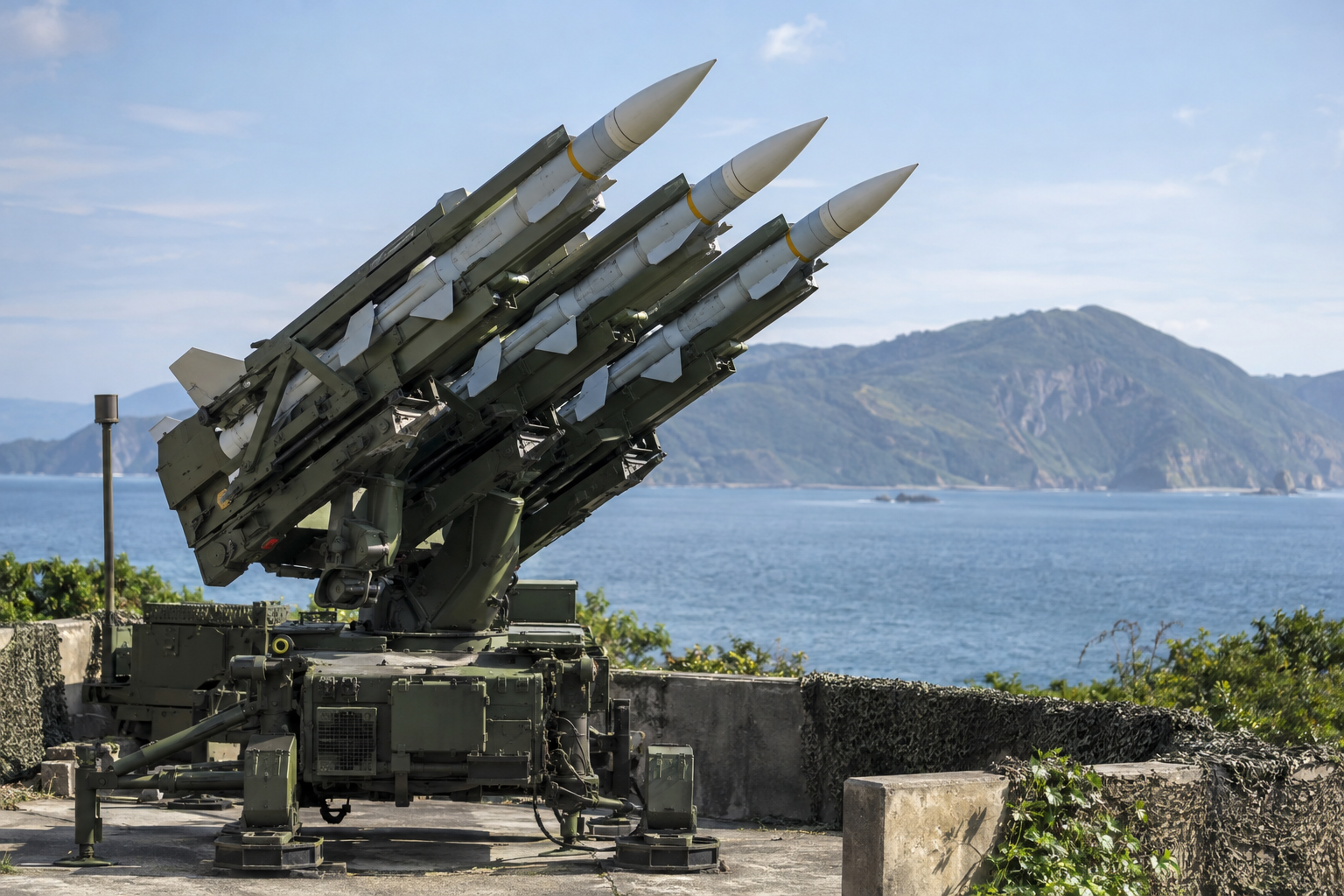
Taiwan’s President Lai Ching-te used his National Day address on October 10, 2026, to defend increased military spending as a means of discouraging war, arguing that stronger defence investment was not intended to provoke conflict. Speaking at celebrations in front of the Presidential Office in Taipei, Lai presented the spending effort as a means of deterrence as China applies military pressure in support of its claim to Taiwan.
The stakes extend to Taiwan’s 23 million people, who face the threat of an attack from China. Beijing regards the democratic island as Chinese territory and has threatened to take it by force. Lai’s remarks set out the purpose of increasing defence investment, but the available account provides no spending total, proposed increase or timetable. The excerpt therefore offers a statement of strategic intent rather than figures with which to assess the scale of the military spending effort.
The distinction Lai drew was between deterring war and provoking it. By presenting additional defence spending as preventive, he described investment in national defence as serving a goal of avoiding war. That argument was central to the remarks available from his speech: the case for spending rested on its intended deterrent effect, with Lai explicitly saying that provocation was not the aim.
Read more: India detains ‘Cockroach’ protest leaders as Delhi imposes strict curbs
China’s territorial claim provides the immediate context for that argument. Its military pressure is directed at an island it insists belongs to it, while its threat to use force leaves the possibility of an attack at the centre of Taiwan’s security concerns. Against that backdrop, Lai defended greater investment in defence in his National Day speech. The contrast is between Beijing’s assertion that Taiwan is its territory and Lai’s stated purpose of discouraging war.
Delivering that message during National Day celebrations placed defence spending within an occasion focused on Taiwan itself. Lai addressed the issue in front of the Presidential Office, using the speech to explain the rationale for increased investment. His formulation also addressed how such spending should be understood: as a precaution against conflict rather than a provocation. That is a distinction about the purpose of the policy, however, rather than evidence of how China will interpret it.
The population figure conveys the human reach of the security issue, but it does not establish the financial burden of the policy. Without a spending amount or a specified increase, the available material cannot show how much additional investment Lai is defending. Nor does it identify which military capabilities would receive funding. Any assessment of the spending’s affordability, composition or likely effectiveness would require details beyond the broad rationale given in the available remarks from the address.
Read more: Trump and Putin agree to release Russian diesel as fuel-price pressure mounts
Lai’s position and China’s claim reflect different positions in the same confrontation. The Taiwanese president describes defence investment as a way to discourage hostilities; Beijing maintains that Taiwan is its territory and has threatened force to bring it under its control. The available material contains no Chinese response to this particular speech. It therefore does not establish whether Beijing accepts, rejects or otherwise distinguishes Lai’s stated defensive purpose from the fact of increased military spending.
The deterrence argument also leaves a distinction between an objective and an outcome. Lai identified preventing war as the reason for greater defence investment, but that statement alone cannot demonstrate that the policy will achieve it. The material offers no assessment of the military balance or of how additional spending would affect Chinese decisions. What the available remarks establish is the president’s public justification for the policy, rather than a measurable account of its consequences for security.
Further detail on the amount, allocation and timing of expenditure would be needed to turn that justification into a fuller assessment of the spending effort. The available material does not set out those elements or identify a subsequent decision on funding. For now, the policy information in the excerpt is limited to the direction Lai is defending—higher investment in national defence—and the purpose he assigns to it. No numerical budget comparison can be drawn from the material provided.
The available remarks from Lai’s National Day address thus centred on why Taiwan should invest more in defence, rather than how the money would be spent. Against China’s continuing territorial claim and threat of force, he argued that increased defence investment should be understood as an effort to keep conflict from occurring. The next question for assessing that position is how the spending translates into capabilities and whether those capabilities support the preventive purpose he outlined, matters not resolved by the available account of his address.