Arts · Art
Public-funding protesters block visitors from entering the Louvre
The museum, which drew more than 9 million visitors last year, remained closed at 11 a.m. after demonstrators blocked its pyramid entrance in a protest against public-funding cuts.
By Calla Brenmoor · 3 min read
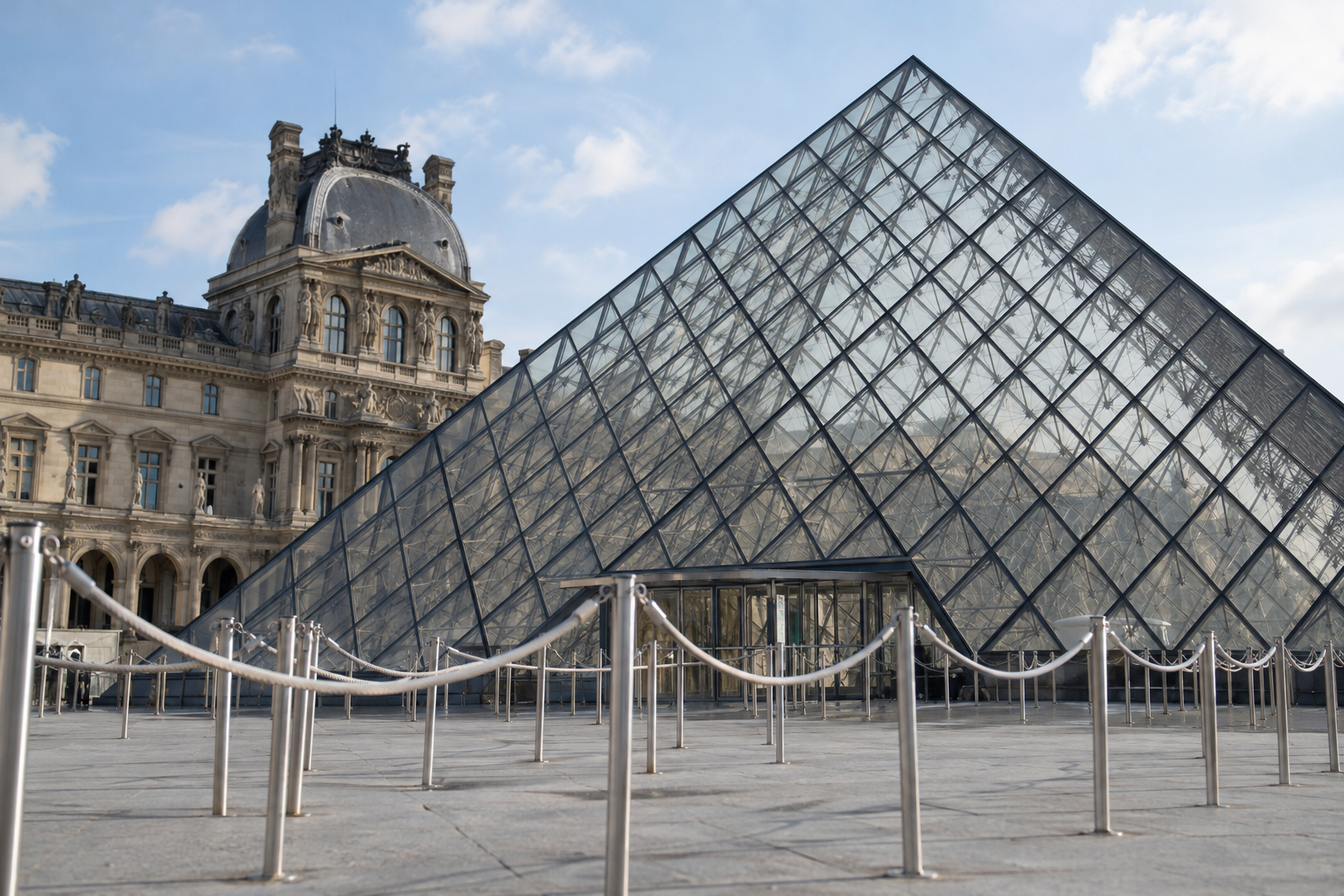
Demonstrators protesting cuts to public funding blocked the Louvre’s pyramid entrance on Monday, October 19, 2026, preventing visitors from entering the museum as a dispute over public services reached one of France’s major cultural institutions. Protesters were at the doors at 9 a.m., the museum’s usual Monday opening time, and remained there at 11 a.m. Security officials were present, and metal gates surrounded the plaza while demonstrators chanted, displayed signs and played music through a speaker.
The interruption affected a museum that received more than 9 million visitors last year and accommodates well more than 20,000 people on its busiest days. Those attendance figures indicate the scale of the institution, rather than the number of people turned away on Monday, for which the available information provided no count. The blockade followed nationwide demonstrations on Saturday over public schools and the rising cost of living; property destruction and looting also occurred over the weekend, and law enforcement officials reported more than 2,400 arrests.
At the entrance, the protesters’ messages focused on services beyond the museum itself. One sign, written in English, read: “French public schools are falling apart.” Another carried the French words “365 jours d’austérité”, presenting austerity as a continuing grievance. Demonstrators also waved the flag of the Confédération Générale du Travail, a trade union representing some Louvre employees. The presence of its flag connected the scene to organised labour, although it did not by itself establish who had organised the blockade.
Read more: Trump plans NIH women’s health research division after Melania Trump’s push
A leaflet attributed to the organisers described the action as part of a struggle by French students and workers against the government’s approach to public services. It presented blocking the Louvre as a means of advancing that campaign and accused the government of responding to youth protests with violent police repression. Those assertions appeared in the leaflet attributed to the organisers; they were not an independently established description of the police response at the museum on Monday.
The Louvre’s public explanation was narrower. In a notice, the museum attributed its closure to student strikes and apologised for the disruption. It did not immediately respond to a request for comment. The notice addressed the immediate consequence for visitors without discussing the protesters’ objections to funding cuts or their allegations about policing. The leaflet framed the action as a dispute over the direction of public services; the museum’s statement concentrated on its inability to admit the public.
The attendance numbers help explain the significance of an interruption at the Louvre, but they cannot establish its precise impact. More than 9 million visitors over the previous year describe annual activity, while the figure of well more than 20,000 concerns the museum’s busiest days. Neither supplies a measure of expected attendance that Monday. With protesters still outside at 11 a.m., the information available established a morning closure, rather than the eventual duration of the disruption or the total number of visits affected.
Read more: Lula and Flavio Bolsonaro trade personal attacks in first runoff debate
The arrest figure likewise belongs to the wider unrest, not specifically to the Louvre blockade. Law enforcement officials reported more than 2,400 arrests amid unrest that included large marches across France as well as incidents of destruction and looting over the weekend. The scene described at the museum consisted of an obstructed entrance, chants, signs, music and a union flag. Keeping those accounts distinct is important: the nationwide arrest total does not establish that the Louvre demonstrators participated in the weekend’s property damage.
Monday’s action brought the public-services campaign into a cultural setting, linking the blockade to a broader dispute involving education, workers and living costs. The school-related sign and the leaflet attributed to the organisers both placed the museum blockade within that broader dispute, rather than presenting it solely as a campaign about the Louvre’s own operations. The immediate effect, however, fell on access to the collection: visitors could not enter while the protesters occupied the entrance, and the institution announced that it was closed.
The disruption also coincided with the one-year anniversary of the theft of pieces of France’s crown jewels from the Louvre. That heist led to the resignation of the museum’s director, Laurence des Cars, in February. The anniversary supplied a separate institutional backdrop to Monday’s closure. The protesters’ stated reasons concerned public funding and the government’s treatment of students and workers; the quoted passages of the leaflet did not link the blockade to the theft or to the director’s departure.
For visitors, the timing of resumed entry remained unresolved in the available information. At 11 a.m., demonstrators were still in position, and the museum’s closure notice offered no reopening time. The Louvre’s notice apologised for the inconvenience, while the leaflet attributed to the organisers framed the blockade as pressure on the government over public services. The available information left both the duration of the action and the timing of restored access unresolved.