International justice · Opinion
U.S. sanctions announcement on the ICC puts Washington’s accountability agenda under scrutiny
Washington’s call to dismantle the court raises questions about both its case against the institution and the accountability arrangements it would support instead.
By Editorial Board · 4 min read
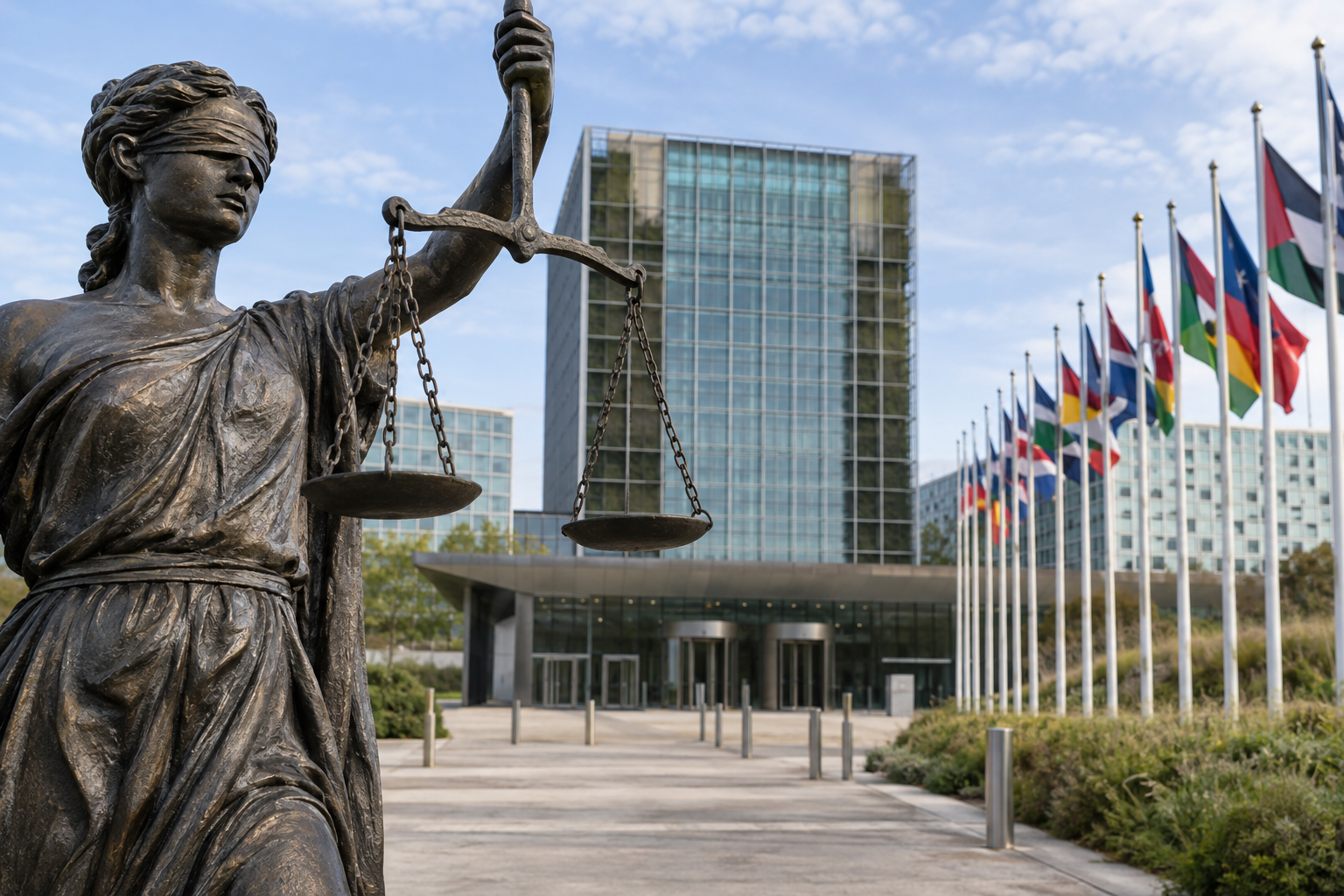
The U.S. announcement of sanctions on the International Criminal Court brings a larger question into focus: whether Washington is seeking to change an institution it considers defective or to eliminate it. The distinction matters for evaluating the Trump administration’s approach to international accountability. Sanctions can be assessed against a stated objective, but the objective itself also requires scrutiny. In this case, the clearest available expression of American policy goes beyond opposition to particular conduct and calls for dismantling the court.
In remarks presented as prior signs of administration pressure on the ICC, the U.S. State Department welcomed what it described as the new Venezuelan government’s cooperation with American-led efforts to dismantle the court. It also urged every ICC member to leave the Rome Statute. That establishes the breadth of Washington’s stated ambition, though not the reach of the announced sanctions. The available material provides no sanctions targets, financial amounts, implementation timetable or membership figures. Any numerical assessment of their scale, or confident prediction of their practical consequences, would therefore exceed the evidence.
The diplomatic context is nevertheless significant. In welcoming the Venezuelan government’s partnership, the State Department presented its campaign as something other governments could join, rather than simply a unilateral American objection. Its appeal to all ICC members similarly sought a wider response. These statements provide context for the sanctions announcement by showing an American effort to reduce international support for the institution. They do not establish how many governments share Washington’s position, whether others will act on its appeal or what commitments the Venezuelan partnership entails.
Read more: What Takaichi’s ¥36,000 tax-cut figure does—and does not—show
The administration’s stated objection is an institutional one. The State Department characterised the court as the “corrupt and worthless ICC,” making clear that its objection concerns the institution’s legitimacy and utility. If Washington regards those defects as fundamental, its preference for dismantlement rather than adjustment is internally understandable. Governments should be able to challenge international bodies rather than treat their continued existence as sufficient justification for support. But the force of that argument depends on substantiating the defects alleged.
Here the distinction between assertion and evidence is essential. The State Department’s language establishes its judgment of the ICC; it does not, by itself, demonstrate corruption or institutional failure. The supplied material identifies no conduct offered to substantiate those allegations and no standard against which the court’s performance has been measured. That does not establish that the administration has no wider case. It means that the case cannot be evaluated from the statement alone, and that its accusations should not be repeated as settled findings.
The competing institutional argument concerns what would follow from success on Washington’s own terms. If dismantlement is the objective, an assessment of that policy must consider not only the alleged shortcomings of the existing court but also the arrangements that would take its place. The material supplies no ICC response and no statement from a government defending continued membership. It would be misleading to assign either a position they have not expressed here. The unanswered question remains whether the proposed remedy would improve accountability rather than merely remove an institution.
Read more: Trump and Putin agree to release Russian diesel as fuel-price pressure mounts
Sanctions and withdrawal appeals also require separate evaluation; the supplied material does not specify the sanctions’ objectives or their relationship to the withdrawal campaign. The former are a means of applying pressure; the latter ask member governments to reconsider their relationship with the court. Without details of the sanctions, it is not possible to establish how those instruments would reinforce one another, or whether their effects would extend beyond Washington’s intended objectives. A sober analysis must distinguish the administration’s demonstrated desire for dismantlement from any claim that its chosen measures will deliver a better outcome.
The reference to Venezuela adds a further test of evidentiary discipline. The State Department welcomed cooperation from the new government, but that endorsement should not be inflated into proof of broad international agreement. Nor does the supplied statement explain Venezuela’s own reasoning in its own words. Washington’s description is evidence of Washington’s diplomatic position. Assessing the partnership more fully would require clarity about its substance and objectives, rather than an assumption that participation validates every American allegation or resolves the broader debate over the court.
What comes next should therefore be judged against concrete disclosures rather than the severity of official language. The sanctions’ targets, terms and intended effects would help establish what Washington expects them to accomplish. An explanation of the conduct underlying its institutional accusations would make those claims testable. Equally important would be an account of the accountability framework the administration favours if its withdrawal campaign succeeds. None of those questions presupposes that the ICC is beyond criticism or that sanctions are necessarily an effective response.
The central issue is the relationship between criticism, remedy and responsibility. Washington has stated an expansive objective and identified a governmental partner in pursuing it. The evidence provided does not establish the practical reach of the sanctions or the merits of the underlying allegations. International institutions should face rigorous scrutiny; policies intended to dismantle them warrant the same standard. The soundest assessment of this campaign will turn on whether the administration can connect its diagnosis to a credible, clearly explained approach to accountability.