Real estate · Real Estate
Wall Street’s data-centre pitch faces rising risks and limited retail interest
Institutional ownership dominates a Blackstone property vehicle as Wall Street promotes data centres, while separate views on artificial intelligence highlight the distinction between technological promise and investment risk.
By Rian Keswicke · 3 min read
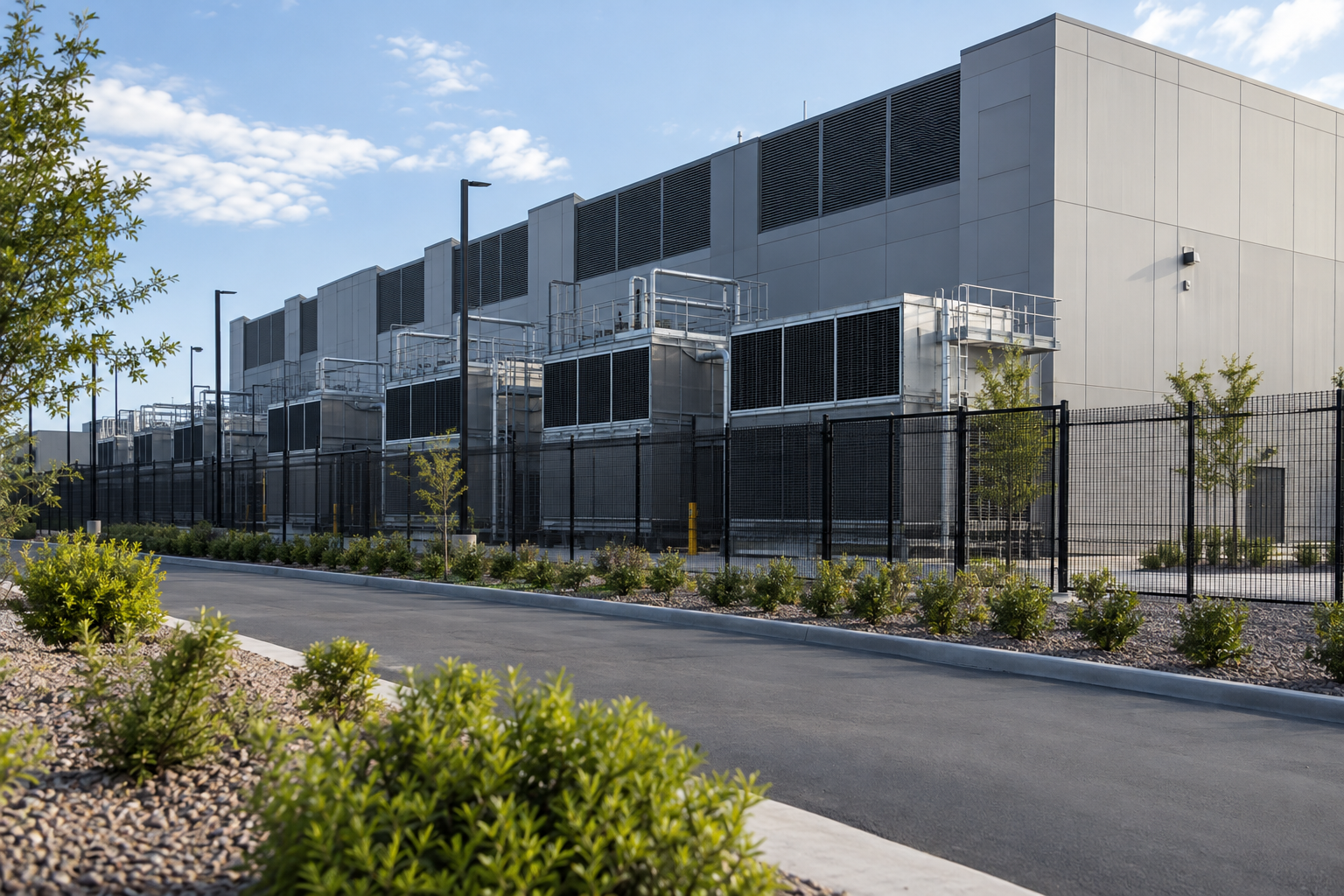
Wall Street is promoting data centres as a major property investment as risks mount, with concerns extending beyond markets and politics. Retail interest has so far remained limited, leaving a gap between the prominence of the investment pitch and evidence of broad participation. The question for investors is not simply whether artificial intelligence will advance, but whether enthusiasm for that advance provides a sufficient basis for committing money to the real estate associated with it.
Market data show that roughly 94% of ownership in the Blackstone REIT is institutional, despite the vehicle being available to trade in the same manner as shares. That figure is the clearest measure of investor participation in the supplied information. It points to an ownership base dominated by institutions, rather than evidence of broad retail ownership in that vehicle. It does not, however, establish why retail participation remains limited or whether that balance will change as Wall Street continues its promotion.
The ownership pattern gives the sales effort an important qualification. Access to a listed vehicle and participation in it are separate matters: the ability to buy and sell does not itself demonstrate demand. Institutional ownership also cannot be treated as a substitute for evidence about investment performance. The roughly 94% figure describes who owns the vehicle, not the returns those investors have received, the price they paid or their assessment of the risks ahead.
Read more: Trump and Putin agree to release Russian diesel as fuel-price pressure mounts
The wider AI debate supplies both an optimistic backdrop and a reason for caution. On Oct. 9, 2026, Michael Kratsios said superintelligence would accelerate progress across all scientific fields. His position expresses a broad view of the technology’s potential, rather than a forecast for data-centre property investments. That distinction matters to the real estate pitch: confidence in scientific progress is not, on its own, a statement about the financial outcome for a particular fund or its shareholders.
A contrasting investment perspective came from Man Group’s Kristina Hooper on Oct. 8, 2026. She said the market was recognising the vulnerability of technology stocks to AI-related volatility. Her comments concerned technology shares, not a stated assessment of the Blackstone REIT or data-centre property funds. Even with that boundary, they underline a relevant distinction for prospective investors: enthusiasm about AI’s capabilities can coexist with uncertainty over how investments associated with the technology will perform.
Those views are not necessarily contradictory. Kratsios addressed the potential pace of scientific advancement, while Hooper addressed market sensitivity. Neither position establishes the merits of a specific property investment. For Wall Street’s data-centre pitch, the analytical challenge is to keep those questions separate. A favourable technological outlook would not by itself settle concerns about an investment’s risks; equally, volatility in technology shares would not by itself establish that a property vehicle faces the same outcome.
Read more: Hurricane Isaias brings strong winds and flooding to US Gulf Coast
The risks surrounding the pitch also require separate scrutiny. Market, political and other investment concerns cannot be collapsed into a single judgment about whether AI succeeds. These concerns raise questions about the investment proposition that cannot be resolved from an ownership figure alone. The information available here does not specify the risks beyond markets and politics, quantify the exposures or provide a basis for ranking them. Presenting a precise estimate of their effect on investors would therefore go beyond the evidence.
The institutional concentration can support only a limited conclusion about the market so far: institutions account for the overwhelming share of ownership in the cited Blackstone vehicle. It cannot establish that institutions are uniformly confident, that retail investors have rejected data centres, or that either group has made the better decision. Nor does one vehicle’s ownership provide a measure of the entire property-fund market. The distinction is important when assessing a broad Wall Street sales theme through a narrow piece of investment data.
For prospective buyers, the unresolved issue is how the property proposition stands apart from the wider promise of AI. The supplied information does not include fund returns or a quantified assessment of the risks surrounding the data-centre pitch. That leaves no basis here for weighing a stated reward against a measured downside. The separate perspectives instead frame the decision: potentially far-reaching technological progress on one side, and recognition of AI-related investment volatility on the other, without establishing the implications for data-centre property returns.
Questions ahead include whether Wall Street’s promotion attracts broader retail participation and whether more detailed evidence clarifies the risks behind the property offering. Neither outcome is established by the current ownership data. For now, the strongest concrete signal is institutional dominance in the Blackstone REIT, alongside limited retail interest. The data-centre investment case remains distinct from the case for AI itself: a promising view of the technology does not remove the need to assess the property vehicle on its own terms.