Anime · Entertainment
79% of teen anime fans surveyed say they watch more than a year ago
A viewing survey points to stronger engagement among teen anime fans surveyed, though the finding does not establish how widely the audience is expanding.
By Dena Pellwick · 4 min read
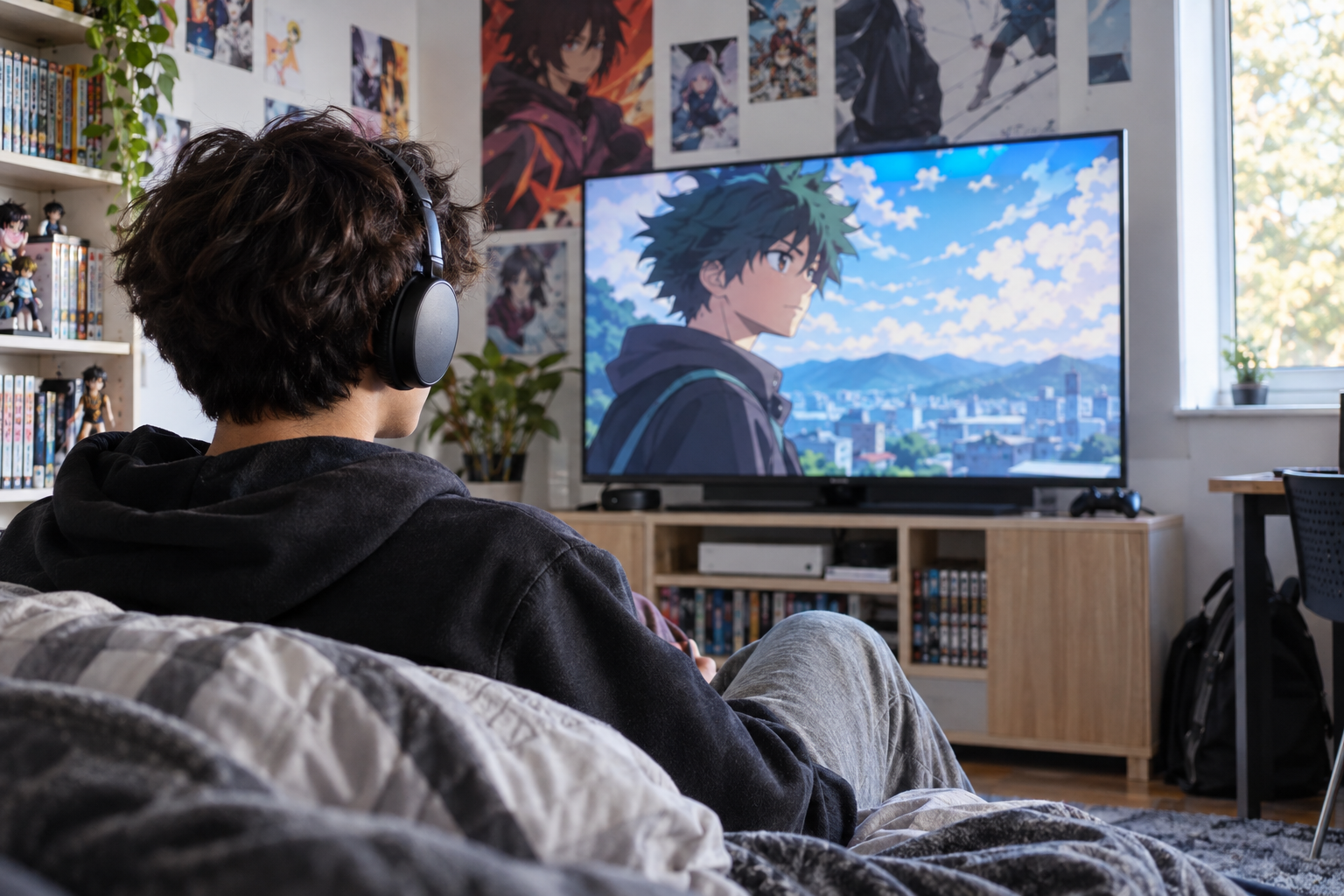
Teenage anime fans are reporting increased viewing, offering a sign of the medium’s appeal among younger audiences while leaving open questions about the scale of its growth. A survey indicates that many teen fans surveyed are watching more than they did a year earlier. The result points most clearly to greater engagement among people identified as fans, rather than measuring how many teenagers are discovering anime for the first time.
The central finding is that 79% of teen fans surveyed said they were watching more anime than a year ago. That figure measures the share of respondents reporting an increase, not the amount by which their viewing rose. It is therefore a signal of changing habits within the surveyed group, rather than a measure of total audience growth. The available survey summary does not give viewing hours, audience totals or a comparison with older fans that would establish whether teenagers are increasing their consumption faster.
Those distinctions matter when assessing the suggestion that anime is reaching a new generation. More viewing among surveyed fans and an increase in the number of fans would both support that broader picture, but they are different developments. The reported result directly addresses the former. Without information on respondents who had only recently become fans, it cannot show how much of the additional viewing reflects new interest and how much reflects established viewers spending more time with anime.
Read more: Trump pauses Russia sanctions, drawing bipartisan criticism
The finding also leaves the intensity of the change unclear. Respondents reporting a modest increase and those reporting a much larger one could both fall within the 79%. The summary does not distinguish between those possibilities, identify particular titles or explain what prompted the change. Nor does it identify the survey’s organiser, sample size, geographic coverage or fieldwork dates. These omissions limit how confidently the finding can be extended beyond the teenagers surveyed, even as their responses indicate stronger engagement within that group.
The result sits alongside other signs of international attention to Japanese cultural work, although those developments are not measures of anime consumption. Hirokazu Koreeda’s “Look Back” received five awards at the Venice film festival, including the CinemaSara Award. The prizes came from outside organisations rather than the festival itself, an important distinction in describing the recognition. Such awards provide context for the visibility of Japanese filmmaking abroad, but they cannot establish whether the teenage viewing pattern in the survey is widespread.
Another Japanese film, “Muyou no Hito,” received an International Critics Award and is scheduled for release in Japan in January 2027. That offers a separate example of critical recognition preceding a domestic release. Neither that award nor the recognition for “Look Back” supplies the missing audience information behind the anime finding. Together, however, they illustrate why different indicators need to remain distinct: awards record decisions by judging bodies, release plans describe availability, and a viewing survey records what its respondents say about their habits.
Read more: U.S. Coast Guard rescues 16 after boat sinks off Baja California
The movement of culture across borders also involves people connecting artists with audiences. Adrian Bianco, who died at 40 in August 2026, helped bring underground cultural scenes and emerging creative talent across Asia to international attention. His work provides another strand of context for the circulation of Japanese and Asian culture. It does not explain the survey result, but it highlights a form of cultural connection that is different from either formal awards or reported changes in viewing.
There are comparable indications of interest elsewhere in Asian cinema. Filmmakers and festival programmers have described a growing appetite for stories from China and the wider Chinese-speaking world, while more Chinese films have featured in TIFF theatres amid warmer Canada-China relations. Those observations concern film programming and interest in Chinese-language stories, rather than the teenage anime survey. They offer broader context for interest in Asian storytelling, not corroborating evidence for the specific level of increased anime viewing reported by young fans.
The strongest and most cautious readings of the anime result can therefore coexist. The stronger reading is that increased viewing is common among the teen enthusiasts surveyed, making the finding notable for anyone assessing their engagement. The cautious reading is that this finding about surveyed fans cannot, on this information alone, establish anime’s reach among teenagers generally. There is no need to dismiss the reported enthusiasm to recognise that it answers a narrower question than whether an entire generation is changing its entertainment preferences.
What comes next is a question of evidence: whether fuller survey details or subsequent findings establish the breadth, duration and causes of the reported increase. Information about viewing time, new fans and differences between age groups would help distinguish deeper engagement from wider adoption. For now, the defensible conclusion is specific but meaningful: 79% of the teen anime fans surveyed reported watching more than a year earlier. That supports a story of increased viewing among those fans, while the extent of audience expansion remains unresolved.