Open astronomy · Science
A telescope network asks whether better access can beat more hardware
Demo journalism: An invented observatory pilot explores how shared scheduling could expand research without constructing another telescope.
By Elian Mosswick · 4 min read
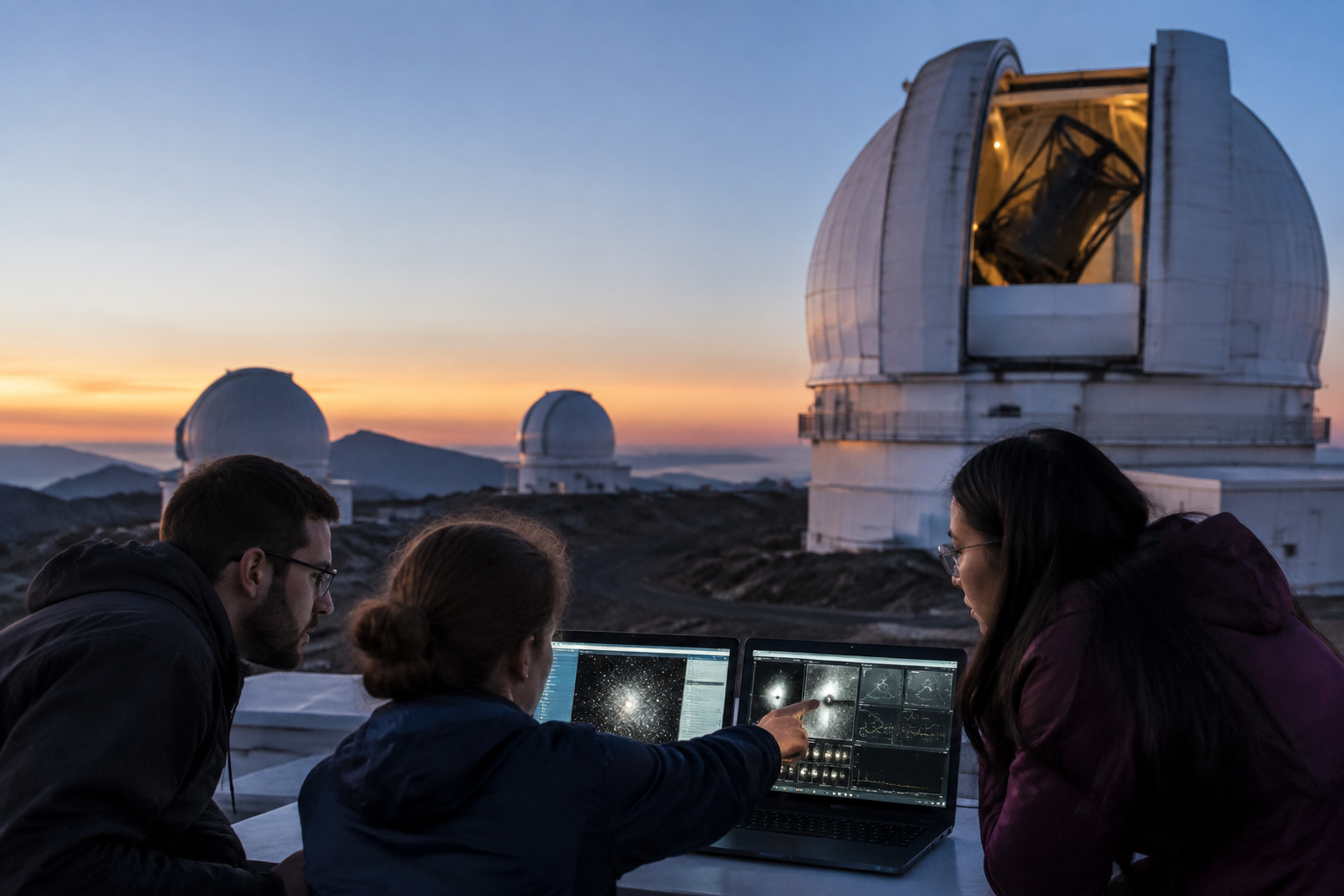
A fictional consortium of 9 university observatories has designed a scheduling pilot that pools unused telescope time across different longitudes. In a simulation using 18,000 observing requests, the shared system completes 22% more short observations than separate local queues. The result is an invented planning exercise, not a reported scientific finding, and assumes compatible instruments and reliable transfers of calibration data.
The harder question is who receives the additional access. A proposed allocation reserves 25% of pooled time for researchers without institutional telescope ownership, with applications assessed under published criteria. Longer projects would keep protected blocks to avoid fragmentation. The pilot's useful contribution would be methodological: testing whether coordination expands meaningful scientific opportunity, rather than merely raising the number of exposures recorded each night.