AI investment · Investing
Blackstone president urges more equity to fund AI buildout
Goldman Sachs estimates global data centre demand will require about $8.5 trillion in capital spending over the next five years, as Blackstone’s president calls for more equity financing amid growing debt risks.
By Elva Norreth · 3 min read
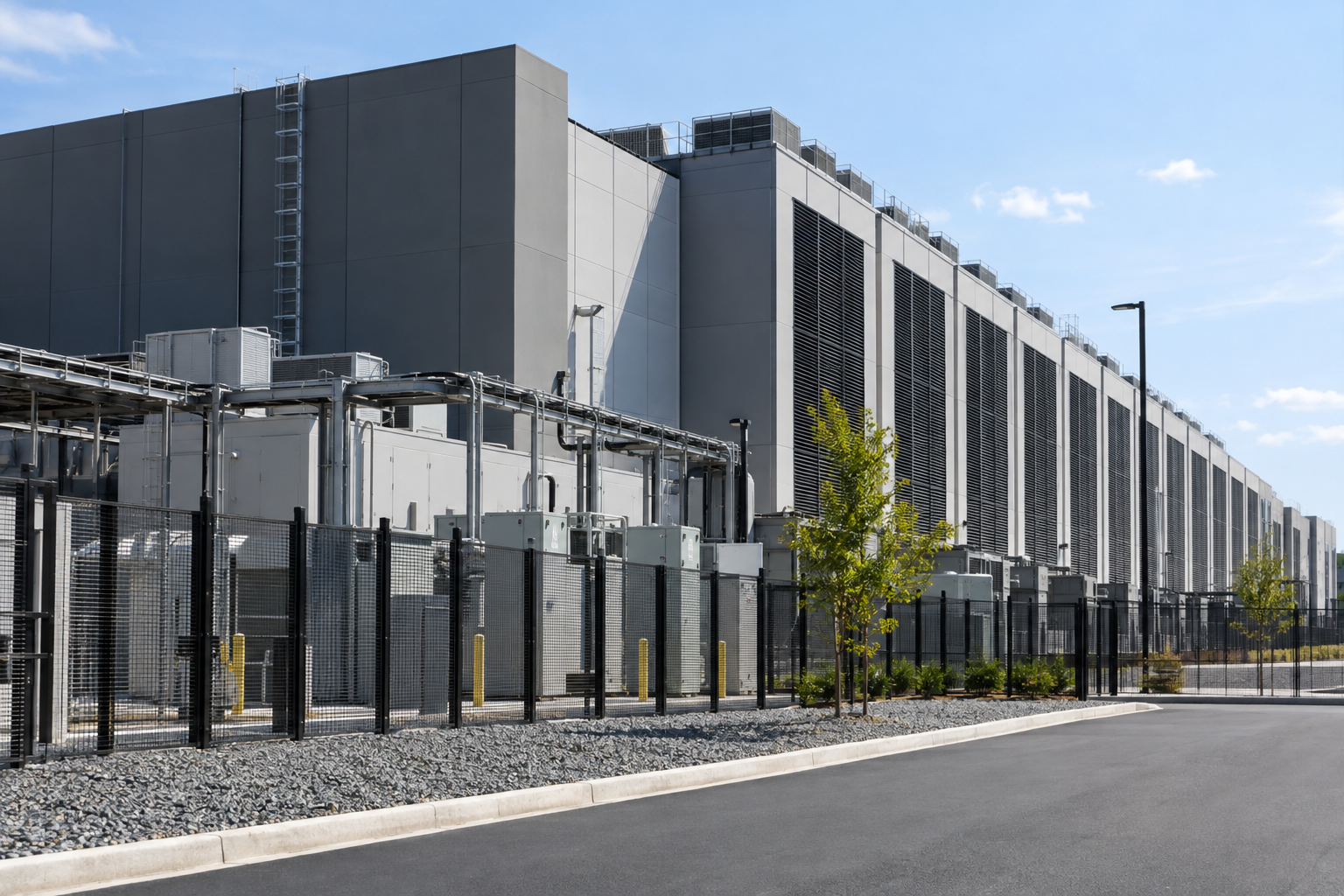
Blackstone’s president is calling for more equity financing to support the artificial-intelligence buildout as debt risks grow, putting the funding mix at the centre of the investment debate. His comments combine caution about how the expansion is financed with evidence of rising AI spending within Blackstone’s portfolio. For investors, the distinction is important: confidence in the technology’s applications is not necessarily an endorsement of every means of paying for its infrastructure.
The scale of that financing challenge is substantial. Global data centre demand will require about $8.5 trillion in capital spending over the next five years, Goldman Sachs wrote in a report Monday. Separately, Blackstone’s president said spending on AI models across its portfolio companies had risen 20-fold over the past year. The figures capture different aspects of the expansion: a forward-looking estimate of infrastructure requirements and an increase in spending by businesses already using AI models.
The Goldman Sachs estimate provides a measure of the investment required to meet global data centre demand, rather than a tally of financing already secured. That distinction matters when assessing the Blackstone president’s call. An anticipated capital requirement does not establish how much should be funded through equity or debt, or which investments will deliver financial benefits. The forecast frames the size of the task without itself resolving the financing question.
Read more: Yvonne Bajela launches $17 million fund for European startups
The president’s call is for more equity in the buildout; increased spending alone does not establish that an investment case is sound. A central issue for investors is whether enthusiasm about future demand is accompanied by an appropriate financing structure. If debt risks are mounting, a large forecast for infrastructure needs cannot, by itself, answer those concerns. The case for supplying capital and the choice of how to supply it need to be assessed separately.
At the same time, Blackstone’s president reported that AI expenditure within the firm’s portfolio was associated with practical business uses. Companies were seeing financial benefits from applications including coding, customer engagement and content creation, he said. The 20-fold increase in spending on AI models over the past year therefore sits alongside an account of business value, rather than simply an expectation of future adoption. That provides a positive counterpoint to his call for more equity financing as debt risks grow.
Those portfolio-company figures nevertheless measure a different activity from the capital spending anticipated for data centres. Spending on AI models and investment in the infrastructure supporting demand should not be treated as interchangeable measures. Nor should the 20-fold increase be read as a forecast for the next five years. For investors, its relevance is as evidence of increased model spending within Blackstone’s portfolio, while Goldman Sachs’ estimate addresses the broader infrastructure requirement over a longer, prospective period.
Read more: U.S. strikes Iranian targets in Strait of Hormuz as Tehran asserts self-defense right
A separate corporate development illustrates how preparations for AI are also entering workforce and restructuring decisions. American Express is cutting 5% of its workforce as it prepares for AI. Chief executive Stephen Squeri said Friday that the company was taking a $336 million restructuring charge in the quarter; American Express had reported third-quarter results earlier that day. The announcement adds a different dimension to the investment debate, showing that AI-related corporate preparations extend beyond spending on models or data centres.
The American Express figures should be considered on their own terms. The 5% figure describes the workforce reduction, while the $336 million figure is a restructuring charge in the quarter, not a stated data centre investment or a measure of spending on AI models. Together with the Blackstone president’s comments, the announcement highlights the range of financial decisions surrounding AI. It does not provide a basis for combining those distinct expenditures into a single measure of the buildout’s cost or returns.
The competing considerations are therefore present within the Blackstone president’s comments: businesses in the firm’s portfolio are increasing model spending and seeing financial benefits, while he calls for more equity to fund the infrastructure expansion as debt risks grow. These are not necessarily contradictory positions. Evidence of business benefits can support the rationale for investment without settling the question of financing. Equally, concern about debt need not amount to a rejection of the business applications he identified or of the demand underlying the infrastructure forecast.
A question for investors is how those considerations are reconciled as the buildout proceeds. Goldman Sachs’ five-year capital-spending estimate sets out the scale of the anticipated requirement; the Blackstone portfolio figures describe spending growth already experienced over the past year. The president’s call puts the emphasis on the mix of capital used to fund the buildout. The investment question is not only whether AI use continues to expand, but whether the funding mix adequately addresses the debt risks accompanying that expansion.