Middle East · World
U.S. strikes Iranian targets in Strait of Hormuz as Tehran asserts self-defense right
The waterway usually carries a fifth of global oil and gas shipments, placing the limited U.S. operation against Iranian targets alongside renewed efforts to end the war.
By Ilan Corven · 5 min read
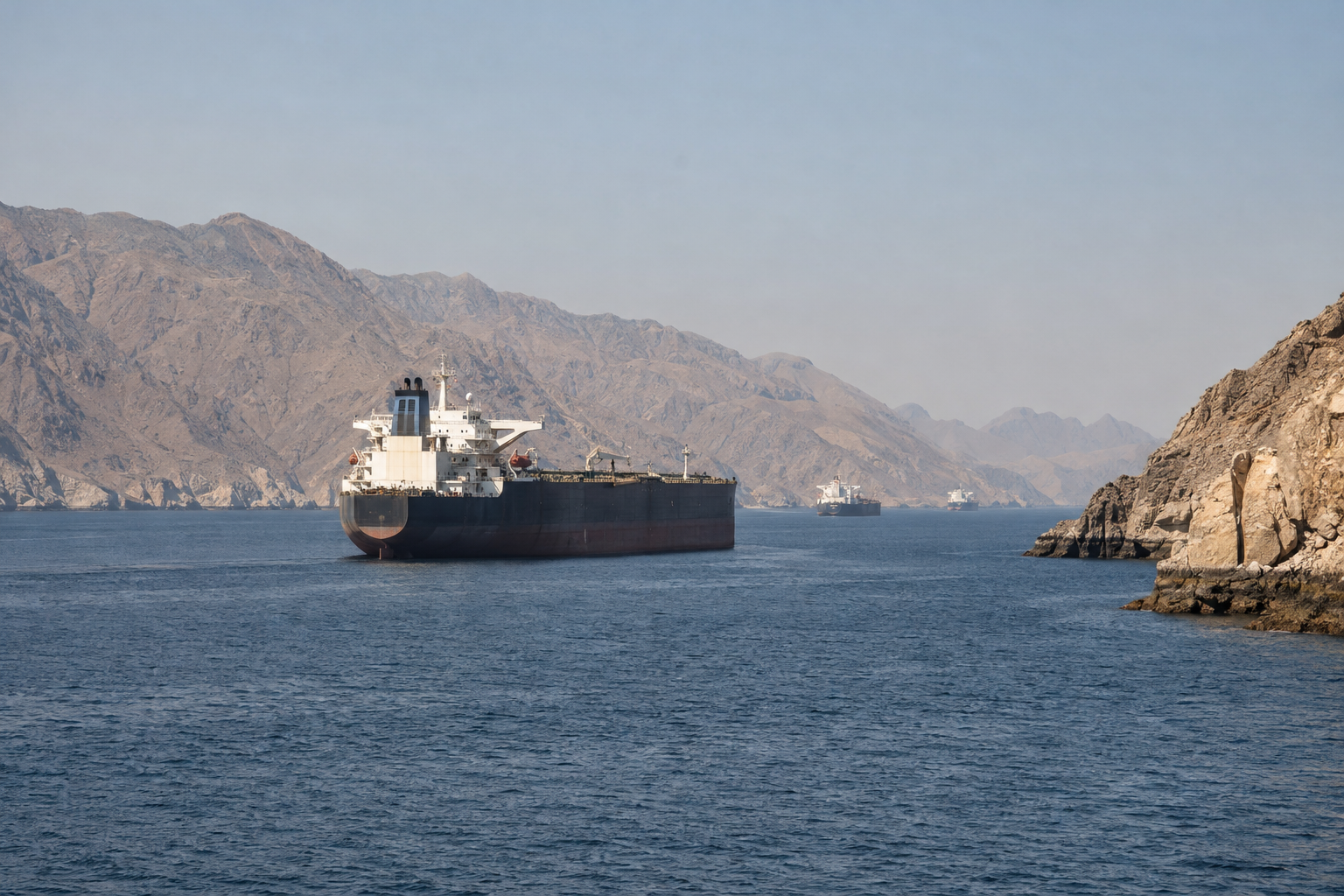
The United States has struck Iranian targets in the Strait of Hormuz in an operation officials described as limited and defensive, prompting Tehran to assert its right to legitimate self-defense. U.S. officials said the strikes responded to Iran’s Islamic Revolutionary Guard Corps firing on an American aircraft. The exchange came as mediators intensified efforts to prevent a return to all-out war and American voters headed into Tuesday’s midterm elections.
U.S. officials identified Qeshm Island as a target of the operation, but the U.S. military had not commented on the strikes. Iran’s Islamic Revolutionary Guard Corps did not address the U.S. operation directly. It said its forces had brought down two U.S. MQM-170 drones south of Qeshm and a U.S. MQ-9 drone east of the strait. Those claims remained separate from the American officials’ account that Iranian fire on a U.S. aircraft had triggered the strikes.
Explosions were reported on Qeshm and Hengam, islands in the strategic waterway, as well as in the nearby mainland area of Bandar Abbas. Reports placed explosions on Qeshm on Monday. The accounts of explosions across those locations did not establish that each had been struck by the United States. The more specific American account identified Qeshm, while describing the overall operation as limited in scope.
Read more: 2,800 troops to join Ukraine-support force’s first exercise in Poland
Iran’s Deputy Foreign Minister Kazem Gharibabadi said Tuesday that Tehran retained “the right to legitimate self-defense” after the U.S. action. Separately, parliament speaker Mohammad Bagher Ghalibaf, Iran’s chief negotiator with Washington, put responsibility for avoiding renewed war on the American side. In a televised speech, he said Iran was prepared for battle while also having delivered a response to the United States. What response he meant was not immediately clear, leaving its relationship to the latest exchange unresolved.
The confrontation unfolded in a passage through which a fifth of global oil and gas shipments usually travel. That figure describes its normal role, rather than the volume currently moving through it. The strait was effectively closed after the war began, due to Iranian missile and drone attacks on commercial vessels and the U.S. naval blockade. The war started when the United States and Israel attacked Iran in February.
The dispute over shipping extends beyond whether the passage can reopen. Iran has insisted on retaining some control over the waterway and began attacking vessels taking a southern route through Omani waters, rather than its preferred course through Iranian waters. The U.S. military has been protecting tankers carrying oil through the strait to help maintain exports from Gulf Arab states. The latest confrontation therefore occurred where American forces are already involved in efforts to keep oil moving.
Read more: Americans vote for control of Congress in major test for Trump
A preliminary agreement reached by Washington and Tehran in June was intended to end the war and restore passage through the strait. It broke down within weeks, following renewed Iranian attacks on shipping and the reinstatement of the American blockade. That sequence provides the backdrop to the current negotiations: an earlier agreement to reopen the route did not produce a lasting settlement, and both the shipping attacks and the blockade returned.
Alongside these military developments, diplomatic efforts were continuing: Iranian Foreign Minister Abbas Araghchi said Monday that intensive negotiations to end the war were under way through Qatari and Pakistani mediators. The diplomatic effort was gathering pace amid concern about a return to broader fighting after the U.S. elections. The talks offered a channel for exchanging proposals even as U.S. officials described a defensive strike and Iranian officials stressed both military readiness and their right to self-defense.
Last week, Iranian negotiators discussed a proposal with mediators under which the Strait of Hormuz would reopen within two days after Washington satisfied Iran’s seven conditions. The reported conditions include ending the naval blockade of Iranian ports and releasing frozen Iranian assets. The two-day period was therefore a conditional timetable, not an announced reopening date. Nor did the proposal, as described, establish that the United States had accepted the demands or that implementation was imminent.
Qatar’s foreign ministry spokesman, Majed al-Ansari, said Tuesday that the American and Iranian sides were examining the ideas and proposals presented to them. Speaking to reporters in Doha, he said both remained committed to negotiations and that Qatar was helping exchange proposals in real time. He also expressed hope that an agreement could be reached. His account pointed to an active negotiating process, but did not announce a settlement or say that the outstanding conditions had been resolved.
For President Donald Trump, the exchange came against falling polling numbers and pressure from within his Republican Party to bring the war to an end. Tuesday’s midterm elections also formed the backdrop to speculation that Washington could launch a larger round of strikes afterward. Asked Monday whether significant attacks would resume after the vote, Trump said “no”. His answer rejected that suggestion, although his other remarks left further military action among the possibilities he was discussing.
Earlier Monday, Trump told reporters he was in “no rush” to intensify strikes against Iran. He argued that American pressure had severely weakened the country financially and asserted that it lacked money and gasoline, while its people were growing tired of the situation. Those were the president’s characterisations of the effects of the conflict, rather than figures establishing Iran’s financial or fuel position. His stated lack of urgency contrasted with the immediate military exchange described by U.S. officials.
Trump also raised the possibility of attacking Pickaxe Mountain, an underground location associated with Iran’s nuclear programme. In an interview on the eve of the midterms, he suggested that such an operation could be completed in “one hour”. That was his assessment of a possible future action, not a description of the duration of the strikes in the strait. The remarks put a potential nuclear-related target into the discussion even as he dismissed the need to escalate quickly.
Israeli Prime Minister Benjamin Netanyahu, meanwhile, pressed Trump during a weekend telephone call to undertake another round of attacks on Iran after the midterms, according to two regional officials. Their account described pressure for further action, not an American decision to carry it out. It added another position to the competing signals surrounding the election: Israeli advocacy for renewed strikes, Trump’s denial that significant strikes would resume after the midterms and continuing mediation between Washington and Tehran.
What comes next depends on decisions that the latest statements did not settle. The American officials’ description of a limited operation did not resolve the wider dispute over shipping, the blockade or Iran’s conditions for reopening the strait. Tehran’s assertion of self-defense likewise came alongside its participation in negotiations. With Qatar reporting continued exchanges of proposals, the immediate question is whether that diplomatic channel can produce an agreement while the parties remain engaged in military confrontation.