Business · Business
CBRE turns to data centers as higher rates weigh on dealmaking
Critical infrastructure revenue rose 80% year-over-year in the third quarter, helping CBRE offset pressure on its real estate capital-markets business.
By Tobin Ellmere · 4 min read
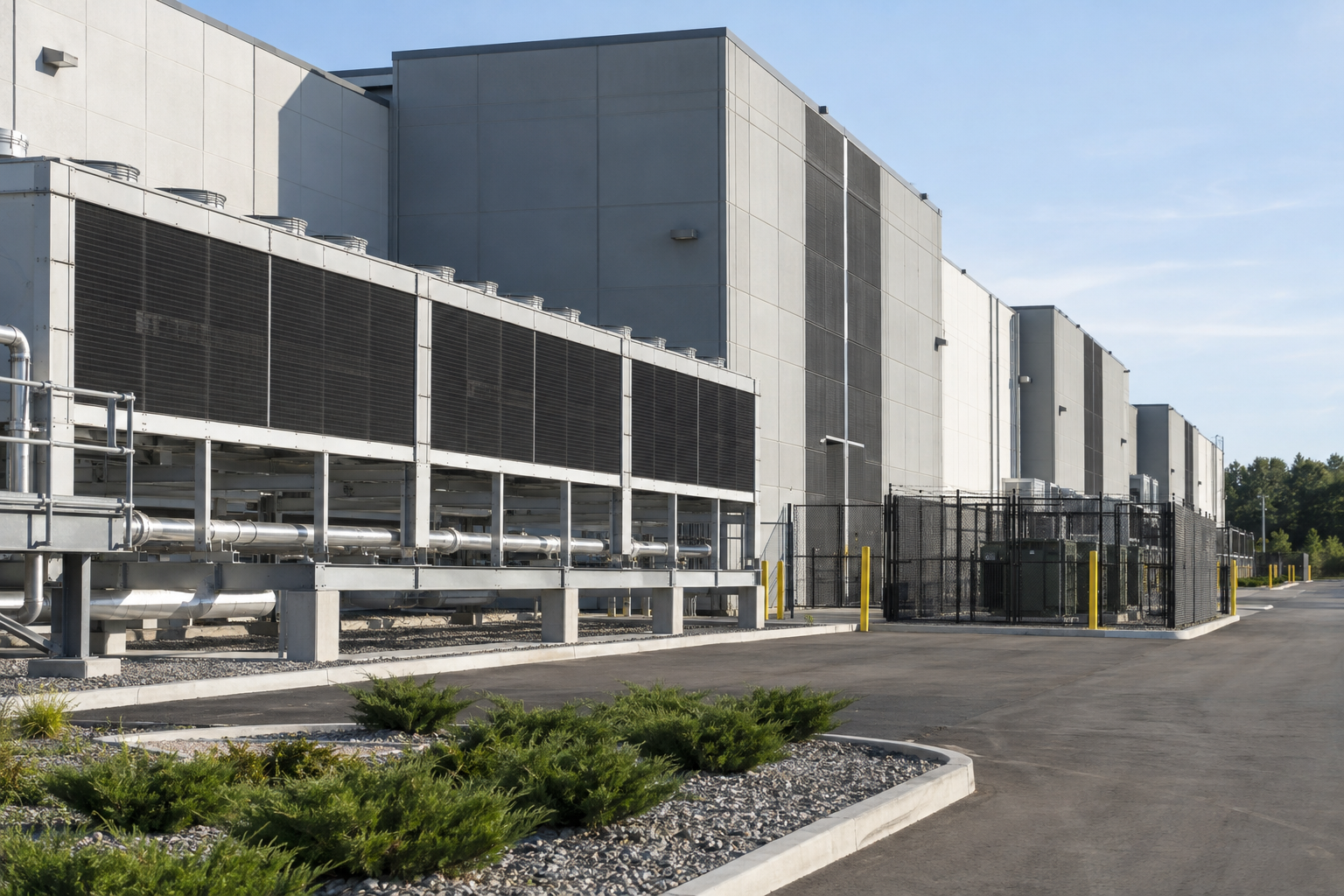
CBRE is relying on data centers and infrastructure services to sustain growth as higher interest rates impede commercial property transactions, leaving its expanding infrastructure operations to offset weakness in dealmaking. The Dallas-based company reported higher third-quarter revenue and profit on Thursday, but executives described a more difficult environment for sales, financing and development. Its outlook rests partly on further acquisitions and demand for infrastructure work, even as management acknowledges that data center construction could face constraints of its own.
5B, up 13% year-over-year, according to CBRE’s earnings report. Net income was $443M, an increase of 22% from Q3 2025, while free cash flow rose from $779M to $927M. Those gains came alongside an 80% year-over-year increase in critical infrastructure revenue, which includes data center and related energy work. Chief Financial and Investment Officer Emma Giamartino said infrastructure services and data centers were providing a substantial counterweight to pressure on the company’s real estate capital-markets operations.
The backdrop has become less favourable since the Federal Reserve raised rates in mid-September, its first increase since 2023. Chief Executive Bob Sulentic said investment sales and management, mortgage origination and development were facing increasing pressure. The company expects transaction activity, particularly in capital markets, to weaken through the second half of next year. Sulentic described transactions being renegotiated after contracts had been agreed, prospective deals failing to advance and some owners refinancing properties that CBRE had expected would be sold.
Read more: Initial jobless claims fall to 194,000 as low-fire trend continues
Uncertainty over the direction of borrowing costs is also affecting activity, rather than the level of rates alone, Sulentic said. He suggested that uncertainty could ease in the second half of next year, while cautioning that the outcome remained unknown. Not all of the quarter’s weakness was attributed to financing conditions: U.S. office leasing revenue fell 2% year-over-year, which Sulentic linked to two large transactions moving into the fourth quarter. That distinction leaves the timing of those deals relevant to the next reporting period.
Infrastructure growth reflects both demand and acquisitions. CBRE attributed much of the increase in critical infrastructure revenue to demand for data center services and its $1.2B purchase of Pearce Services last year. Across infrastructure services, revenue increased 50% to $4.5B on a trailing 12-month basis. The figures underline the importance of the acquisition programme to the company’s changing business mix: the growth is not solely the result of stronger activity within existing operations, but also of adding service providers in data centers and infrastructure.
Despite the overall gains, CBRE expects revenue growth in advisory services and building operations and experience to fall short of earlier projections of 20% and 25%, respectively. The company cited higher-rate pressure on capital markets and reduced expectations for enterprise facilities management. It nevertheless retained its 2026 earnings-per-share guidance of $7.80 to $7. Shares were down 3.5% by early Thursday afternoon, compared with a 1.3% decline in the S&P 500, despite the unchanged earnings outlook.
Read more: Russian strikes kill 7 in Ukraine amid push to resume peace talks
Building operations and experience also faces contract-specific difficulties that could weigh on fourth-quarter earnings. Sulentic said CBRE was reviewing and addressing troublesome accounts, including two arrangements being restructured because the company could not deliver the contracted services under their existing terms. He characterised the contracts as particularly large and complex and said the company would change aspects of its approach in response. Those issues represent a separate operational challenge alongside the interest-rate pressures affecting property transactions and the lower expectations for facilities management.
The data center outlook carries risks, too. Concerns about an artificial intelligence bubble have raised questions about the profitability of the sector’s expansion, although CBRE expects its own business to continue growing. Sulentic acknowledged that the volume of new data center construction could come under pressure. His assessment was more qualified than an assumption of uninterrupted U.S. growth: he said interest rates or political conditions could slow domestic activity, while arguing that growth outside the U.S. could accelerate and provide further opportunities for CBRE.
The planned acquisition of data center infrastructure provider Onnec Group Ltd. is central to that international positioning. The transaction is expected to close by the end of this year and is a significant contributor to projected infrastructure revenue. The company forecasts total infrastructure services revenue of nearly $7B in 2027, representing growth of more than 40% from 2026. That business extends beyond data centers to construction oversight for transportation and energy assets, alongside project management and data center sales, leasing and financing services.
CBRE also projects earnings growth of 15% next year, with executives attributing part of that expectation to planned acquisitions, particularly in data centers in the U.S. and overseas. Sulentic described a fragmented market with scope for further expansion despite CBRE’s growing size relative to other providers. The next tests are completing the Onnec purchase, resolving the complex facilities contracts and delivering the projected infrastructure growth while capital-markets activity remains under pressure. Management’s outlook depends on those businesses continuing to offset the effects of higher rates.