Europe · World
Russian strikes kill 7 in Ukraine amid push to resume peace talks
Ukraine’s air force reported shooting down 181 Russian UAVs overnight as attacks on Kyiv continued despite renewed US efforts to restart peace negotiations.
By Ilan Corven · 5 min read
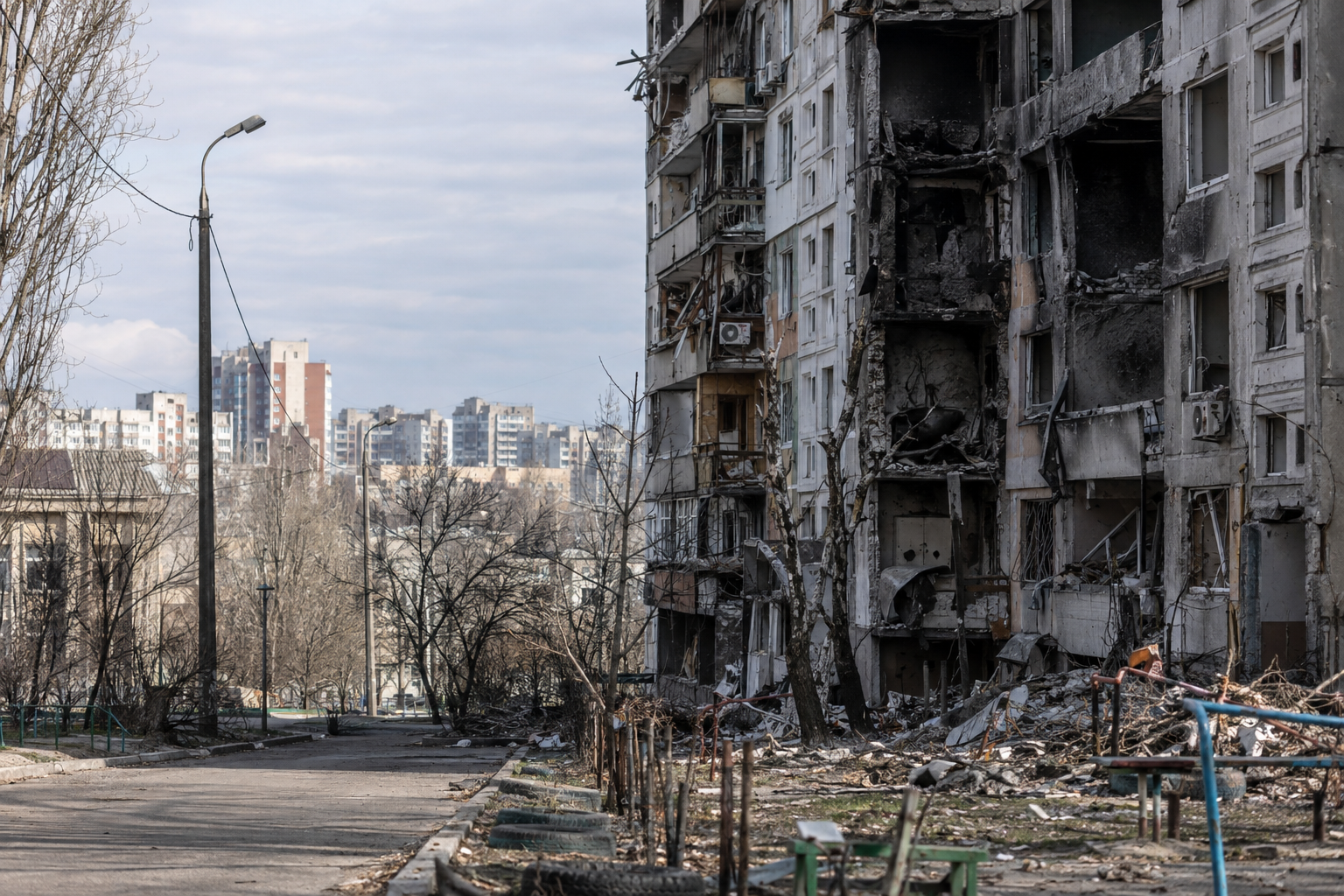
Russian strikes killed 7 people in Ukraine as missile warnings sounded over Kyiv, underscoring the distance between renewed diplomatic engagement and a halt to the fighting. The attacks followed a meeting between US envoy Witkoff and Russian President Vladimir Putin, after which President Donald Trump expressed optimism about prospects for ending the conflict. Yet no breakthrough was announced, and Russia’s willingness to return to negotiations had not translated into an end to attacks on the Ukrainian capital.
Ukraine’s air force said on Thursday morning, October 22, 2026, that it had shot down 181 Russian UAVs overnight, while warning that strike drones remained in the air. Earlier, it had alerted residents to additional ballistic missiles heading towards Kyiv and told them to remain in shelters. The death toll covered Russian strikes in Ukraine, rather than a confirmed count for the capital alone. The interception figure likewise described the overnight air-defence response, not the total number of weapons launched or the number that reached their targets.
Missiles had also hit Kyiv after Russia agreed to a US call to resume Ukraine peace talks, placing the latest attacks within a continuing diplomatic effort rather than after a completed negotiation. The distinction matters: agreement to discuss the war is not an agreement to suspend it. The developments showed that discussion of possible talks and military operations were proceeding alongside each other, with neither the US outreach nor Moscow’s stated readiness to negotiate providing an immediate reprieve for Kyiv.
Read more: Macron says some protests will be banned; minister reports 217 jailed
Following the Putin-Witkoff meeting, Trump said the sides were “maybe now the closest we’ve been” to ending the conflict. His assessment offered an optimistic reading of the diplomatic opening, but no breakthrough was announced. The continuing strikes left that optimism set against a more immediate reality for Ukrainians: air-defence operations, missile alerts and instructions to shelter. The reported diplomatic outcome was renewed discussion of negotiations, rather than an agreement that would stop those attacks.
The Kremlin said it was willing “in principle” to resume trilateral talks involving Russia, Ukraine and the US. It raised the possibility of holding them in mid-November, after the US midterm elections. Both the qualification and the tentative timing leave an important distinction between willingness to participate and a confirmed meeting. The reported announcement did not establish a firm date for talks, while the proposed window placed a possible meeting beyond the immediate period in which Ukraine was reporting fresh strikes and casualties.
Ukraine also supported a return to trilateral negotiations. President Volodymyr Zelenskyy said Kyiv wanted a meeting as soon as possible, expressing urgency alongside the possible mid-November timetable outlined by the Kremlin. Those statements do not by themselves rule out an agreement on a meeting, but they do not establish a settled schedule. The sides’ stated support for the same negotiating format therefore represents a point of procedural overlap, not evidence that they have resolved when discussions will begin or what they will deliver.
Read more: Warren warns of food insecurity as advocates seek delay to SNAP changes
The overnight figures illustrate the continuing demands on Ukraine’s air defences even as officials discuss diplomacy. The air force’s report that 181 Russian UAVs had been shot down described interceptions during the night, while its warning that drones were still airborne indicated that the threat had not ended when the statement was issued. That combination is important when assessing the figures: a reported interception count can document defensive activity without establishing that an attack is over or that all incoming weapons have been stopped.
The ballistic-missile warning presented a separate immediate concern for Kyiv residents. The air force referred to “more ballistic missiles towards Kyiv” and instructed people to stay in shelters during the early hours. Its later UAV figure should not be read as an accounting of those missiles, because the statement identified the intercepted weapons as UAVs. Together, the alerts and the morning announcement described continuing aerial threats, but they did not provide a complete breakdown of launches, interceptions and impacts across all weapon types.
Russia also reported drone attacks directed towards Moscow and the surrounding region. Moscow Mayor Sergei Sobyanin said two people had been wounded during barrages involving 630 drones headed towards the region, with 163 approaching the capital city. He described the attacks as mostly intercepted. Those figures were presented by the Russian official and concerned a different geographical area from the Ukrainian air force’s overnight report. They cannot be treated as a directly comparable measure of the attacks that killed people in Ukraine.
The casualty reports likewise described different outcomes: deaths in Ukraine and injuries reported by Moscow’s mayor. They establish that the diplomatic exchanges took place amid continued attacks, but do not offer a common basis for measuring the overall scale of harm on either side. In Ukraine, the reported fatalities gave the latest strikes a direct human cost beyond the interception statistics. In Russia, Sobyanin’s statement combined a claim of extensive interception with an acknowledgement that people had nevertheless been wounded.
The US diplomatic effort also comes alongside a separate economic initiative involving Russia. Trump reached a fresh agreement with Moscow to sell diesel, aimed at lowering fuel prices that had increased during the wider Middle East conflict. The arrangement drew criticism from Kyiv and several European governments. It adds another point of contention to Washington’s engagement with Russia, even as the US seeks to bring Moscow and Kyiv back into a shared negotiating process over the war.
The diesel agreement and the proposed peace talks have different stated purposes, and the available account does not establish that either depends on the other. The fuel arrangement is intended to address prices, while the trilateral initiative concerns efforts to end the conflict. Their coexistence nevertheless shows the range of issues involved in US dealings with Moscow. Criticism from Ukraine and European governments also makes clear that the fuel agreement has drawn objections, distinct from Kyiv’s support for renewed negotiations.
For now, the differing assessments centre on what diplomatic willingness means in practice. Trump has portrayed the moment as potentially close to an end to the conflict; the Kremlin has offered qualified support for renewed talks; and Zelenskyy has pressed for a meeting as soon as possible. None of those statements amounts to an announced halt in hostilities. The strikes on Kyiv therefore illustrate the gap between expectations surrounding diplomacy and any concrete change in military activity.
The next question is whether the parties turn their stated support for trilateral negotiations into a confirmed meeting, and whether that process produces an agreement affecting the fighting. Mid-November remains a possibility raised by the Kremlin rather than a settled timetable, while Ukraine says it wants a meeting as soon as possible. With no breakthrough announced, the latest developments leave the central contrast intact: officials are discussing a route towards ending the conflict while Ukrainian residents continue to face missile warnings and overnight drone attacks.