AI strategy · Opinion
China’s AI ambitions reach beyond the contest with Silicon Valley
Major U.S. technology companies’ capital expenditures exceeded $400 billion in 2025, compared with $63 billion in China, but Beijing’s strategy also centres on industrial deployment.
By Editorial Board · 4 min read
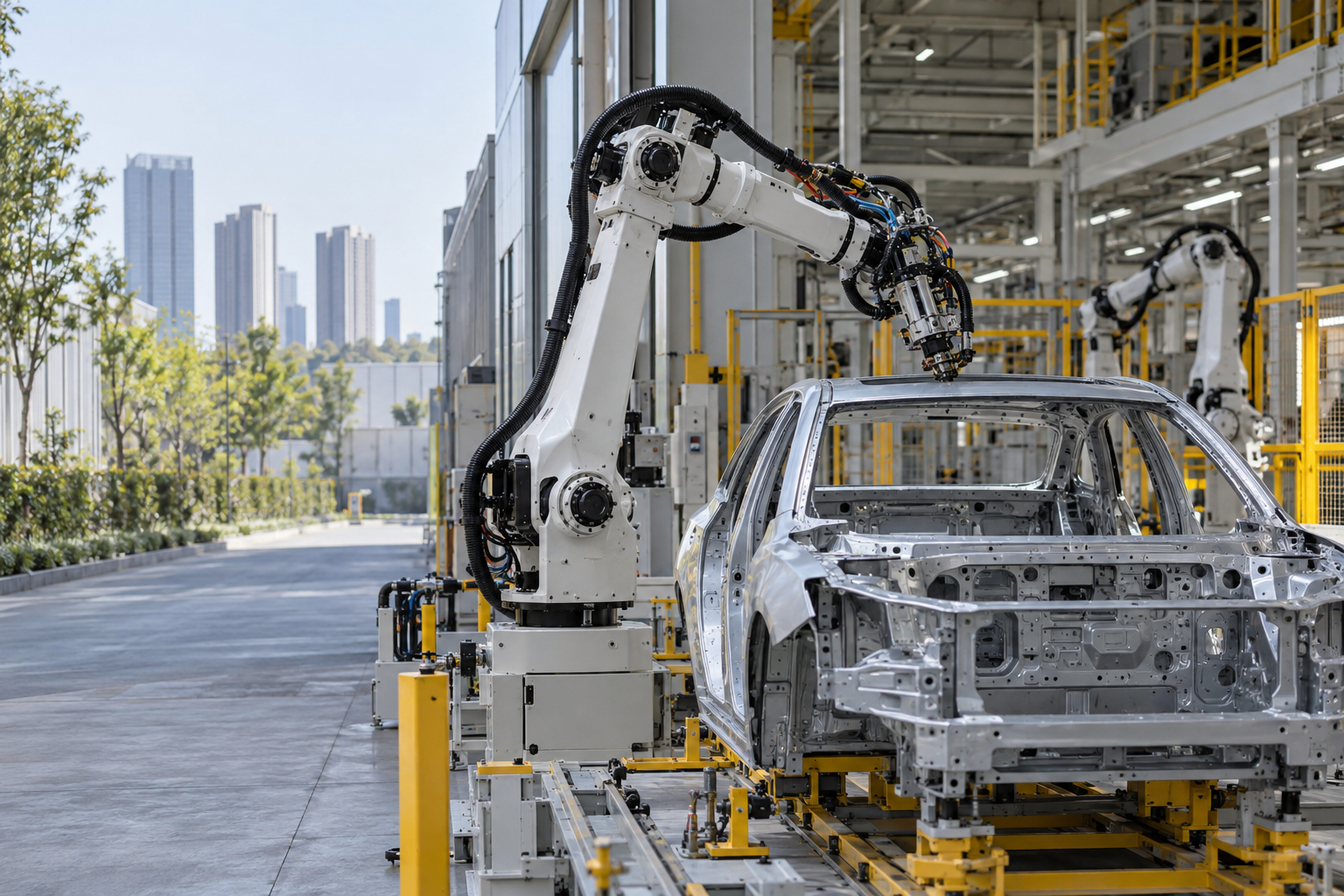
China’s artificial intelligence ambitions are not confined to producing models that compete with Silicon Valley’s. Its leaders see the technology as a means of advancing scientific development and reshaping industry, with competition extending into semiconductors, energy, communications and manufacturing. That broader objective suggests a wider question facing Beijing: not simply whether Chinese developers can match American models, but whether deploying AI across the economy can create advantages that a comparison of model capabilities alone would miss.
The financial imbalance nevertheless provides an essential starting point. Capital expenditures by major U.S. technology companies exceeded $400 billion in 2025, compared with $63 billion in China. The United States also retains advantages in frontier models, advanced semiconductors, private capital, cloud infrastructure and developer ecosystems. Those strengths make it difficult to judge China’s prospects solely by the breadth of its ambitions. Equally, the spending figures do not themselves establish how effectively either country will translate technological investment into industrial applications.
President Xi Jinping set out China’s approach in April 2025, calling for technological self-reliance and application-oriented development. Beijing’s objective includes both building domestic AI models and improving them through use in manufacturing and government administration. The rationale for this approach is embedded in that relationship: deployment is intended to contribute to development, rather than merely follow it. Under this strategy, practical use is part of the intended route towards stronger technology, not simply an outlet for domestic models.
Read more: Contemporary art-market confidence reaches 56 out of 100, but durability remains unproven
That is a different emphasis from treating leadership in the most advanced models as the decisive measure of national success. For China’s leaders, AI’s significance lies in its potential to transform industry as well as advance science. Their strategy therefore invites assessment against a wider set of outcomes. A model’s capabilities matter, but so would evidence that its use improves manufacturing or public administration. The distinction is important: the ambition to achieve those improvements is established, while their scale is not demonstrated by the available figures.
A counterweight to those ambitions is the breadth of the existing American advantages. The United States retains advantages not only in frontier models but also in several of the resources and systems surrounding them. Advanced chips, cloud infrastructure, capital and developer ecosystems are relevant to the same development process that China wants to strengthen through deployment. An application-focused strategy therefore does not remove the significance of those capabilities. Beijing’s emphasis offers a potential route to progress, but it is not evidence that the American advantages in those areas have been overcome.
The capital expenditure comparison sharpens that tension without resolving it. The figures describe spending, not a direct measurement of model quality, manufacturing performance or administrative effectiveness. They support the case that American technology companies possess substantial investment capacity. They cannot, on their own, establish the eventual value of each country’s applications. A balanced reading therefore avoids both extremes: dismissing the spending gap because China has a different strategy, or assuming that a larger investment total settles every dimension of AI competition.
Read more: U.S. strikes Iranian targets in Strait of Hormuz as Tehran asserts self-defense right
Energy and communications further broaden the analytical frame. Both sit within the arena of U.S.-China AI competition, alongside semiconductors and manufacturing. Yet the available material gives no sector-specific investment or performance figures for them. Their inclusion establishes the reach of the contest, not which country has secured an advantage in each field. Any claim that China’s AI ambitions already amount to leadership across these sectors would go beyond the evidence, just as a Silicon Valley-only comparison would leave part of the stated contest unexamined.
Manufacturing and government administration have a more explicit place in Beijing’s development approach: they are settings in which China intends to deploy and refine domestic models. This makes the relationship between technological capability and practical experience central to evaluating the strategy. The relevant question is whether use produces improvements that strengthen the models and their applications. That remains a question to test, rather than an outcome to assume. The policy direction identifies where Beijing expects progress to come from; it does not quantify the benefits.
The competing cases consequently operate on different kinds of evidence. China’s leadership offers a strategic proposition linking self-reliance, deployment and industrial transformation. The American position rests on established advantages in technology, infrastructure, finance and developer ecosystems, reinforced by the capital expenditure comparison. Neither should be substituted for the other. A statement of national purpose is not a performance measure, while evidence of current strengths does not, by itself, determine how successfully a rival strategy might develop.
What comes next is a test of conversion: whether China can turn application-led development into demonstrable capability, and whether American resource advantages translate into sustained leadership across the wider contest. Energy, communications and manufacturing belong in that assessment alongside models and chips. For now, the evidence supports a narrower conclusion than either inevitable Chinese ascendancy or an unassailable American lead. Beijing is pursuing a broader industrial objective while the United States retains advantages in key technologies, financial resources and supporting infrastructure.