Colombia · Art
Colombia’s president removes museum works he says promote communism
De la Espriella’s removal of works from the National Museum comes alongside his stated opposition to what he calls “atheist social communism” in cultural institutions.
By Calla Brenmoor · 3 min read
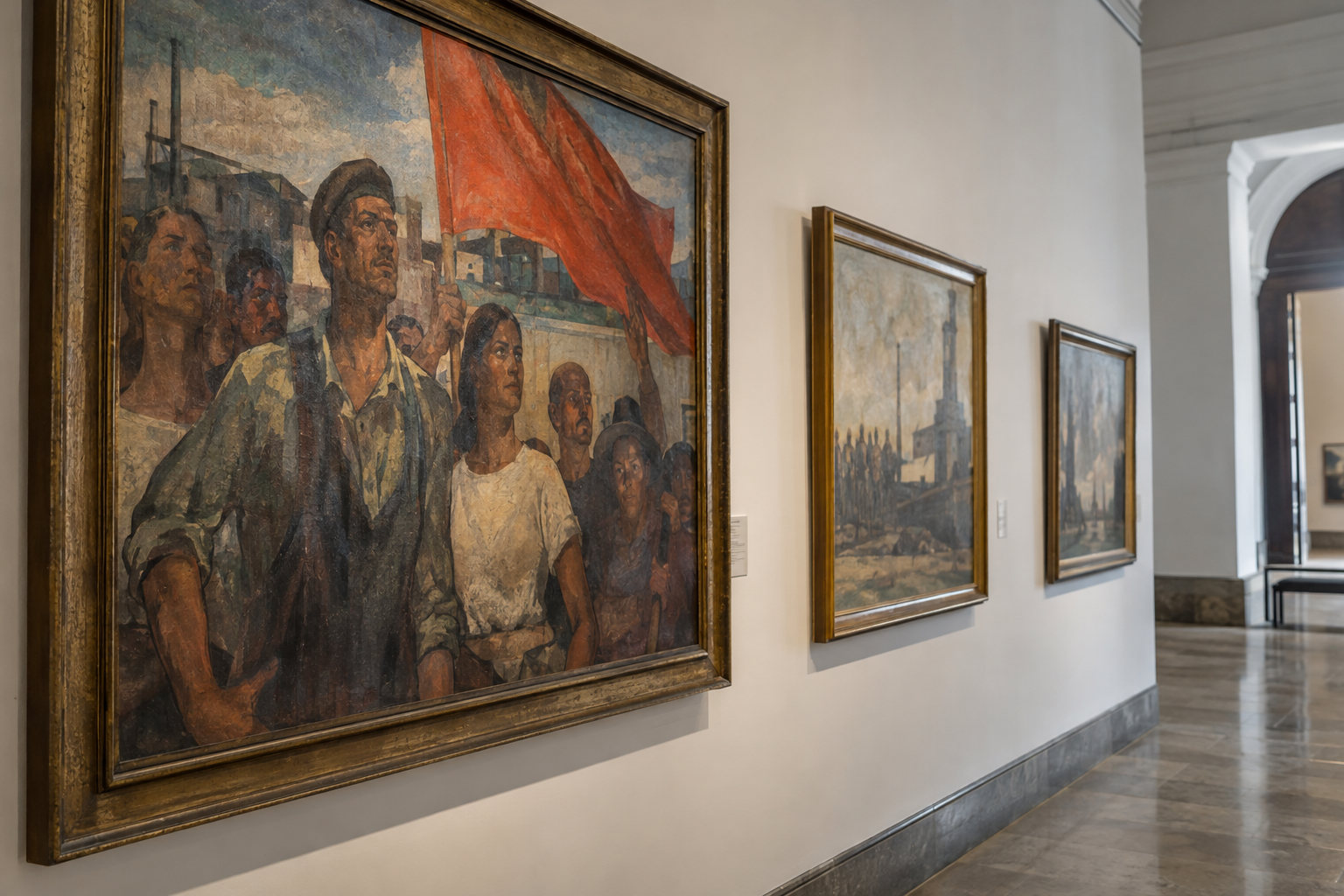
Colombian President De la Espriella has removed works from the National Museum described as promoting communism, bringing his ideological position directly into decisions about what the institution displays. The conservative president, an ally of Trump, said last week that he wanted to stop cultural institutions from being taken over by what he termed “atheist social communism”. His intervention makes the museum’s contents a matter of presidential political judgment.
The available account does not identify the works removed or give their number, leaving the scale of the intervention unclear. It also provides no inventory against which to assess how much of the museum’s display has been affected. The central development is therefore a presidential removal of works on ideological grounds, rather than a quantified change to the collection. There is no basis in the information available for describing the action as either limited or comprehensive.
De la Espriella’s stated concern reaches beyond the National Museum. His reference to cultural institutions more broadly expresses a wider objection to what he regards as an ideological threat. That language provides context for the action: the president presented his broader objective as preventing an institutional takeover, rather than simply expressing dislike of particular works. The account does not, however, establish that the influence he described amounts to such a takeover.
Read more: Art Basel Paris to close at 7 p.m. Friday ahead of protests
His description also joins a religious objection to a political one. The word “atheist” forms part of the president’s own formulation, alongside his reference to communism. That formulation describes his broader concern, not independently established properties of the unidentified works. Without their titles, subjects or accompanying interpretation, it is not possible to assess the description of the works as promoting communism. Nor can the available information establish whether the objection concerns the works themselves or the way they were presented within the museum.
That distinction matters to the curatorial question raised by the removals. Displaying a work that addresses a political ideology is not necessarily the same as endorsing that ideology; the purpose and context of its presentation would be relevant to such an assessment. Here, however, the account describes the removed works as promoting communism without identifying them or explaining that characterisation. The information available offers no detailed explanation of how the president distinguished political subject matter from political advocacy in reaching his judgment.
The intervention puts two different kinds of judgment alongside each other: a president’s assessment of an ideological threat and the question of what belongs in a museum. The first is explicit in De la Espriella’s remarks about cultural institutions. The second remains largely unexplained, because no account of the selection process or the treatment of individual works is provided. The removals demonstrate presidential intervention, but the account does not establish what curatorial reasoning, if any, accompanied the decision.
Read more: Russian strikes kill 7 in Ukraine amid push to resume peace talks
De la Espriella’s conservatism and alliance with Trump provide political context, but neither supplies missing evidence about the museum’s contents. Those affiliations should not be treated as proof of a broader cultural programme beyond the action and stated intention described here. Equally, the reference to cultural institutions cannot by itself establish that other collections have already been affected. The National Museum is the institution identified in the account, and the extent of any action elsewhere is not specified.
The president’s broader objective is clear enough to report: he says he wants to prevent an ideological takeover. An assessment of the museum decision would require examining whether the excluded works actually promote communism, and whether removal is justified by their content. No response from museum representatives or the affected artists is included in the available information. It would therefore be premature to describe their positions, claim a consensus against the decision or suggest that they support it.
The immediate uncertainty concerns both the objects and the decision-making process. Identifying the removed works would allow a more concrete assessment of their characterisation; explaining the criteria would clarify whether the objection applies to particular presentations or to communist subject matter more generally. Neither question can be resolved from the president’s broad statement of intent. These limits also prevent an assessment of how the removals change the museum’s account of the subjects represented in its displays.
What follows is not specified: the available account gives no timetable for further changes or explanation of whether the removed works could return. The president’s wider warning nevertheless leaves an unresolved question about how his ideological position will shape subsequent decisions at cultural institutions. For now, the reported action is at the National Museum, where De la Espriella has removed works described as promoting communism. The scope and criteria of that intervention remain unclear.