Southeast Asia · World
Conservation groups rescue dozens of orangutans from Indonesian wildfires
A joint rescue operation reported evacuating 51 critically endangered orangutans in West Kalimantan as fires on Borneo and Sumatra spread smoke across the region.
By Ilan Corven · 3 min read
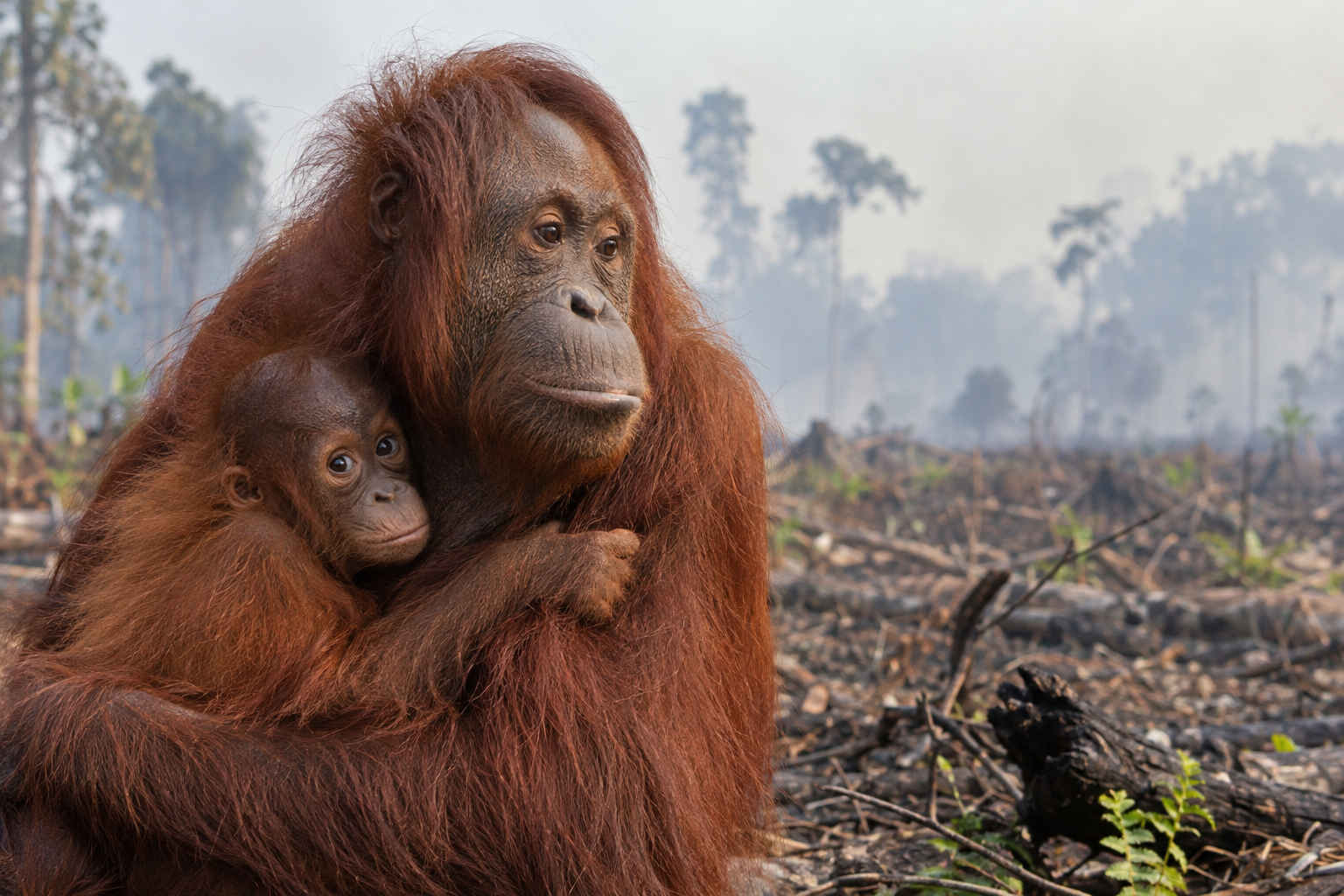
Conservation groups have rescued dozens of critically endangered orangutans from wildfires sweeping across Indonesia, as efforts to protect wildlife unfold alongside a regional pollution problem. The rescues include an operation in West Kalimantan involving the provincial conservation agency and Indonesian non-profit YIARI. Fires on Borneo and Sumatra, intensified by the El Nino weather phenomenon, continue to release smoke, with the effects extending beyond Indonesia to major cities in neighbouring countries.
The West Kalimantan conservation agency and YIARI reported that a team evacuated 51 orangutans from locations across the province. The account gives the evacuation period as August 6 to October 19, but its October 18 publication date leaves the chronology unclear. Separately, figures from Indonesia’s forestry ministry suggested that rescues across Kalimantan over recent months could number as many as 96. The provincial operation provides a specific account of evacuations, while the ministry’s figures provide a broader, provisional tally for Kalimantan.
The two figures need to be read against their different geographical coverage and descriptions of timing. The 51 evacuations concern West Kalimantan and a stated reporting period whose end date is unclear; the possible total of 96 concerns Kalimantan more broadly over recent months. They are not presented as separate groups of rescued animals and should not be added together. Nor do the available details establish how the provincial tally fits within the ministry’s wider estimate, leaving the relationship between the figures unresolved.
Read more: Iran says two tankers struck mines amid sharp fall in Hormuz oil flows
The animals’ critically endangered status gives the evacuations particular conservation significance, but the rescue counts are not a measure of the fires’ full impact on orangutans. They record animals brought out of affected locations, rather than the number exposed to fire or smoke. The information provided does not give an overall count of orangutans affected, killed or still requiring assistance. It therefore supports a clear account of dozens being rescued, but not a complete assessment of losses or remaining needs.
The fires are burning on both Borneo and Sumatra, with El Nino identified as an intensifying factor. That wider setting matters when interpreting the rescue announcements: the reported evacuations concern Kalimantan, whereas the fire emergency described extends across both islands. The available figures do not provide a corresponding rescue tally for Sumatra. As a result, the Kalimantan numbers offer evidence of conservation activity in one part of the emergency, rather than a comprehensive inventory of wildlife operations across Indonesia.
Smoke has also made the fires a cross-border air-quality concern. Swiss-based air-quality monitor IQAir again placed Singapore and Kuala Lumpur among the world’s top five most polluted major cities as the blazes continued emitting smoke. That ranking gives a separate indication of the emergency’s regional reach, beyond the locations where conservation teams are evacuating animals. It does not, however, quantify conditions at the rescue sites or establish the level of smoke exposure experienced by the orangutans being moved.
Read more: Egypt considers assistance as Saudi Arabia reports incoming fire
The urban pollution rankings and wildlife rescue figures describe different consequences of the same continuing fires. One tracks the position of major cities in an air-quality comparison; the other counts animals evacuated by conservation teams. Neither supplies a measure of the area burned or the duration of the emergency. Taken together, they show why the situation is not solely a local conservation concern, while leaving substantial limits on what can be concluded about its overall scale.
A separate operational concern is aviation safety. A ministry statement warned that haze can impair visibility near airports, potentially causing delays, disruption or cancellations, and said safety governs operational decisions. That warning described possible consequences rather than providing a tally of flights affected. It adds another dimension to the emergency without establishing the extent of any actual interruption to air travel. The available material does not identify particular airports or services where disruption has occurred.
The conservation announcements and the aviation warning reflect different immediate priorities, rather than a documented dispute over the response. For the conservation agency and YIARI, the reported outcome is the evacuation of endangered animals; for aviation operations, the stated consideration is safety in reduced visibility. No competing account of the rescue totals is provided. The distinction is instead between a specific provincial count and a broader ministry figure expressed as a possible total, requiring caution about treating both as equally definitive.
What follows for the rescued orangutans remains unspecified in the available announcements. They do not set out the animals’ destinations, subsequent care or arrangements for release, nor a timetable for further evacuations. With fires continuing to emit smoke, the immediate picture remains one of wildlife rescue alongside wider environmental and operational pressures. Further details would be needed to establish both the final scale of the rescue effort and the outcomes for the animals already evacuated.