Middle East · World
Iran says two tankers struck mines amid sharp fall in Hormuz oil flows
Oil flows through the Strait of Hormuz fell to 2.9 million barrels on October 11 as a shipping disruption pushed up global energy prices and inflation.
By Ilan Corven · 4 min read
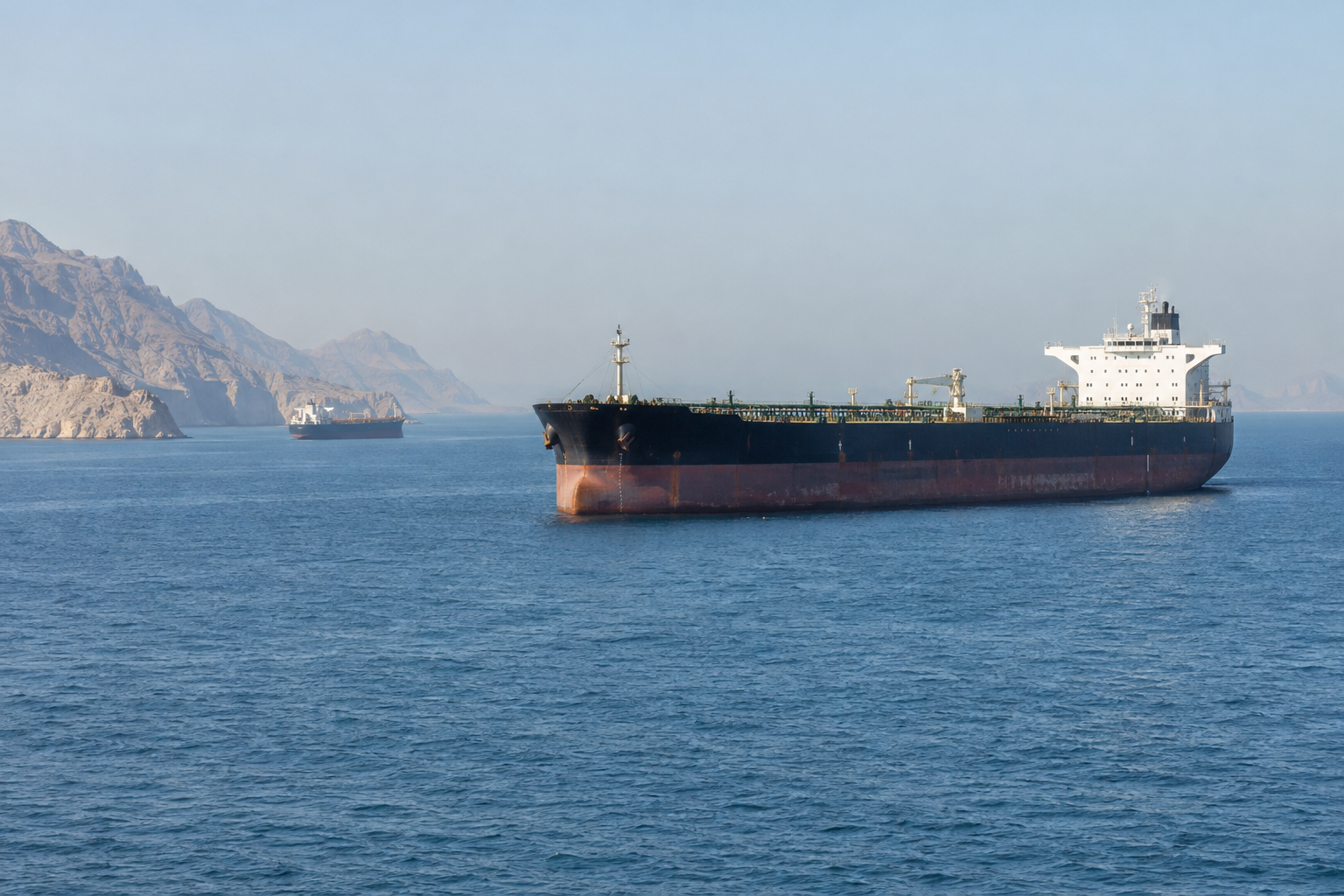
Iran says two tankers caught fire after striking mines in the Strait of Hormuz, describing a threat to vessels amid a shipping disruption affecting global energy prices. The Iranian account places mine strikes at the centre of the tanker incidents, but the available information does not independently establish what happened. The account describes a security dimension alongside a disruption whose economic effects are visible in sharply reduced oil movements and rising prices.
8 million barrels of oil passed through the strait on October 8, compared with only 2.9 million on October 11. Those readings show a pronounced reduction in the volume moving through the waterway. The disruption has pushed up global energy prices and inflation, extending its consequences beyond the tankers themselves. No figures are provided for the size of the price increases or the resulting inflationary effect.
The available material does not identify the vessels, their owners or their operators, and it provides no information about their crews. Nor does it establish the extent of damage or whether either tanker was able to continue its voyage. Those gaps leave the immediate operational consequences of the reported incidents unclear, even as the broader reduction in oil traffic is documented by Kpler’s figures.
Read more: Egypt considers assistance as Saudi Arabia reports incoming fire
The Iranian account and the oil-flow data describe different aspects of the situation and should not be treated as interchangeable evidence. Iran’s account concerns the reported cause of fires aboard two vessels. Kpler’s readings concern the amount of oil passing through the strait on specified dates. Together, they show a reported danger to shipping alongside a substantial disruption in oil movements. They do not, on their own, establish how much of that disruption was caused by the reported mine strikes.
The chronology is particularly important. The available account does not give a date for either tanker incident, while the oil figures refer specifically to October 8 and October 11. It would therefore be premature to present the change between those readings as a measured response to the fires. The figures establish that oil movements were much lower on the later date; they do not establish when the disruption began, how it developed or the sequence of events surrounding the tankers.
The higher reading also requires care in interpretation.8 million barrels describes the volume passing through on October 8, rather than an established average or a measure of the strait’s capacity. There is no longer series in the available information against which to assess that day. Similarly, the 2.
Read more: Conservation groups rescue dozens of orangutans from Indonesian wildfires
Even with those qualifications, the contrast between the readings is significant. The strait carried a much smaller volume of oil on October 11 than on October 8. That is evidence of disrupted movement, but not of a complete stop: oil was still passing through on the later date. The distinction matters because a severe reduction and a total halt describe different conditions. The information available supports the former, without establishing that all shipping through the waterway had ceased.
The global economic consequences are clearer in direction than in magnitude. Energy prices and inflation have risen as a result of the disruption, but there is no accompanying price benchmark, inflation reading or country-level breakdown. The account therefore supports a broad conclusion about upward pressure on costs, not a precise assessment of its distribution. It does not show which energy markets have experienced the largest increases or how the effects compare across economies affected by higher prices.
Nor should the oil-flow figures be read as measurements of lost production. They describe oil passing through the Strait of Hormuz, not the amount being produced, consumed or held elsewhere. The available information does not track oil elsewhere or explain why less passed through the strait on October 11 than on October 8. Any assessment of the wider supply position would require information beyond these transit volumes. For now, the figures demonstrate a sharp change in movement rather than a quantified change in global supply.
On the security question, attribution remains essential. Iran says the tankers struck mines, but the available account contains no separate assessment of that explanation. It also does not identify who might have placed the mines or provide a basis for assigning responsibility. Reporting the Iranian claim is therefore distinct from confirming either the mechanism of the incidents or their origin. The reported fires describe a hazard to shipping without resolving those questions of evidence and accountability.
There is no competing account from a vessel operator or another authority in the available information. That absence should not be interpreted as either agreement with or a challenge to Iran’s version. It means there is no substantiated alternative explanation to set against the Iranian account within the material available. The same caution applies to the condition of the tankers: the report of fires does not, by itself, establish the vessels’ subsequent status or the outcome for anyone aboard.
Whether the fall in oil movements persisted beyond October 11 remains unanswered by the figures supplied. Further readings would be needed to distinguish a continuing disruption from a shorter-lived interruption or a recovery in traffic. Neither a subsequent improvement nor a further deterioration can be established from the October 8 and October 11 observations alone. The available account also provides no timetable for a return to higher volumes through the strait.
Clarification of the tanker incidents would address a separate set of uncertainties. The vessels’ identities, the timing of the fires and an independent assessment of their cause would help establish whether and how the reported mine strikes relate to the wider shipping disruption. None of those details is established in the available information. Until they are, the central picture remains limited but consequential: Iran has reported tankers hitting mines, Kpler has recorded sharply lower oil movements, and the disruption has pushed up global energy prices and inflation.