Middle East · World
Deadly Houthi attacks hit Riyadh airport as oil rises
Houthi attacks have killed at least 20 people in Saudi Arabia over the past week, raising questions about the kingdom’s security and the role of its allies.
By Ilan Corven · 5 min read
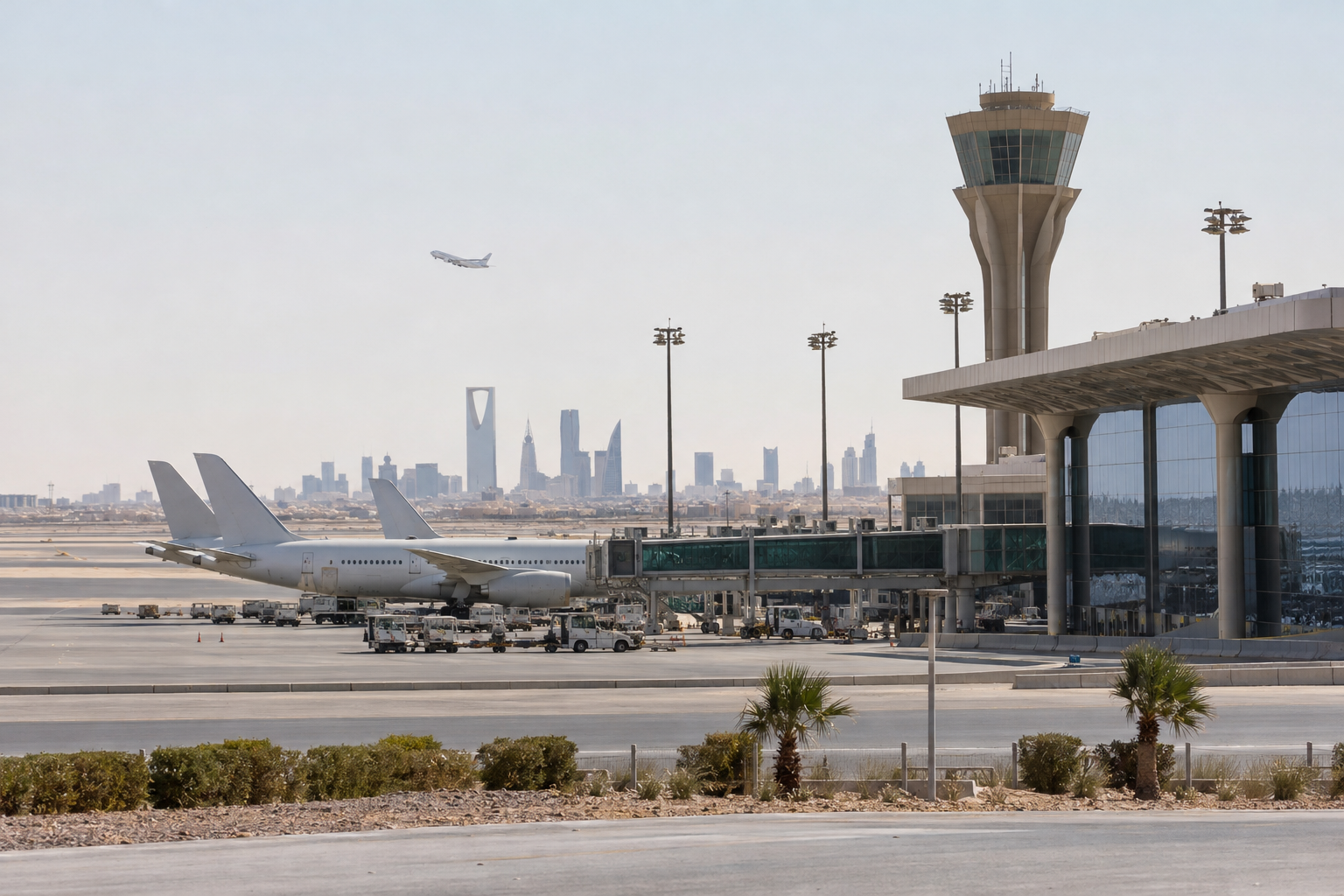
Houthi attacks have repeatedly hit Riyadh’s main airport during a deadly week in Saudi Arabia, bringing renewed attention to the kingdom’s security and the role of its allies as crude prices advanced. The airport strikes place a major transport facility at the centre of the security concerns. They also form part of a week of attacks whose reported death toll covers Houthi attacks in Saudi Arabia, without specifying how many deaths occurred at the airport, an important distinction in assessing the scale of the violence.
As of October 12, 2026, the attacks had killed at least 20 people in the preceding week. Oil rose on Monday following a deadly attack at the Riyadh airport, with Brent crude futures gaining 1.8% to settle at $106. The market move coincided with a separate allegation from Ukraine that Russia was continuing to strike its energy facilities. Together, the developments put Saudi security and the war-related threats described by Ukraine into the same trading-day picture, without establishing how much either contributed to the rise.
The repeated strikes on Riyadh’s main airport distinguish the security problem from an account of a single isolated attack. Recurrence raises questions about the kingdom’s security, including protection of the facility, and the role of its allies. The available information does not describe how the attacks were carried out, however, or identify the measures in place when they occurred. It therefore supports concern about repeated exposure without allowing a detailed judgment about the performance of particular defences.
Read more: Britain and EU set November 20 summit as Burnham calls relationship inadequate
The casualty figure also requires careful interpretation. At least 20 is a minimum reported toll for Houthi attacks in Saudi Arabia over the week, not a confirmed total for one incident. Although the airport attack preceding Monday’s oil-price increase was described as deadly, no separate casualty count is available for that strike in the supplied information. Assigning the full weekly toll to the airport would overstate what is known about that location and obscure the distinction between the toll for the week’s attacks and an unspecified toll at the airport.
For the kingdom’s allies, the attacks raise questions about their role in Saudi security. The strikes have raised that question, but the available account does not identify an allied commitment, a request for assistance or a change in policy. Any assessment of the wider regional implications must therefore distinguish between questions about a possible response and an actual decision to respond. The attacks create a security challenge; they do not, on the information provided, establish what form a Saudi or allied response will take.
The oil figures offer a clearer measure of the market outcome than of its underlying causes. Brent, the international crude benchmark, ended Monday at $106.8% gain. That establishes both the closing price and the direction of the session’s move. It does not show how prices moved around each report of an attack, or whether the airport news accounted for most of the increase. The reported sequence places the rise after the attack, but the figures do not support assigning a precise share of the gain to Saudi developments.
Read more: Federal agents search Ilhan Omar’s Washington home
Ukraine’s allegation adds another relevant element to that interpretation. Ukraine said Russia had continued attacking Ukrainian energy facilities, conduct it described as violating an energy ceasefire. That remains an allegation attributed to Ukraine, rather than a separately established finding in the available information. No Russian response is included. It would consequently be misleading either to present the alleged violation as independently confirmed or to treat the Saudi airport attack as the only reported security development accompanying the rise in crude prices on Monday.
The two developments should not be conflated. The Saudi reports concern deadly Houthi attacks, including repeated strikes against an airport; the Ukrainian account concerns alleged Russian attacks on energy facilities. No connection between those events is established here. Their relevance to the same oil-market session is not evidence of coordination or a shared cause. A sober reading is that crude advanced after the Saudi airport attack while Ukraine also reported attacks on its energy facilities, without a numerical breakdown of market drivers.
Nor does the rise in Brent establish that Saudi oil production or exports were interrupted. The reported target in Riyadh was the main airport, and the information available does not describe damage to oil facilities or a reduction in supplies. The distinction matters because a price rise following a security event is not itself proof of a physical supply loss. The market result can be stated firmly; a claim that the attacks curtailed Saudi crude availability cannot be supported by the details provided.
There are similar limits to what can be said about the airport’s condition. Repeated strikes demonstrate that it has been hit more than once, but no exact attack count is given. The account does not establish the extent of damage, whether flights were disrupted or what operating arrangements followed the attacks. Those missing details leave the practical consequences for the airport unresolved. They should not be filled in by assuming either that operations continued normally or that the facility was forced to shut.
The security and market evidence thus point to different kinds of certainty. The reported deaths establish a serious human toll, and the repeated airport strikes establish recurrence at a significant location. The Brent settlement supplies a concrete financial measure. By contrast, the effectiveness of Saudi defences, the likely involvement of allies and the durability of the oil-price move remain open questions. Keeping those categories separate avoids turning a limited account of attacks and a trading session into an unsupported forecast of a broader regional confrontation.
Assessing what comes next will require information not yet established in the available account: whether the strikes continue, what damage they caused and how Saudi Arabia and its allies address the security questions. More detail on individual incidents would also clarify how the weekly death toll is distributed. For the market, subsequent trading would be needed to determine whether Monday’s increase persists. The reported settlement alone cannot establish a lasting trend, just as the current security concerns do not establish an inevitable escalation.
For now, the central picture is of repeated Houthi strikes reaching Riyadh’s main airport amid a deadly week for Saudi Arabia, with the international oil benchmark rising Monday after a deadly airport attack. Ukraine’s separate allegation about attacks on its energy facilities adds another unresolved security issue to the market backdrop. The immediate priorities for assessing the situation are clearer casualty and damage information, evidence about the airport’s condition and any concrete Saudi or allied response. Until then, the reported toll and market movement are firmer measures than predictions about the next phase.