Cybersecurity · Technology
European freezer cyberattack reaches UK meat supply chain
Around 40 Delhaize supermarkets in Belgium and Luxembourg were affected by Monday’s cyberattack, while UK meat suppliers reported refrigeration disruptions but no lost produce.
By Arlen Mossett · 4 min read
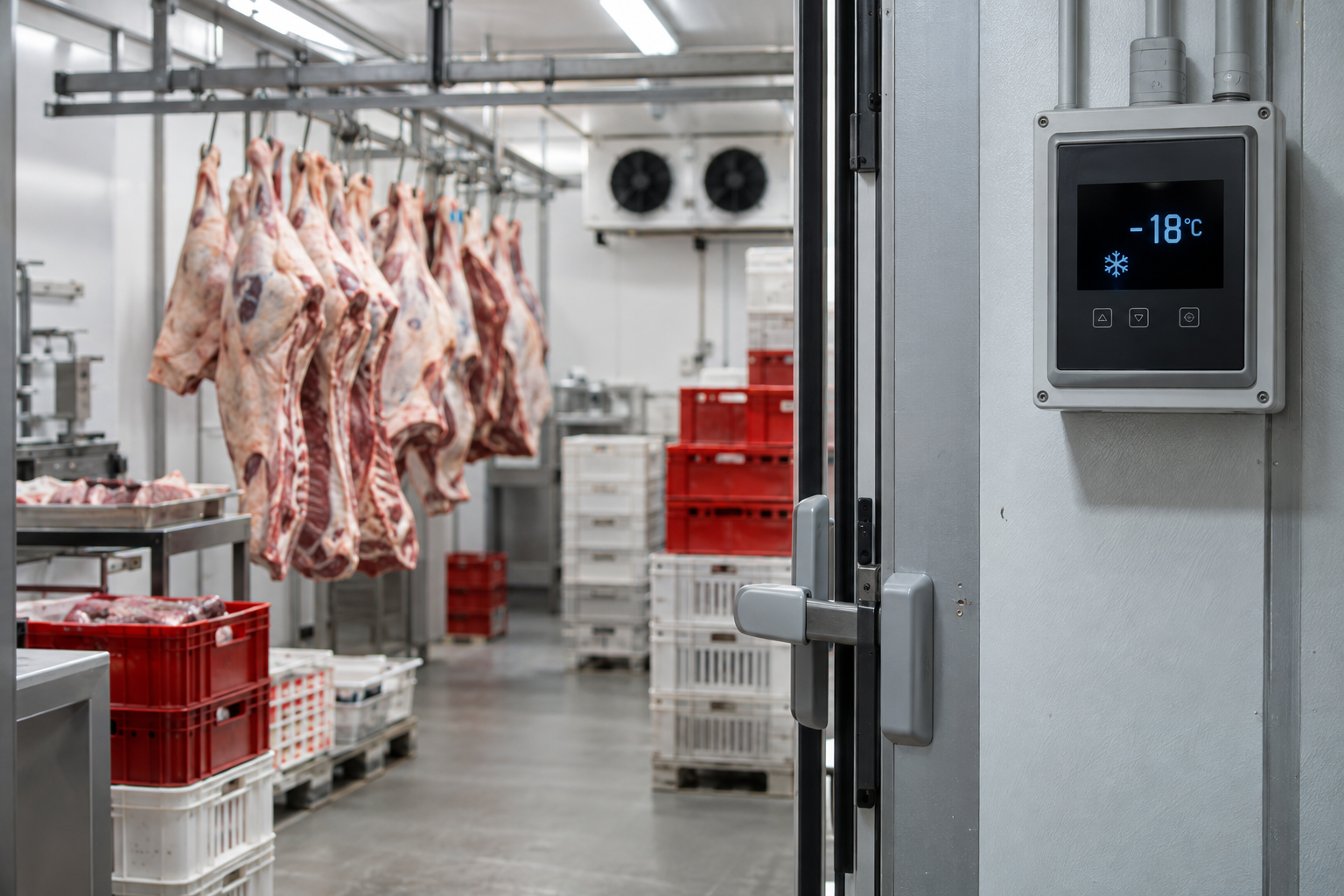
Businesses in the UK food supply chain have been affected by a cyberattack that disrupted supermarket refrigeration across Europe, extending the incident beyond retailers. The National Cyber Security Centre (NCSC) said vulnerable technology had been exploited in the UK and that it had worked overnight to alert potentially affected organisations. British meat suppliers reported equipment defrosting or warming unexpectedly, although the affected units were empty and no produce was lost, according to their trade association.
The British Association of Independent Meat Suppliers (AIMS), which represents more than 300 members, said two members experienced refrigerators starting to defrost. Another reported cold units reaching temperatures of up to 100C (212F). Across Belgium and Luxembourg, around 40 Delhaize supermarkets were affected on Monday, with fewer shops hit in Sweden, Ireland, the Netherlands, Estonia and Finland. The figures indicate disruption across several countries, but the reported consequences in the UK remained considerably more limited than the food losses described by continental retailers.
The latest incidents follow attacks on supermarkets and food suppliers in France in early October. That overnight operation targeted hundreds of stores and spoiled fresh and frozen products estimated to be worth millions of euros. It exploited weaknesses in systems used to manage refrigeration equipment remotely. Cybersecurity researchers had identified those vulnerabilities months earlier. The sequence puts attention on the security of equipment that businesses depend on to keep food cold, rather than only the systems used to store information or process transactions.
Read more: Trajectory secures $45 million for AI training by nontechnical experts
Sabcobel, a Belgian manufacturer of some of the affected refrigerators, said the equipment’s evaporators had been put into defrost mode, raising temperatures inside the units. The same approach was thought to have been used in the French incident, although that connection remained uncertain. The explanation points to the practical consequences of interference with refrigeration controls: changing an operating setting can disrupt the conditions needed to preserve food. It does not establish who carried out the attacks or confirm that every affected business experienced the same technical intrusion.
The financial damage reported by European retailers contrasts with the absence of produce losses reported by AIMS. Many retailers affected on Monday said spoiled food had to be discarded, with some putting the value of lost stock at hundreds of thousands of euros. Those reports are separate from the estimated losses of millions of euros associated with the earlier French attacks. Neither provides a comprehensive cost for Monday’s disruption. In the UK, the empty equipment meant the refrigeration failures reported by meat suppliers did not translate into discarded stock.
AIMS spokesman Tony Goodger nevertheless urged food businesses to remain vigilant. He said the experience should remind companies at every stage of the supply chain that they could become targets. His warning broadens the concern beyond supermarket operators: the British cases involved members of a meat-supply trade body, while the French attacks also reached food suppliers. The association described its affected members as collateral victims, but their experience showed that disruption to refrigeration technology was not confined to the continental stores affected on Monday.
Read more: U.S. strikes Iranian targets in Strait of Hormuz as Tehran asserts self-defense right
NCSC chief executive Dr Richard Horne said on Tuesday that it was too early to say who was behind the attacks. He argued that organisations needed to secure and update technology supporting everyday activities, warning that investment in those underlying systems had been insufficient. Many businesses, he said, had continued using systems beyond the end of their lives without upgrading them or isolating them in secure environments disconnected from the internet. His assessment placed the incidents within a wider problem of ageing technology and inadequate renewal.
Retailers, meanwhile, emphasised their existing security efforts. Graham Wynn, assistant director of regulatory affairs at the British Retail Consortium, said retailers invested heavily in cybersecurity and were working with the NCSC to protect refrigeration equipment against potential attacks. The association’s members include Asda, Lidl, M&S, Sainsbury’s and Tesco. That statement set out the sector’s response rather than identifying those companies as victims. It also offered a different emphasis from Horne’s warning: retailers pointed to continuing investment and cooperation, while the NCSC chief stressed shortcomings in the broader technology base.
For affected continental shops, the immediate burden included disposing of food that could no longer be sold. Mathieu Tilman, who runs a Delhaize supermarket in Belgium, described his distress at throwing away large quantities of food while people lacked enough to eat. His account illustrated a consequence beyond the retailers’ financial losses. In Britain, however, there was little evidence of comparable waste. The distinction between equipment being compromised and stock being destroyed remains important when assessing the severity of the incident in different markets.
The NCSC is continuing to monitor and assist affected UK organisations. At the launch of its annual report on Tuesday, director of operations Paul Chichester described the domestic impact as minimal and said work was under way to identify and close existing vulnerabilities before they could be exploited. Horne also urged organisations to review the technology they depend on and invest in replacing ageing systems. The immediate priorities are therefore securing exposed equipment and supporting affected businesses, while responsibility for the attacks remains unresolved.