European security · Opinion
France’s security hedge exposes Europe’s defense dilemma
A Franco-German dispute over buying U.S. weapons with a €90 billion loan to Ukraine highlights the tension between greater European autonomy and continued reliance on Washington.
By Editorial Board · 4 min read
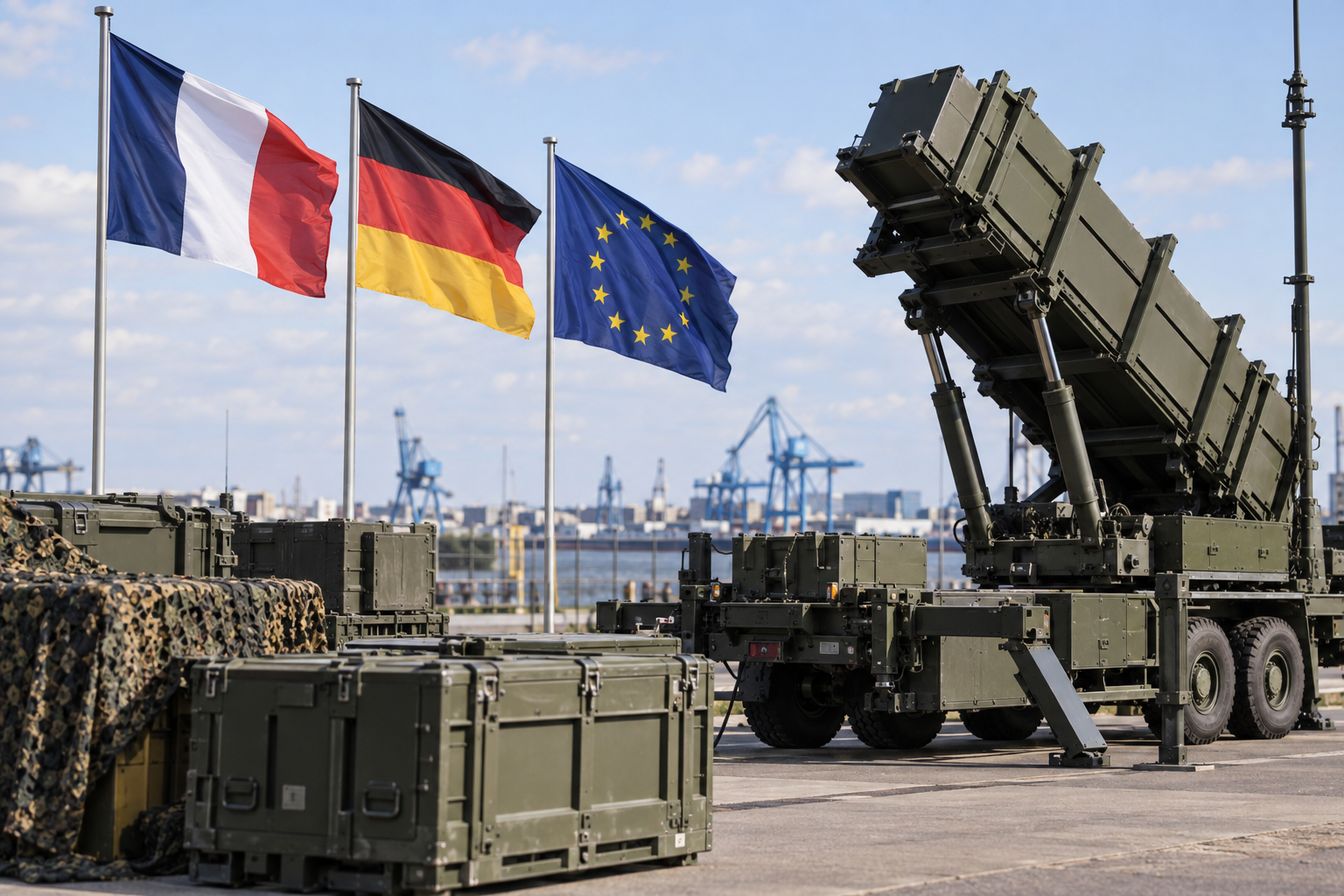
France’s preparations for a less dependable American security partner have moved from a longstanding strategic concern to a practical test: how to support Ukraine while questioning the reliability of the ally Europe still wants involved. Emmanuel Macron’s warning that Washington is distancing itself from its allies gives the argument for greater European independence renewed urgency. But identifying a vulnerability is not the same as resolving it. Europe must decide what it can undertake, how to finance its commitments and what American backing it can count on.
The clearest financial expression of that dilemma is the disagreement between France and Germany over whether a €90 billion loan to Ukraine should fund purchases of U.S. weapons. The dispute, reported on January 12, 2026, concerns more than procurement: it connects Ukraine’s support to Europe’s relationship with American military supply. Yet the available information does not establish the amount that might go toward those purchases or detail each government’s negotiating position. The figure measures the loan, not an agreed allocation to American arms or European defense production.
Macron’s warning also reflects a broader assessment of international politics. In remarks reported on January 8, he described a world of great powers tempted to carve up the world and warned that America was turning away from its allies. Donald Trump’s statements about Greenland give that concern a concrete security dimension. The U.S. president suggested that seizing Greenland and preserving NATO could become competing choices. European leaders have defended Greenland against his threats and pursued diplomacy to prevent a crisis. The concern is therefore not confined to differences over Ukraine policy.
One argument for greater European self-reliance is that security commitments become harder to plan around when a partner questions the framework within which they operate. Trump’s Greenland position presents a different priority: he has entertained territorial acquisition even at a possible cost to NATO. Those positions cannot simply be reconciled through stronger declarations of allied unity. For Europe, the analytical question is how much uncertainty it can accept in its arrangements with Washington, rather than whether every disagreement means the alliance has already ceased to function.
Ukraine illustrates both the desire to keep the United States engaged and the limits of reassurance. An explicit commitment that Washington would backstop Kyiv was scrapped from the leaders’ final joint statement, according to information published on January 6. That omission does not establish that all American support will disappear. It does, however, distinguish an explicit commitment to American backing from the wording that ultimately appeared. The competing case for continued engagement is visible in the effort to secure American backing: European leaders are not treating Washington as irrelevant, even while worrying about its dependability.
Britain and France have also pledged troops to support a Ukraine ceasefire agreement, with Keir Starmer joining Macron in that commitment. This is a more tangible expression of European responsibility than a general appeal for autonomy. But questions remain about resources, terms of engagement and the mission’s eventual conclusion. Those uncertainties matter as much as the announcement itself. A pledge establishes political intent; it does not, on the information available, settle how the operation would function or what support would be required to sustain it.
Read more: Ueda says further rise in underlying inflation above 2% is unacceptable
The weapons dispute exposes a related tension between the source of military equipment and the purpose of financing it. Buying American arms would preserve a procurement relationship at the same time that France’s president is questioning the political relationship. Excluding such purchases would make supplier choice a constraint on the loan’s use. Neither observation establishes which option would meet Ukraine’s needs better: the supplied information contains no delivery schedules, comparative prices or equipment requirements. The disagreement therefore cannot responsibly be reduced to a contest between European principle and military practicality.
France’s domestic position adds another qualification to its strategic ambition. The country began 2026 without a proper budget, and its budget minister opened the possibility of proceeding without a parliamentary vote. That does not demonstrate a specific shortfall in military funding. It does show that France’s wider fiscal decisions remained politically unsettled at the start of the year. The debate over a more capable Europe consequently coexists with unresolved national budgeting. A credible assessment must distinguish the strength of Macron’s warning from the resources and political agreements needed to act on it.
Diplomacy offers another approach, though not necessarily an alternative to military preparation. Italian Prime Minister Giorgia Meloni has joined Macron in calling for European discussions with Russia and suggested appointing a special envoy for talks with Moscow. Their position gives Europe a potential diplomatic role alongside its security commitments. But proposing talks does not establish that negotiations would succeed or remove the questions surrounding a ceasefire force. The relevant distinction is between seeking a voice in discussions and having an agreed capacity to support their outcome.
What comes next will turn on decisions rather than diagnoses: the permitted uses of Ukraine’s loan, the terms of European troop commitments and the extent of any American backing. France has articulated a reason to prepare for diminished U.S. reliability; the continuing search for Washington’s backing illustrates why that preparation is difficult. Europe’s dilemma is not a clean choice between independence and alliance. It is how to assume greater responsibility while the commitments, financing and external support needed to make that responsibility effective remain unsettled.