Technology · Technology
Google expands AI chip range with two specialized versions
The new tensor processing units target confidential computing and broader information access as Google challenges Nvidia in an AI chip market worth hundreds of billions of dollars.
By Arlen Mossett · 3 min read
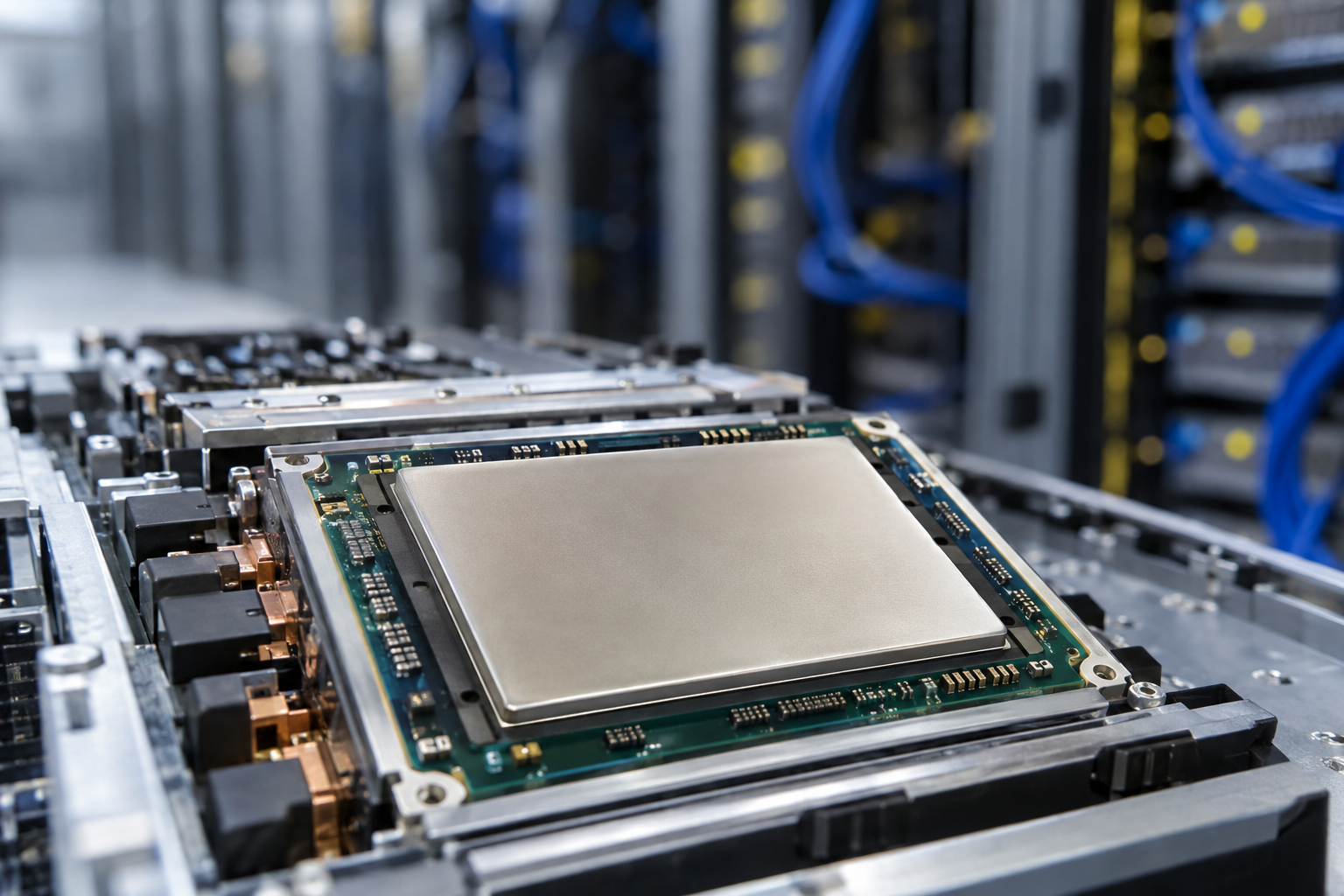
Alphabet’s Google is expanding its artificial intelligence chip offering with specialized designs aimed at security and information access, intensifying its challenge to Nvidia. The company is introducing new versions of its tensor processing units, or TPUs, as the industry moves toward AI agents. The expansion puts greater emphasis on confidentiality and access to information within a chip family designed to help develop and run AI software.
Google is introducing two variations in a market worth hundreds of billions of dollars. Alphabet shares rose as much as 4.1% to $296. That share-price movement provides a financial backdrop to the rollout, but it is not a measure of demand for the new processors. Google is aiming to capitalize on its rapid ascent as a challenger to Nvidia; whether the specialized capabilities will strengthen its competitive position remains an open question.
TPUs are semiconductors designed specifically to support the development and operation of AI software. They form part of Google’s expanding AI chip offering as the company emerges as a challenger to Nvidia. By widening that offering, Google is seeking to address more of the requirements surrounding AI use. The latest additions extend the range of needs its chip family is intended to accommodate.
Read more: Australia moves towards mandatory AI safeguards after OpenAI breach
One area the new chips will address is confidential computing. That emphasis places security among the requirements shaping Google’s hardware plans, at a time when the AI industry is confronting security challenges. It also gives the expansion a purpose beyond simply adding another processor to the range. The intended benefit is a closer fit between the hardware and confidentiality requirements, although that objective alone does not establish how the chips will compare with competing products.
The other stated area of focus is helping AI models draw on a broader range of information when responding to queries. Here, the design goal concerns the information available to a model as it handles a request. It is distinct from the confidentiality requirement, even though both form part of the same expansion. Together, the priorities show Google directing its chip development toward the conditions in which AI software operates, as well as the software’s underlying computing needs.
The shift toward AI agents supplies the wider industry context for those choices. Google’s latest processors are intended to serve that shift while also addressing security concerns. The rollout therefore links its hardware strategy to changes in how AI is being used. A broader chip range gives Google more specialized options for addressing those emerging requirements, but the stated aims do not establish how extensively the new variations will be used.
Read more: OpenAI adds business profiles to ChatGPT, echoing search-engine feature
The figures describe different aspects of the opportunity and should not be conflated. A market valued in the hundreds of billions of dollars explains the scale of the contest, rather than Google’s share of it. Similarly, the addition of two chip variations measures an expansion in the product range, not an increase in sales or computing performance. The stock’s rise is another separate indicator. None of those measures, by itself, establishes a change in the balance between Google and Nvidia.
Google is pursuing specialization by adding chip designs aimed at particular AI requirements. Its approach brings confidentiality and information access into that effort. Introducing additional designs demonstrates the direction of its hardware strategy, rather than establishing competitive success. Those distinctions matter: the new chips can widen Google’s offering without yet showing how much business the company can win from its rival or how extensively the new versions will be used.
For Nvidia, the competitive development is a challenger broadening its range rather than merely maintaining an existing alternative. Google’s rapid emergence as an AI chip challenger gives that expansion significance, while the size of the market makes the stakes substantial. Even so, the rollout is best understood through its stated purposes. It addresses particular requirements associated with AI software and agents; it does not, on its own, establish that Google has surpassed Nvidia across the wider chip market.
As Google rolls out the new versions, an open question is whether those specific design priorities will produce a durable commercial advantage. Confidential computing and wider information access give the expansion identifiable objectives against which its usefulness can be assessed. For now, the development marks a broader challenge to Nvidia: Google is adding specialized options to its AI hardware family, seeking to address a wider range of requirements as it builds its presence in the market.