Ukraine diplomacy · World
Europe joins U.S.-mediated Russia-Ukraine peace effort in Abu Dhabi
Russia and Ukraine resume U.S.-mediated negotiations scheduled over two days in Abu Dhabi, with European representatives present despite Kremlin objections to their involvement.
By Ilan Corven · 5 min read
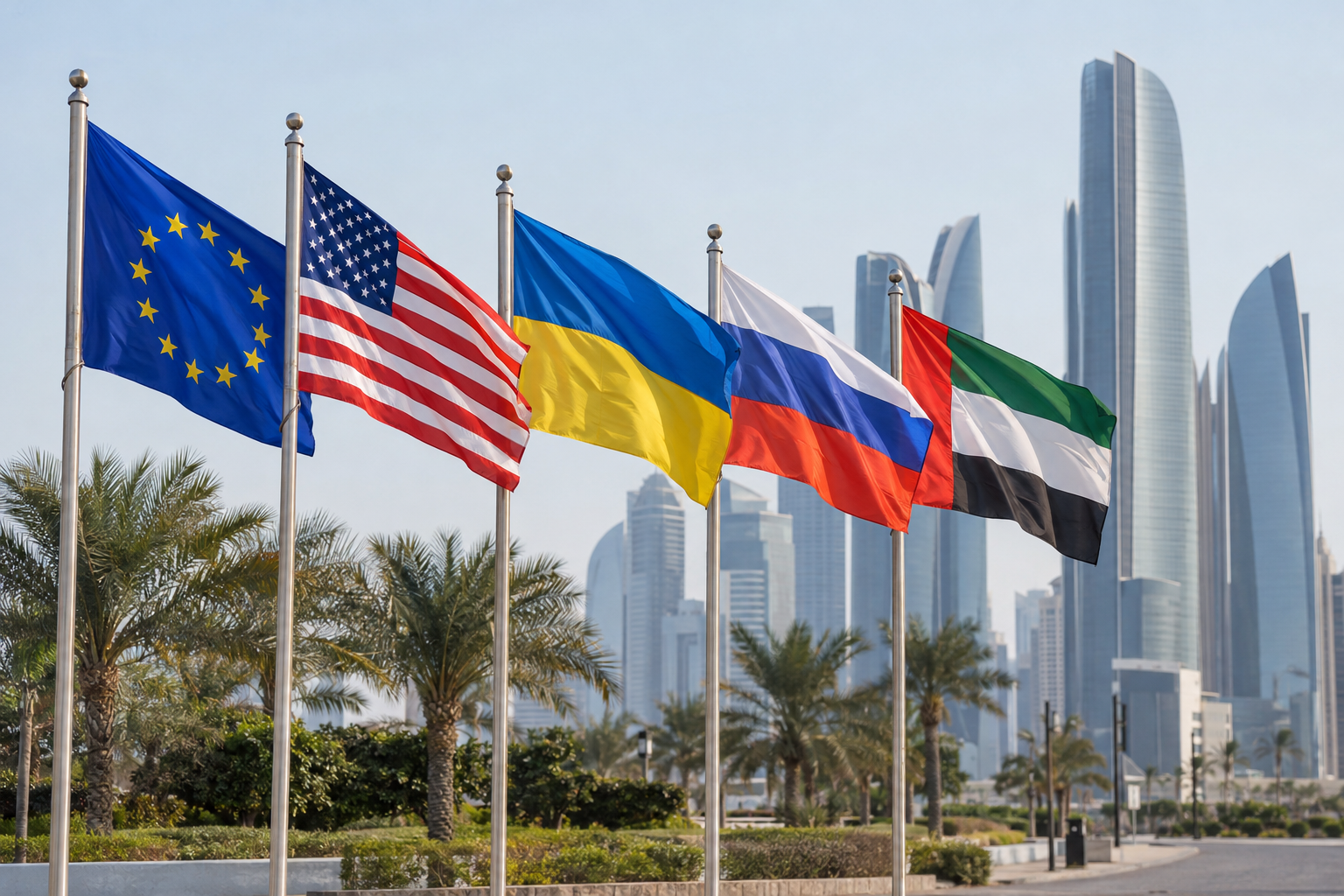
Russia and Ukraine resumed U.S.-mediated peace talks in Abu Dhabi on Tuesday, with European representatives present as the diplomatic effort widened despite Kremlin objections to their participation. A joint European Union team and officials from France, Germany and the United Kingdom were on site. Their presence adds a European dimension to negotiations whose central format remains talks involving Ukraine, Russia and the United States, with security guarantees among the issues under discussion.
The negotiations were scheduled for November 10 and November 11, 2026. By November 8, France had said European officials would attend the meeting, which was described as the first negotiating round involving Russia, Ukraine and the United States since February. That interval makes the resumption a notable diplomatic development, but the available information does not establish an agreement or a completed negotiating outcome. The two-day schedule also does not establish the duration of any individual session.
European involvement is a prominent feature of the effort described ahead of the meeting. The presence of an EU team alongside representatives of individual European countries brings both EU-level and national participation to Abu Dhabi. Those arrangements should not, however, be treated as proof that every delegation is attending every negotiating session. Being on site and holding a formal place in the central talks are distinct questions, and the precise division of roles remains unspecified.
Read more: Trump calls Iran war militarily ‘effectively over’ after Qatar meeting
European attendance ran counter to the Kremlin's objections to their involvement. The disagreement concerns who should participate in the peace effort, a question separate from the substance of any eventual settlement. European officials were nevertheless present as negotiations resumed. Their attendance demonstrates that the objections had not prevented a European presence in Abu Dhabi, although it does not establish that Russia had accepted a particular role for them within the negotiating format.
The United States remains the mediator between Russia and Ukraine. European participation therefore broadens the diplomatic presence around the talks without, on the information available, replacing the American-led framework. This distinction matters when assessing the significance of the meeting: an expanded group of officials can be part of the same peace effort while having different responsibilities. No detailed allocation of negotiating tasks between the American mediators, the EU team and the national European delegations was provided.
Security guarantees form part of the agenda, but the available account does not set out their proposed terms, identify prospective commitments or describe how any guarantees would operate. Those omissions limit what can be concluded about the substance of the discussions. The inclusion of an issue on an agenda is not evidence that the parties have found common ground on it, and European attendance alone does not establish an undertaking by the EU or the countries represented.
Read more: Americans less likely to back pro-war candidates by 3-1 margin, poll finds
The timing provides a firmer measure of the diplomatic activity than of progress towards peace. The reference to February establishes the gap since the previous round in this format; the November schedule establishes the planned span of the current meeting. Neither supplies a measure of how far the parties have moved on their positions. The available details support describing a renewed negotiating process, rather than a breakthrough, and do not justify attributing a specific duration to a completed session.
The planned continuation on Wednesday also distinguishes the overall negotiating schedule from any individual discussion. A meeting arranged across consecutive days may contain separate exchanges, but the information available does not provide a session-by-session timetable or confirm how the delegations would use that time. The calendar is therefore useful for identifying when the effort is taking place, not for determining the intensity of negotiations, the length of direct contact or the likelihood of an agreement.
Ahead of the talks, Trump said that post-war Ukraine would have a changed shape. The remark is relevant background to the American-mediated effort, but the available material does not explain its precise meaning or connect it to a detailed settlement proposal. It should not be read as an agreed description of an outcome. Nothing in the supplied account establishes Ukrainian or Russian acceptance of the remark as a basis for negotiations, or indicates how European participants viewed it.
The positions that can be identified with confidence are consequently narrower than the range of questions surrounding the meeting. France said European officials would attend, while the Kremlin objected to European involvement. Russia and Ukraine were participating in the resumed American-mediated process. Beyond those points, the available information does not specify their negotiating demands. It would therefore be premature to present a comparison of concessions, red lines or proposed compromises as though those had been disclosed.
The European presence nevertheless adds a political dimension to the assessment of the talks. The peace effort includes not only the principal negotiating parties and their American mediator but also EU and national representatives on site. That establishes European participation, not yet a demonstrated change in substance. Its practical importance will depend on the role those representatives actually perform, rather than on attendance alone or assumptions about their influence over the parties.
For the same reason, the joint EU team and the national delegations should not automatically be treated as interchangeable. The account identifies both, but does not explain whether they share a single mandate or have separate functions. Describing a broad European presence is supported; claiming a unified negotiating position would go further than the information permits. The distinction is especially relevant given the Kremlin's objections, which make participation itself one of the contested features of the diplomatic effort.
The immediate next step in the published schedule was the continuation of talks on November 11. Further details about the format, European responsibilities and the treatment of security guarantees would help clarify whether the broader attendance translates into substantive negotiating work. Any assessment of progress would also require evidence of what Russia and Ukraine had discussed or accepted. At this stage, the schedule and the composition of the delegations are more clearly established than the outcome.
Abu Dhabi thus marks a resumption of the American-mediated process with European representatives also present. Those are concrete developments, but they remain distinct from an agreement to end the war. The central test is what follows from the renewed contact: whether the parties disclose areas of convergence, explain the role of the additional participants or set out further negotiating steps. Until then, the meeting is best understood as an expanded diplomatic effort whose substantive results remain unestablished.