Middle East · World
Houthi attack on Riyadh airport kills 12, Saudi aviation authority says
An attack on Riyadh’s King Khalid airport killed 12 people, Saudi Arabia’s civil aviation authority said, as Donald Trump considered whether the US should enter the war against the Houthis.
By Ilan Corven · 5 min read
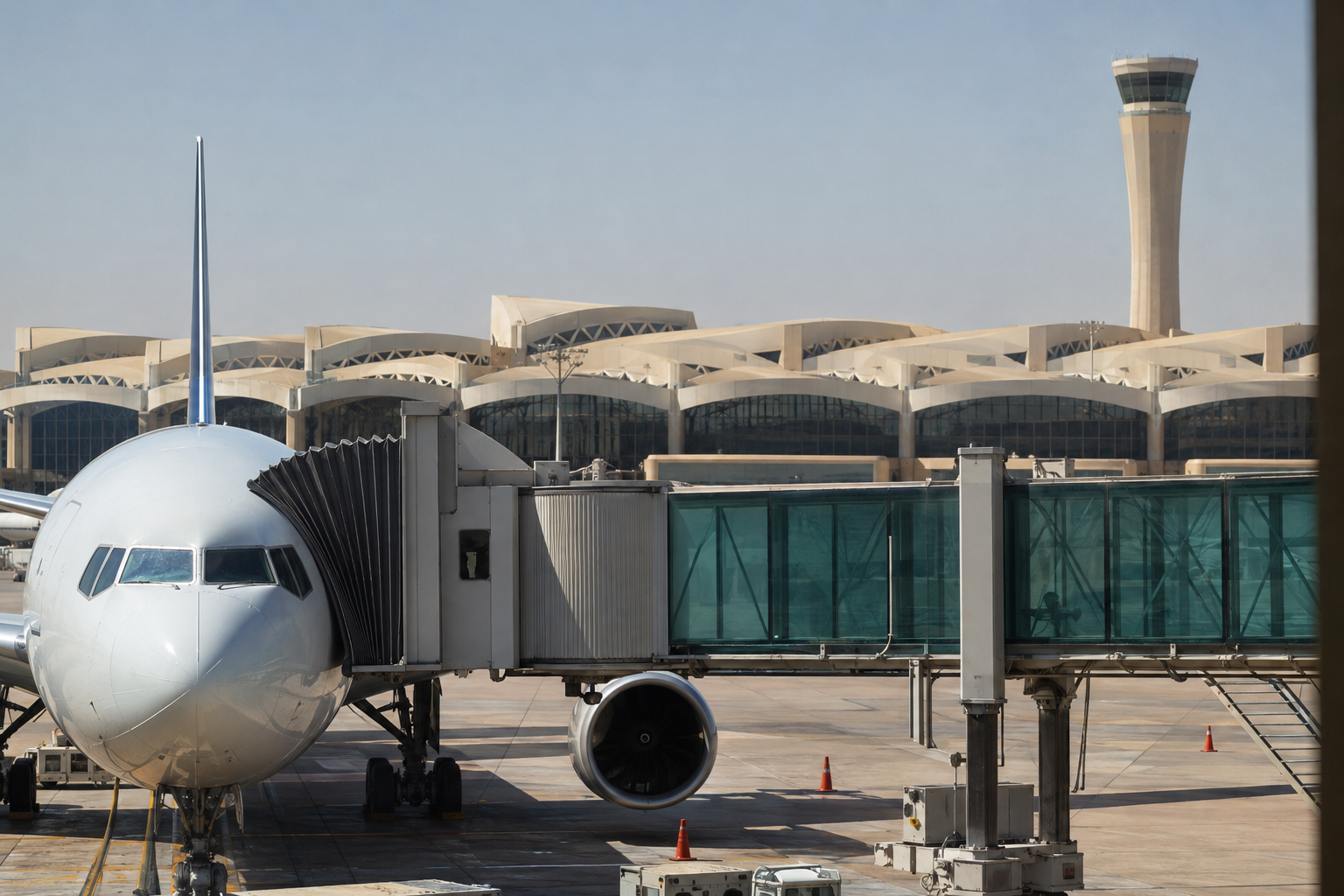
A deadly Houthi attack on Riyadh’s King Khalid airport drew international condemnation, with US President Donald Trump saying afterward that he was considering whether to join the war against the group. Trump condemned the attack and said he expected to speak soon with Crown Prince Mohammed bin Salman, Saudi Arabia’s de facto leader. His remarks raised the prospect of US involvement without announcing a decision to intervene.
Saudi Arabia’s civil aviation authority said 12 people were killed and 309 injured. The toll underscores the human consequences of the attack, alongside questions about what military action might follow. Saudi-led coalition forces subsequently destroyed a drone, according to the account of the aftermath. That action and Trump’s comments represent separate developments: a coalition action already reported and a possible American decision that remained under consideration.
The available account describes the incident as the latest Houthi attack on the airport. That description places it within an existing conflict rather than presenting it as an isolated episode. The available account, however, gives no chronology of earlier attacks or figures against which to compare the latest casualties. It therefore supports reporting the attack and the current toll, but not a conclusion about whether attacks have become more frequent or more destructive.
Read more: A year into Gaza ceasefire, Palestinians question whether war has ended
The casualty figures require similar care. The authority’s reported injury count was 309, but the account does not distinguish between people with minor wounds and those in a more serious condition. The death toll of 12 is the figure reported by the authority, rather than a forecast of the eventual losses. Without further medical information, neither number provides a basis for predicting how the toll might change or assessing the demands on hospitals treating the wounded.
Nor does the account identify the victims by nationality or say whether they were passengers, airport employees or others present at the site. Those distinctions matter to understanding the reach of an attack on an airport, but cannot be inferred from its location. The reported numbers establish the scale of the immediate casualties while leaving the circumstances of individual deaths and injuries unresolved. Any fuller description of the victims would require information beyond the authority’s numerical account.
The subsequent destruction of a drone by Saudi-led coalition forces adds a military element to the reported aftermath. The account does not establish whether that drone was involved in the airport attack, where it was destroyed or what role it was intended to perform. Its destruction should therefore not be treated as an explanation of how the airport was struck. It is evidence of a reported coalition action, not a complete account of the attack’s execution or the response to it.
Read more: Hormuz attacks reported to intensify as efforts to end Iran war stall
The available material identifies the attack as Houthi but provides limited detail about responsibility. It contains neither a Houthi statement accepting responsibility nor a response contesting that identification. It also supplies no detailed account of the evidence supporting the identification. That limitation does not establish a competing explanation; it distinguishes the identification of the attackers from a detailed reconstruction of events. No account from the Houthis is available in the supplied record.
Trump described the attack as “terrible”, giving a direct expression of American condemnation. Another part of his remarks concerned what Washington might do next. He said he was evaluating whether the US should join the war against the Houthis, linking his reaction to the airport attack with a possible change in American involvement. His comments expressed concern and a willingness to consider action, but did not specify a military objective or the form any intervention might take.
On the possibility of joining the war, Trump said: “We may. We’re gonna look at it. We just found out about the recent attack, so we’ll make a decision. We’ll move very quickly.” The conditional opening is important: it leaves intervention as a possibility rather than a settled course. His reference to having just learned of the attack also frames the remarks as an initial response, not the presentation of a completed assessment or an announced operational plan.
The promise of speed does not supply a precise timetable. Trump’s remarks gave no date for a decision and no conditions that would determine whether the US entered the war. The distinction between reviewing an option and authorising action is central to interpreting his statement. Although the attack formed the immediate setting for his comments, the available account does not establish which considerations would carry the most weight in his evaluation or what alternatives he was examining.
Trump also said he “will be speaking” with Mohammed bin Salman soon. That prospective conversation provides a diplomatic next step identified in the account. It was described as a future exchange, not a call that had already taken place, and no outcome can therefore be attributed to it. The remarks do not establish whether Saudi Arabia had sought American military involvement, what the crown prince intended to request or whether the leaders shared a preferred response.
The coalition’s reported action and the president’s deliberations should not be conflated. Saudi-led forces were described as having destroyed a drone; Trump was describing a decision still to be made about joining the war. Nothing in those statements establishes a joint operation or a new agreement between Washington and Riyadh. The difference matters because military action by one coalition can proceed while a separate government weighs its position, without the latter’s public comments amounting to a commitment.
The airport setting also leaves practical questions unanswered. The account does not describe damage to facilities, changes to flights or the status of airport operations after the attack. The casualty figures cannot establish those effects on their own. A fuller assessment would need to distinguish the human toll from physical damage and any disruption to aviation. For now, the authority’s figures support a clear account of deaths and injuries, but not a broader calculation of operational or economic consequences.
Trump’s anticipated conversation with the crown prince and his consideration of American participation leave the question of Washington’s next move open. Further information from Saudi authorities would also be needed to clarify the victims’ conditions, the circumstances of the strike and its relationship, if any, to the drone subsequently destroyed. The reported elements remain the authority’s casualty figures, the identification of the attack as Houthi, the coalition action and an American president whose supplied remarks considered—but did not announce—entry into the war.