Hong Kong · Investing
HSBC launches app-based portfolio management for retail investors
Portfolio+ gives HSBC’s Hong Kong retail customers access to discretionary investment portfolios with a lump sum of at least HK$10,000 or monthly contributions of HK$1,000.
By Elva Norreth · 4 min read
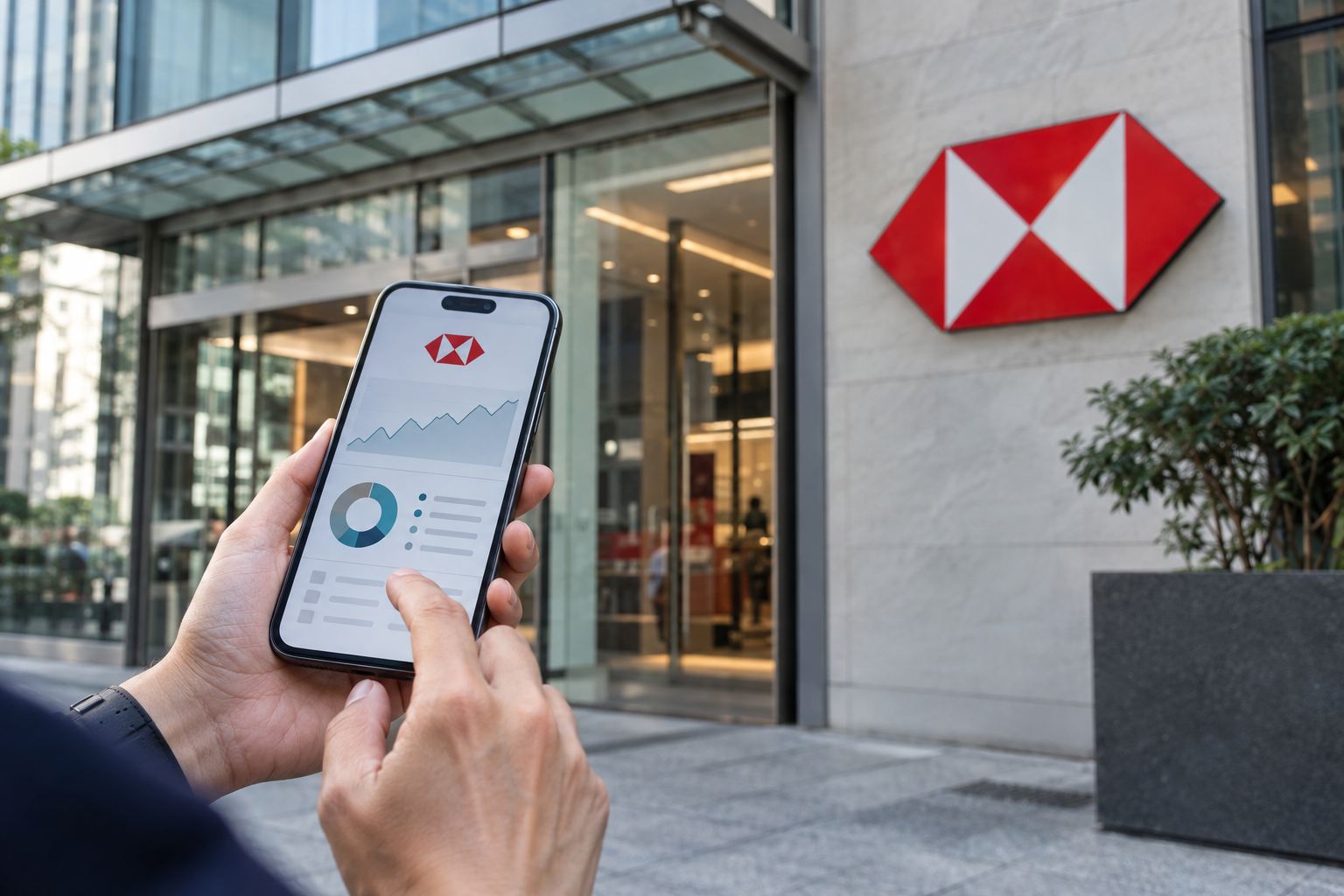
HSBC has launched a discretionary portfolio management service for its retail banking customers in Hong Kong, allowing them to build an investment portfolio through the bank’s mobile apps. Named Portfolio+, the service offers access through either a lump-sum investment or regular monthly contributions. The launch brings a portfolio-management offering to the bank’s retail customers, although the supplied details establish more about how they can fund a portfolio than about the investments that will sit within it.
Customers can start with a lump sum of at least HK$10,000 or make regular contributions of HK$1,000 per month, according to Winnie Ng, head of wealth and premier solutions at HSBC Hong Kong. Those are the central financial terms in the supplied excerpt, dated 15 October 2026. They set out separate funding routes rather than a single entry requirement. No additional figures on charges, portfolio holdings, investment performance or the scale of the launch appear in that excerpt.
The distinction between the two funding options is important to understanding the offer. The lump-sum route specifies a minimum amount to invest at once, while the contribution route specifies a monthly payment. The supplied details do not establish whether customers choosing monthly contributions must also make an initial payment, how long contributions must continue or whether payments can be changed. The two stated amounts should therefore be read as entry terms, not as a complete description of customers’ funding obligations.
Read more: North Korea reports tests of two submarine-launched cruise missile types
The stated audience is HSBC’s retail banking customers in Hong Kong. That identifies both the customer group and the market described in the excerpt, but does not establish availability elsewhere or eligibility for people who do not already bank with HSBC. Ng’s role encompasses wealth and premier solutions, but the service itself is described as a retail banking offer. The supplied details do not set out separate eligibility conditions or say whether particular customer categories face different terms when applying.
Mobile access is another defined feature: customers can build their discretionary investment portfolio through HSBC’s apps. This gives the service a specified digital channel, rather than leaving the means of access unstated. Beyond that, the supplied excerpt does not describe the application process, the questions customers must answer or the functions they can use after establishing a portfolio. It also does not explain whether the service includes conversations with an adviser or how customers receive information about their investments.
The description of Portfolio+ as discretionary portfolio management identifies the service being offered, but leaves its investment arrangements largely unspecified in the supplied excerpt. There are no details in the excerpt of the assets available, how portfolios are constructed or how investment decisions are reviewed. Nor does it establish a range of risk-based portfolios or thematic allocations. Those features cannot be confirmed from the details provided, and the service’s name alone offers no basis for describing particular strategies, exposures or investment choices.
Read more: Japan denies espionage after Russia arrests Japanese journalist
For investors assessing the stated figures, the clearest conclusion concerns access, not investment outcomes. HK$10,000 is stated as the minimum lump sum, while HK$1,000 is the regular monthly contribution amount. Neither figure indicates a potential return, a level of protection or the amount a customer might ultimately receive. The supplied excerpt also provides no performance record or benchmark. It consequently supports a description of the funding options, but not a judgement about how the portfolios might perform against other investments.
Costs remain outside the supplied description as well. No management fee, transaction charge or other expense figure is given in the excerpt, and it contains no details about withdrawals or any conditions attached to taking money out. These gaps limit an assessment of the overall proposition from this material: a stated entry amount does not, by itself, establish the full cost or flexibility of an investment service. There is also no comparable product information in the material on which to base a price or access comparison.
The launch can therefore be assessed from two perspectives without treating either as evidence of investment quality. From an access perspective, the supplied description identifies a retail audience, an app-based route and two ways to fund a portfolio. From a portfolio-selection perspective, the supplied details leave the underlying investments and their risks unexplained. No customer reaction, independent assessment or competing provider’s response is included in the excerpt. There is consequently no basis in this material for claiming either strong demand for Portfolio+ or objections to its design.
The next questions for prospective customers concern the terms beyond entry: eligibility, charges, investment mandates, risk choices and access to their money. The supplied excerpt gives no timetable for further disclosures or additional features, so it does not establish what HSBC will introduce next. For now, the confirmed proposition is narrower: Hong Kong retail banking customers can use HSBC’s mobile apps to build a discretionary investment portfolio, funded through the stated lump-sum minimum or regular monthly contributions.