East Asia · World
North Korea reports tests of two submarine-launched cruise missile types
The launches were intended to assess naval readiness and deterrent reliability as missile testing continues amid renewed friction with South Korea.
By Ilan Corven · 3 min read
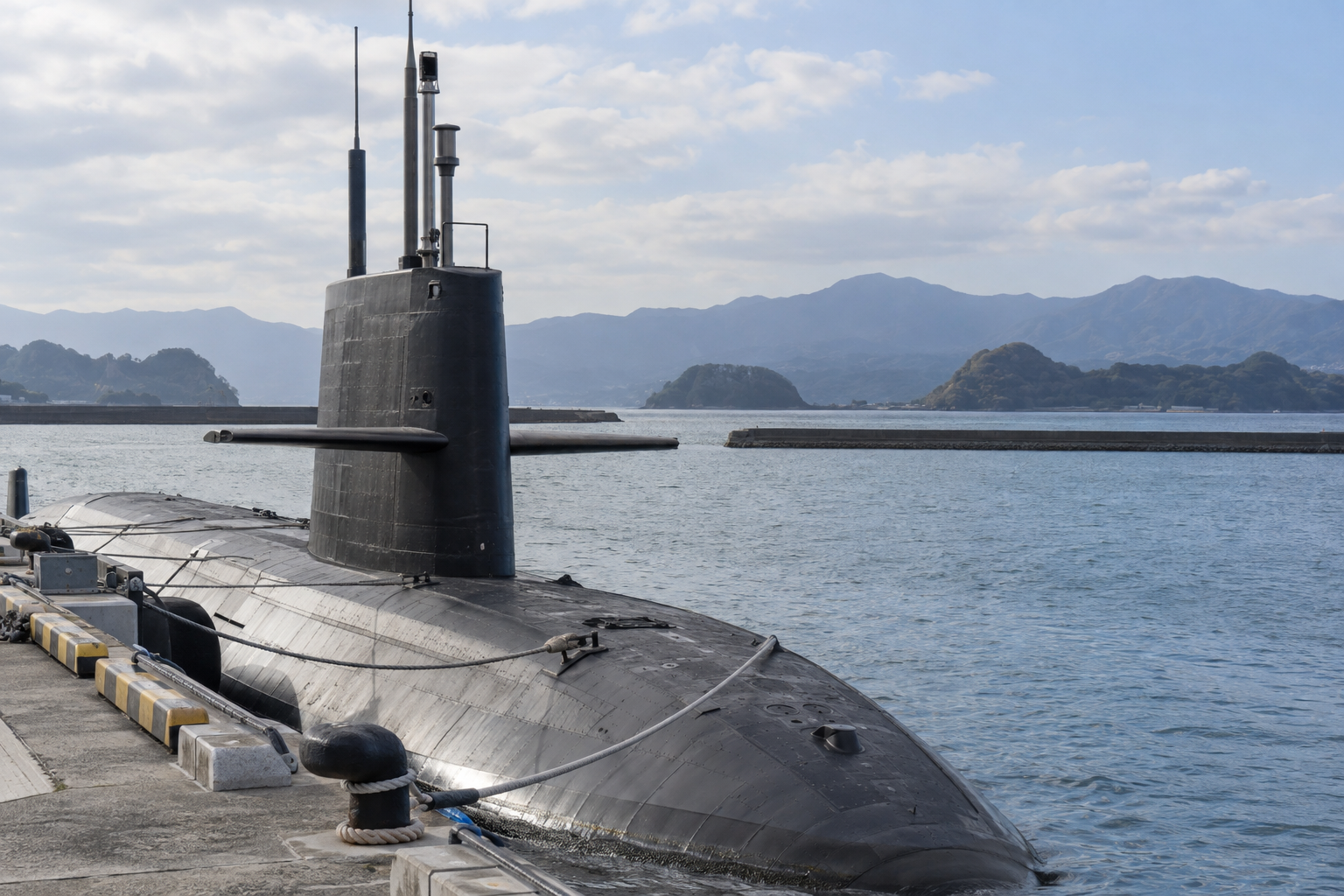
North Korea said it tested two types of submarine-launched strategic cruise missiles on Wednesday to assess its navy’s readiness and the dependability of its military deterrent. The launches form part of its effort to develop a credible nuclear deterrent at sea, a priority for leader Kim Jong Un. They also come amid heightened friction with South Korea, although analysts say Pyongyang has yet to demonstrate that its sea-based deterrent is fully operational.
The October 14, 2026, tests took place in the East Sea, also known as the Sea of Japan, according to the North Korean account released Thursday, October 15. Authorities described the exercise as both an examination of underwater combat systems and training for the navy. The available excerpts describe two missile types without specifying a total number of weapons fired, and North Korea said the launches had not compromised the security of neighbouring countries.
The stated objectives put the emphasis on readiness as well as weapons development. North Korea presented the exercise as a way to check whether its naval systems could carry out their missions and whether its deterrent could be relied upon. That framing connects the launches to Kim’s broader military priorities. It does not, however, settle the separate question of whether the country has demonstrated full operational capability for its sea-based nuclear deterrent, which analysts say remains unproven.
Read more: Japan denies espionage after Russia arrests Japanese journalist
The distinction matters when assessing what the announcement establishes. The reported exercise covered two types of submarine-launched cruise missiles, but the available excerpts provide no range, flight duration or total launch count. Those gaps limit any assessment of the scale and performance of the tests based on this material. The stated purpose was to examine capability and readiness; that purpose should not be treated as independent confirmation that all the intended capabilities have been achieved.
The launches followed weeks of worsening relations over a September 21 landmine explosion in the Demilitarised Zone separating North and South Korea. Three South Korean soldiers were injured in the blast, which occurred in the Seoul-controlled portion of the heavily fortified border area. Both countries subsequently tested upgraded missile technology. The border incident provides the immediate setting for the latest launches, although North Korea’s pursuit of a sea-based deterrent is also a military objective in its own right.
Wednesday’s exercise was not North Korea’s only missile activity during October. It had conducted multiple ballistic missile tests during the month, most recently on Monday. The latest announcement concerned cruise missiles, a distinction that is important when comparing the separate tests. The sequence shows continuing activity across different missile categories, but the supplied information does not establish that the launches were all testing the same systems or addressing the same operational requirements for the navy.
Read more: Milei backs Trump, casting U.S. midterms as consequential for the West
South Korea, meanwhile, test-fired its first domestically developed hypersonic missile last week. That came days after Pyongyang said it had launched an intermediate-range hypersonic missile assisted by artificial intelligence. These developments place the submarine-launched cruise missile exercise within a wider period of weapons testing on the peninsula. They also show why the latest announcement cannot be assessed solely as a naval development: it comes alongside efforts by both countries to test upgraded missile technology during a period of border friction.
The broader strategic significance of submarine-based weapons depends on the capabilities actually demonstrated. A proven submarine-launched ballistic missile capability would allow North Korea to deploy weapons far beyond the Korean peninsula and retain the ability to strike back after an attack. That potential helps explain the importance of the sea-based deterrent programme. But it is distinct from Wednesday’s reported cruise missile exercise, which should not be read as proof that North Korea has achieved those ballistic missile capabilities.
North Korea’s account and the analysts’ assessment therefore address different standards of success. Authorities portrayed the exercise as a test of naval mission capability and deterrent reliability, while also saying neighbouring countries’ security had not been affected. Analysts’ caution concerns the larger question of full operational capability. The assurance about the conduct of these launches does not resolve that question, nor does it remove the regional context of repeated missile testing and friction following the September border explosion.
The unresolved substantive issue is the full operational capability that analysts say has not yet been demonstrated. For now, the announcement adds a reported test of two cruise missile types to North Korea’s recent weapons activity, without resolving the broader assessment of its naval deterrent. The distinction between a training and verification exercise and a fully demonstrated sea-based capability is central to assessing progress towards one of Kim’s leading military objectives.