Art market · Art
London’s art market revisits Cool Britannia
Christie’s £178m sale of art from Peter Simon’s collection adds to a Frieze-week reassessment of the 1990s, as dealers debate whether the era offers a model for London today.
By Calla Brenmoor · 4 min read
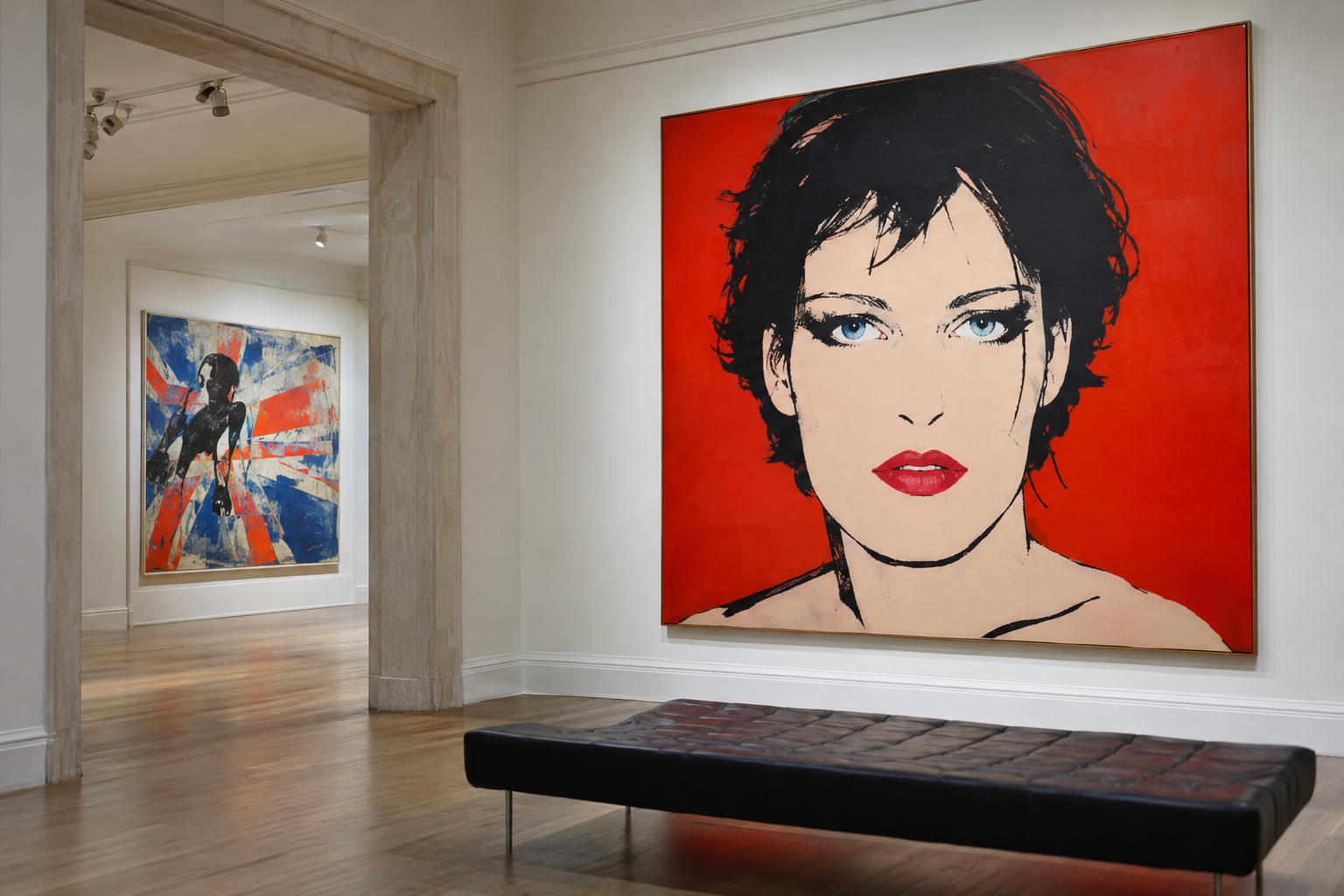
References to Cool Britannia are circulating through London’s exhibitions, auction rooms and art fairs, bringing the artists associated with the 1990s into a debate about the city’s cultural prospects. During Frieze week, the renewed attention has combined sales of early work with institutional reconsideration of the period. But the question is not simply whether its art still attracts buyers: it is whether renewed commercial interest signals anything comparable to the conditions that shaped the original moment.
The figures show activity across several parts of the market, although they measure different things. Christie’s sold £178m of art from the collection of Monsoon founder Peter Simon earlier this week, including early works by Mat Collishaw, Wolfgang Tillmans and Hurvin Anderson. At Xavier Hufkens, three editions of a neon by Emin sold for £95,000 each. At Frieze Masters, Hazlitt Holland-Hibbert sold early Rachel Whiteread works from the 1990s, described as priced up to £60,000. Together, these transactions demonstrate demand without establishing a market-wide revival.
Tate Britain’s exhibition, The 90s: Fashion and Art, provides an institutional setting for the discussion. Its inclusion of Damien Hirst and other prominent Young British Artists alongside the BLK Art Group, whose contribution received less attention during the period, makes the exhibition more than a return to familiar names. It also raises the issue of how the decade is remembered. Any reassessment that includes artists previously overlooked necessarily complicates the narrower account of cultural success associated with Cool Britannia.
Read more: Trump pauses Russia sanctions, drawing bipartisan criticism
The Simon collection sale gives that discussion a substantial auction figure, but its significance requires qualification. The £178m represents art sold from the collection, not a separately identified total for the early works by Collishaw, Tillmans and Anderson. It therefore cannot be treated as a direct measure of demand for the 1990s alone. What the sale does establish is that works connected with the period formed part of a major collection offering, placing the decade’s artistic production within the current auction market.
The Emin transactions provide a more specific indication of buying at the fair. Three editions selling at the same stated price offer evidence of demand for that particular work, rather than a general price trend. They also coincide with institutional attention: Emin’s Tate Modern exhibition has travelled to the Louisiana Museum of Modern Art in Denmark. The combination of museum exposure and fair sales gives her work visibility in different settings, though the supplied figures do not establish whether one generated the other.
Whiteread’s presence at Frieze Masters brings another dimension to the reassessment. Hazlitt Holland-Hibbert’s sales included sculptures from her Torso series, putting early work from the 1990s in a setting concerned with art’s historical significance. The gallery’s explanation of their value centres on what they reveal about her broader practice. That is a different proposition from purchasing a reminder of a fashionable decade: the argument is that these objects help explain an artist’s development, with their period of production supplying context rather than the sole reason for interest.
Read more: U.S. Coast Guard rescues 16 after boat sinks off Baja California
The changing recognition of Lubaina Himid likewise makes a straightforward revival difficult to describe. Her standing has grown over the past decade, particularly following her 2017 Turner Prize win, after her work was sidelined during Cool Britannia. Alongside Tate Britain’s inclusion of the BLK Art Group, that trajectory points towards a revised understanding of the period. Renewed attention can recover contributions that were not central to its original public image, rather than merely restore the hierarchy of artists associated with it.
A more optimistic interpretation comes from Yana Peel, chief executive of the Chanel Culture Fund. In August, she compared London’s cultural energy with 1997 and identified private philanthropy as a promising sign. Among the examples was the Julia Rausing Trust’s £150m donation to the National Gallery. That figure concerns institutional support, not art-market turnover, and should be read separately from auction and fair sales. Peel’s hope that technology leaders will support future artists nevertheless offers a forward-looking argument for private investment in the city’s cultural life.
Lisa Panting, co-founder of Hollybush Gardens, questions both the depth of the revival and the appeal of its precedent. She describes the earlier episode as a “fabricated market moment orchestrated by a few key players” and argues that today’s more diverse scene could not be organised around a similarly narrow group. She also stresses the differences in social and economic conditions. Her objections shift the discussion away from the visibility of celebrated artists towards the circumstances under which artists and galleries can establish themselves.
What comes next is therefore a test of interpretation as much as demand. Exhibitions can broaden the account of the 1990s, while auctions and fairs demonstrate continuing interest in individual artists. Neither, on the evidence available, establishes that the era itself is returning. The sharper distinction is between reassessing its art and reviving its cultural model: London’s current activity supports the former, while the latter remains contested.