France · World
Macron says some protests will be banned; minister reports 217 jailed
The French president says demonstrations organised by groups lacking legitimate authority will be barred in the coming days, while the justice minister reports 217 people jailed in fast-track trials linked to weekend rioting.
By Ilan Corven · 3 min read
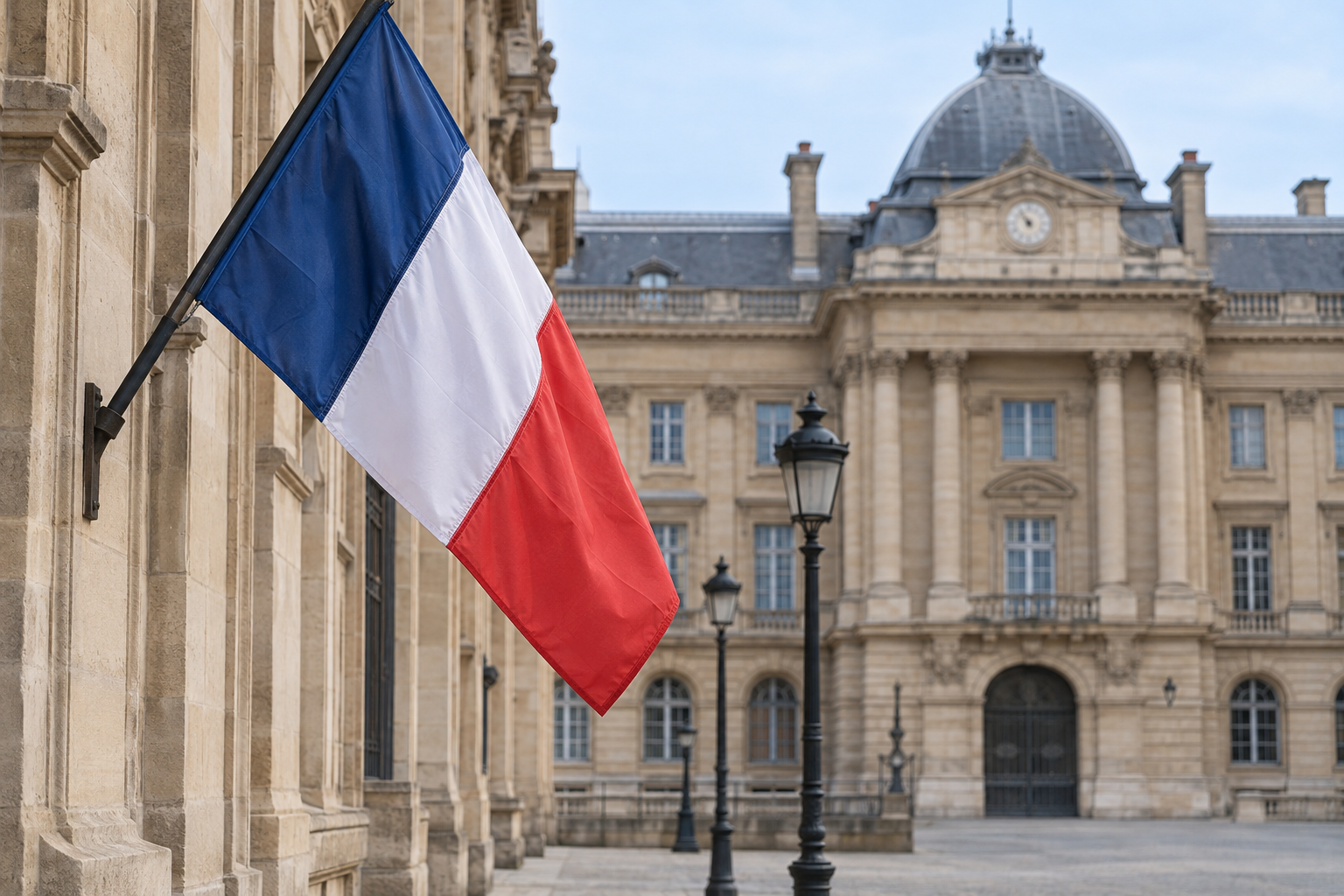
French President Emmanuel Macron said on Thursday that demonstrations organised by groups without legitimate authority would be banned in the coming days, announcing restrictions after weekend rioting. He spoke after a special security meeting at the Elysee Palace with intelligence chiefs and senior ministers. His statement linked the planned restrictions to the status of demonstration organisers, making the question of which groups qualify as legitimate central to the scope of the ban.
Justice Minister Gerald Darmanin said courts had jailed 217 people in fast-track trials connected to the weekend rioting. He added that “this figure is continuing to rise a lot.” The figure provides a concrete measure of the judicial response, but it is specifically a count of people jailed through those proceedings. It should not be read as a total for demonstrators, people involved in the disturbances or everyone facing possible legal action.
Macron characterised the unrest in explicitly political terms. “Last Saturday we had political and seditious acts by ultra-left groups whose aim is to bring down the Republic,” he said following the security meeting. That account presents the events as a challenge to the state rather than simply a matter of public disorder. The description of the groups and their intentions is Macron’s assessment; the court figure supplied by Darmanin does not independently establish those political affiliations or aims.
Read more: Russian strikes kill 7 in Ukraine amid push to resume peace talks
The announced restriction concerns demonstrations in the coming days, while the fast-track cases concern rioting over the weekend. Those are distinct parts of the response: one addresses future gatherings and their organisers, and the other concerns judicial proceedings associated with events that have already occurred. Keeping that distinction clear matters because the number of people jailed does not, by itself, explain which organisations will fall within the planned prohibition or which demonstrations it will affect.
Darmanin’s statement also indicates that the reported judicial outcome was not a settled final tally. His description of the figure as continuing to rise gives a direction of change, but no additional count or numerical comparison. It therefore supports reporting that more people were being jailed, without supporting an estimate of the eventual total or the pace of increase. The precise figure available remains 217 people jailed in fast-track trials linked to the weekend disturbances.
The central practical question is how the authorities will determine whether a group has legitimate authority to organise a demonstration. The available details do not provide a definition of that threshold, identify the groups whose gatherings will be prohibited or establish the geographical reach of the restrictions. Macron’s wording should therefore not be treated as an announcement that every demonstration across France will be banned. The stated criterion concerns the organisers, rather than an expressly universal prohibition on public gatherings.
Read more: Warren warns of food insecurity as advocates seek delay to SNAP changes
The president’s language and the justice minister’s figures offer different perspectives on the same episode. Macron emphasised an alleged political purpose behind the acts, while Darmanin described the results of court proceedings. The statements are not interchangeable evidence: the minister’s total does not identify the offences in individual cases, and the president’s account does not establish the circumstances of each person jailed. Nor do the available details connect every person included in the court figure to the groups Macron blamed.
An assessment of the restrictions must consequently distinguish between the government’s stated concern and the evidence available about its response. The meeting with intelligence chiefs and senior ministers shows that Macron addressed the issue through a senior security gathering. It does not, on its own, reveal the intelligence discussed or the basis for selecting particular organisers for prohibition. The available material also contains no response from demonstration organisers or those affected by the court proceedings, leaving their positions unrepresented.
For the coming days, the announcement leaves implementation as the immediate issue. Identifying the demonstrations covered and explaining the organising-authority criterion would clarify how broad the prohibition is in practice. Until those details are available, the announced measure cannot reliably be described as either a narrowly defined restriction on specified groups or a general suspension of protest activity. Its stated scope remains demonstrations organised by groups judged to lack legitimate authority, with Macron’s security assessment providing the political context.
The judicial response, meanwhile, remains open-ended in Darmanin’s account because he said the number jailed was still rising. Further figures would be needed to establish how that response develops beyond the reported fast-track cases. For now, the confirmed elements are the minister’s tally and Macron’s announcement of restrictions in the coming days. Together they describe a response combining court action over the weekend rioting with prospective limits on demonstrations, while leaving the detailed boundaries of those limits unresolved.