Art · Art
Met turns to everyday fashion after Galliano cancellation
The Costume Institute is assembling 200 to 230 pieces for its 2027 exhibition, shifting attention from John Galliano to designers’ transformations of familiar clothes and materials.
By Calla Brenmoor · 3 min read
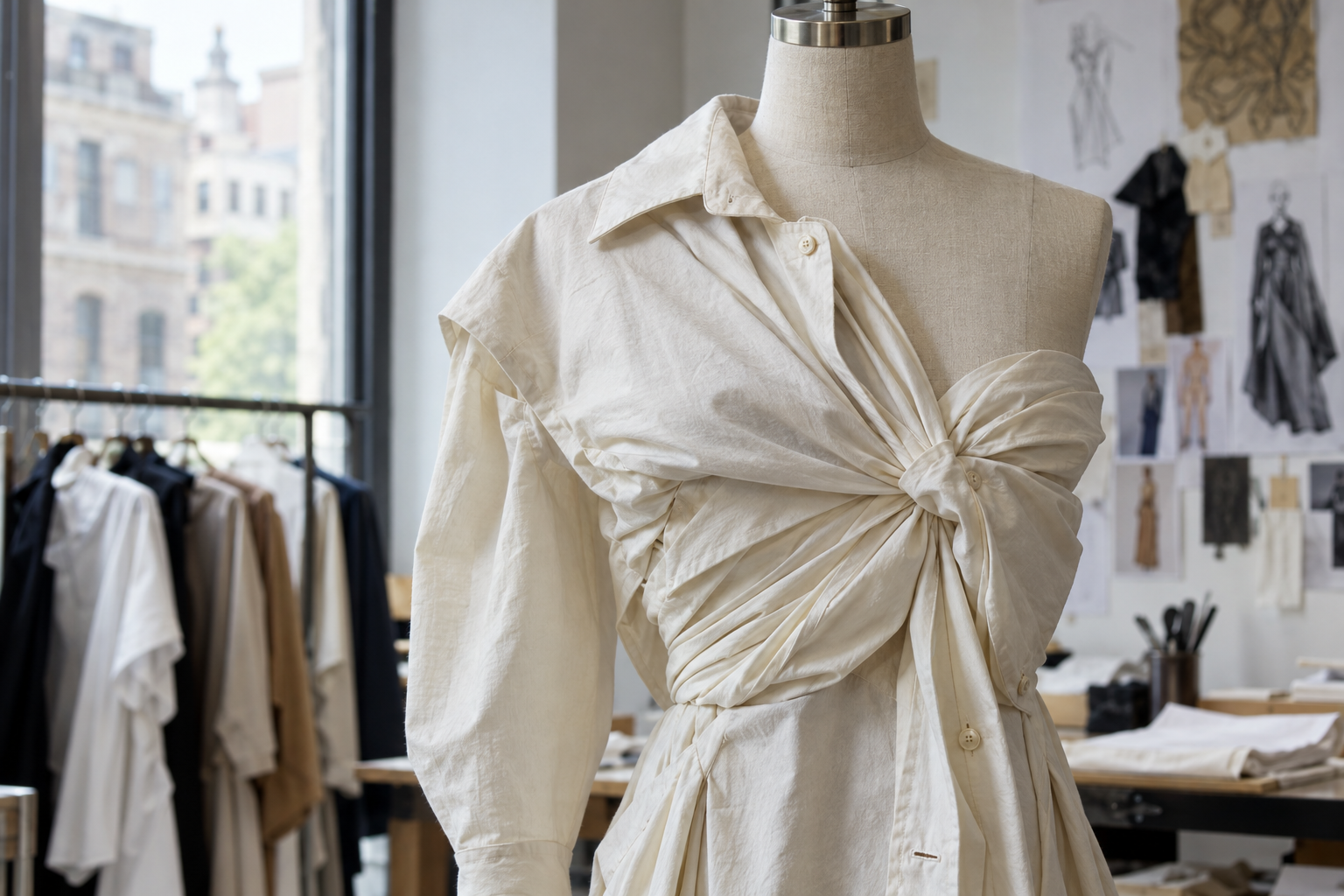
The Metropolitan Museum of Art is taking its next Costume Institute exhibition in a more restrained thematic direction after abandoning a show centred on John Galliano. Rather than organise the presentation around the British designer, the museum will examine how designers rework ordinary clothing and objects. The change follows objections from members of its patron circle and replaces a focus on an individual with a broader inquiry into the creative possibilities of everyday dress.
Opening on May 9, 2027, “extraORDINARY: Fashion and the Poetics of the Everyday” will feature loans and pieces from the Costume Institute’s archive, with the museum assembling 200 to 230 pieces. Planned exhibits include a couture puffer coat by Charles James, Calvin Klein jeans and flannel designed by Marc Jacobs for Perry Ellis. Those selections establish the exhibition’s central proposition: garments associated with familiar wardrobes can also provide material for an examination of design, construction and experimentation.
Curator Andrew Bolton has described the exhibition as revealing “unexpected possibilities within forms and materials we think we already know”. The emphasis is on transformation rather than simply displaying recognisable clothes. Familiarity supplies the starting point, while the designers’ interventions supply the subject. That distinction matters for a show whose title asks visitors to reconsider the ordinary: the garments need not be unfamiliar for their treatment to reward close attention, and everyday references do not necessarily imply unambitious design.
Read more: Maebashi biennale makes the city itself an artistic concern
The announced examples suggest several ways into that argument. James’s puffer coat places a familiar garment within couture, while the Klein jeans and Jacobs flannel bring other recognisable categories into the exhibition. Together, they offer a different organising principle from a presentation devoted to one designer’s work. The question becomes less how a single creative identity develops than how different designers approach clothing that visitors may already recognise, and what changes when those garments are considered as museum objects.
The planned range of 200 to 230 pieces also qualifies the impression of a retreat into modesty. Restraint describes the subject more readily than the size of the presentation. The museum is assembling a substantial group of objects, although the announced range is not a final count. Drawing on both loans and the institute’s holdings gives the exhibition material beyond a single collection. The named garments illustrate its direction without yet establishing the balance between designers, clothing types or approaches.
The change follows a dispute that had reached figures connected to the museum’s support network. Jill Kargman, an actor and member of the Friends of the Costume Institute patron circle, said she was leaving her role over the Galliano exhibition. Arne Glimcher, founder of Pace Gallery, was considering removing the museum from his will. The Met and Galliano cancelled the project on August 31, 2026. Those responses made the disagreement more than a question of curatorial preference, bringing patron relationships into the debate.
Read more: Art Week Tokyo seeks to connect the city’s art scene across 56 venues
The replacement offers a different basis for discussion, but its quieter premise should not be confused with an answer to every objection raised by the abandoned project. Bolton’s stated ambition concerns the interpretation of fashion, while Kargman’s stated intention to leave and Glimcher’s contemplated action concerned the Galliano show. These are distinct issues. What the new programme clearly changes is the exhibition’s centre of attention: a contested individual gives way to a theme capable of encompassing work by several designers.
That shift will also frame expectations for the Costume Institute benefit on May 3, 2027. As of November 5, 2026, the museum had not announced a dress code, though Bolton had indicated that it could follow the exhibition’s understated direction. How that translates into benefit attire remains unresolved. A theme rooted in familiar clothes offers a different prompt from the elaborate dressing associated with the Met Gala, but the exhibition’s emphasis on imaginative transformation leaves room for interpretations beyond straightforward versions of everyday outfits.
There is already an example of the friction that understated dressing can produce at the event. Model Bhavitha Mandava’s understated outfit at the 2026 Met Gala drew controversy. Designed by Chanel’s Matthieu Blazy, the outfit paired a sheer zip-up top with trompe l’oeil jeans. The response provides a counterpoint to the new exhibition’s premise: recognising the language of ordinary clothing does not guarantee agreement about its suitability for a setting associated with visual display.
The next details to watch are the benefit’s dress code and the final exhibition selection. For now, the announced garments and Bolton’s explanation point towards a show that asks for attention to construction and reinterpretation rather than a single designer’s reputation. After the Galliano cancellation, that is a marked curatorial change. Whether the everyday theme produces a similarly restrained gala remains open; the museum has set out its exhibition’s direction, but has yet to announce the benefit’s dress code.