Georgian art · Art
New Georgian museum to open space for artists as protests intensify
Set on a 115-acre site, the Kvareli Foundation for Contemporary Art is scheduled to open with an exhibition tracing Georgian art since the 1960s as demonstrations intensify again.
By Calla Brenmoor · 4 min read
A new private museum devoted to Georgian contemporary art is preparing to open as protests gather renewed momentum in the country, offering an exhibition platform for artists whose work has sometimes lacked institutional support. Founded by shipping and logistics executive Jemal Inaishvili, the Kvareli Foundation for Contemporary Art is scheduled to welcome visitors on 2 November 2026. Its opening brings a long-standing private collection into a broader public programme at a politically unsettled moment for Georgia’s cultural institutions.
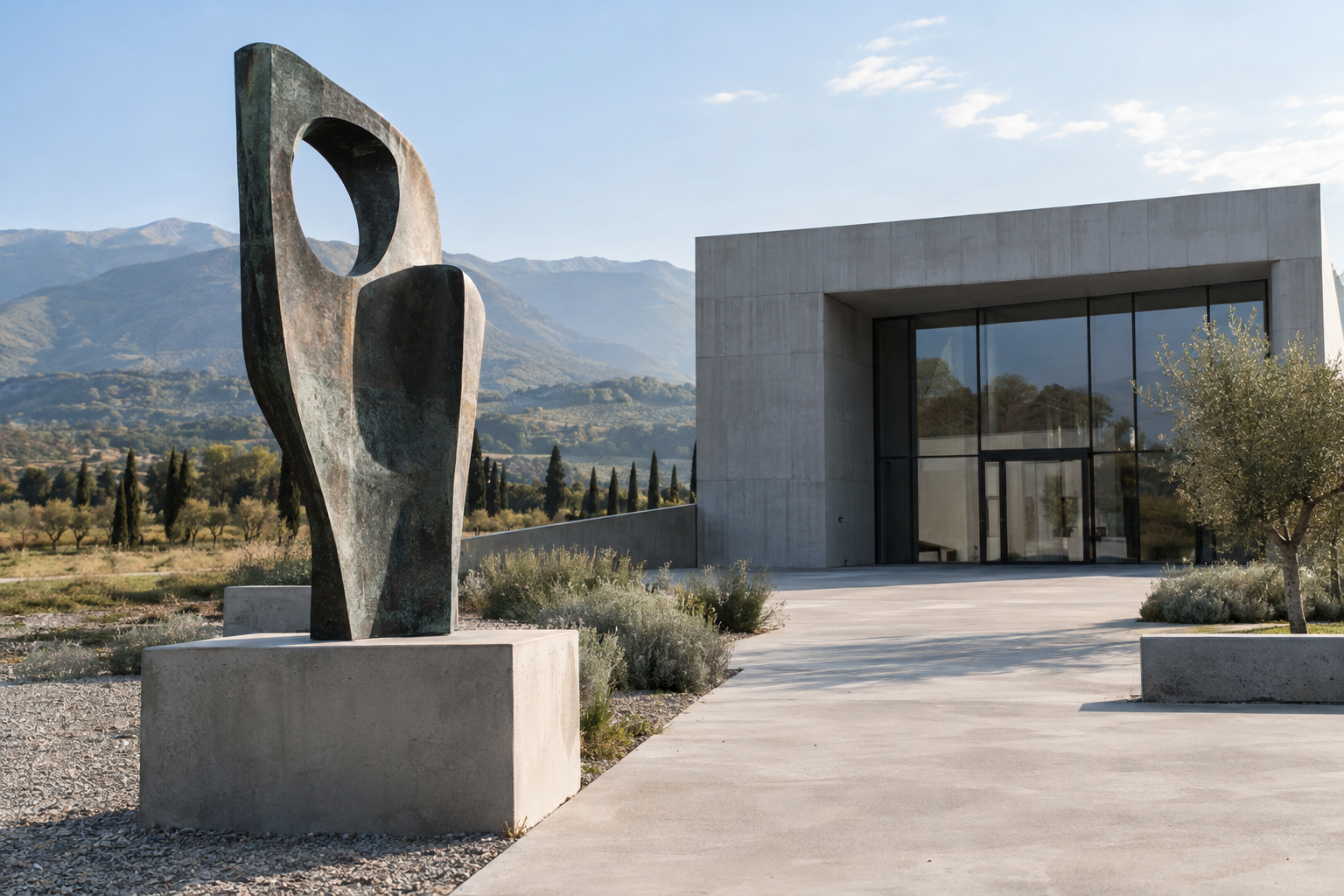
The foundation stands on 115 acres bought by Inaishvili, around two hours’ drive east of Tbilisi. Its newly constructed, two-storey building has a facade of red slats within a silver-grey frame. The first exhibition, Georgian Contemporary Art: Origins and Continuities, draws on the founder’s holdings and borrowed works to examine artistic developments since the 1960s. That historical scope is central to the project: rather than presenting only recent production, the foundation is seeking to place contemporary Georgian practice within a longer artistic trajectory.
For creative director Nino Sulkhanishvili, access to exhibition space is an important part of the institution’s purpose. Some of the artists it intends to support are not given space in institutional settings because of their political stances, she says. “We decided to give the space to those who actually need it,” Sulkhanishvili says. The foundation’s stated mission therefore extends beyond displaying a collector’s acquisitions. It seeks to make room for artists whose visibility depends in part on whether institutions are willing to exhibit them.
Read more: Socrates Sculpture Park rebuilds shoreline and adds one-acre art space
That ambition comes against a backdrop of continuing political confrontation. Georgia’s institutional art sector began developing substantially only in the early 2000s, according to Sulkhanishvili, and its growth has been complicated by major political changes. The Georgian Dream government has turned away from Europe and towards Russia. Disputed parliamentary results in October 2024, followed a month later by the government’s decision to suspend EU accession talks, prompted more intense demonstrations. Protests are again escalating, with a campaign expected to culminate in a major rally on 28 November 2026.
Inaishvili’s collection supplies the foundation with a base built over about 40 years. He considered becoming a painter when he was young and spent time among artists before becoming a collector. He dates the start of his collecting to around 1985, when he asked to buy a work during a late-night gathering hosted by the artist Irakli Sutidze. Contemporary art became his principal collecting interest from the mid-1990s. The museum consequently brings together the results of a long personal commitment, rather than a collection assembled solely to furnish a new institution.
The circumstances in which that collection developed help explain the founder’s emphasis on cultivating buyers as well as audiences. After Georgia became independent of the Soviet Union in 1991, poverty left relatively few buyers and collectors, Inaishvili recalls. He remains among the country’s few major collectors focused on living artists. His foundation is intended partly to change that situation by encouraging wealthy Georgians and international visitors to learn about the work, acquire it and support its makers.
Read more: Binance reports $6.3 billion breach impact as asset freezes widen
About 10% of Inaishvili’s collection consists of work by international artists, including Ukrainians, whom he says he is particularly keen to support during their country’s difficulties. That international component sits alongside the Georgian focus of the inaugural exhibition. The collection and exhibition represent different aspects of the undertaking: the collection reflects decades of individual buying, while the exhibition uses those holdings together with loans to construct a historical account. The foundation’s opening programme will therefore involve interpretation and selection, not simply the presentation of everything its founder owns.
There is a distinction, too, between the breadth of the exhibition’s ambition and the limits its organisers acknowledge. Inaishvili says the history it addresses has not previously been told in its entirety. Sulkhanishvili nevertheless cautions that the exhibition is not intended as an exhaustive survey of all the work produced during the period. Many pieces will be publicly displayed for the first time. That combination gives the opening a dual purpose: introducing unfamiliar works while proposing connections across successive phases of Georgian art.
The founder also has a political background, although he presents business as his main occupation. He represented his home constituency of Batumi in parliament and served as deputy parliamentary chair in the early 2000s, during Mikheil Saakashvili’s presidency. Inaishvili says he chose to leave politics rather than continue that career. His current argument for the foundation centres on patronage and the limited support available to artists, positioning the institution as a vehicle for building interest in Georgian contemporary art.
The immediate next step is the scheduled 2 November opening, ahead of the planned 28 November protest rally. Beyond the inaugural exhibition, Inaishvili wants the foundation to encourage others to become collectors and patrons. The longer-term ambition is therefore not confined to increasing the audience for his own holdings. It is to broaden support for living Georgian artists, while the opening programme gives visitors a historical framework through which to encounter their work.