Public art · Art
Socrates Sculpture Park rebuilds shoreline and adds one-acre art space
The Queens waterfront park plans to unveil an area featuring three large-scale works by Mark di Suvero while seawall reconstruction keeps much of its five-acre campus closed until spring 2027.
By Calla Brenmoor · 3 min read
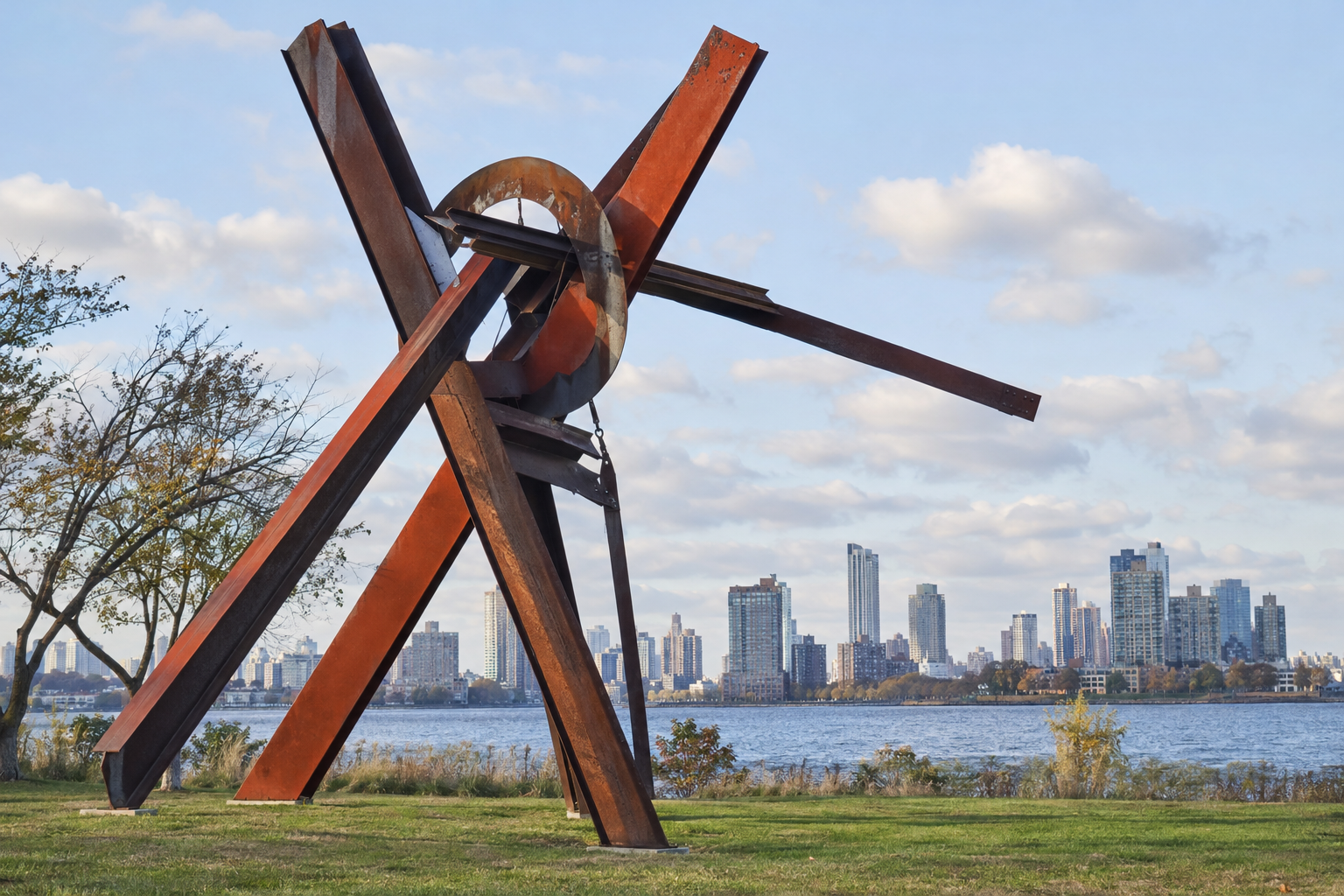
Socrates Sculpture Park on New York’s Astoria waterfront is rebuilding its shoreline while preparing to open an area devoted to its founding artist, bringing environmental repair and artistic expansion together during its 40th anniversary. The projects address different parts of the park’s future: protecting a landscape inundated during Superstorm Sandy and turning a largely disused storage site into a setting for sculpture. They also return attention to the park’s origins as a place where artists and residents reclaimed neglected land.
The one-acre addition, called The Point, is scheduled to be unveiled on 31 October 2026 during the park’s annual Halloween Harvest Festival. It will feature a long-term installation of three monumental works by Mark di Suvero along the southern edge of the park. Meanwhile, seawall reconstruction begun in September 2026 by the New York City Department of Parks & Recreation requires much of Socrates’s five-acre campus to remain closed until the work is completed in spring 2027. Expansion and restricted access will therefore overlap.
The shoreline project follows the flooding that submerged Socrates when Sandy struck New York City in 2012. A four-foot rise in sea level sent water through the park and into the surrounding neighbourhood, then occupied mainly by factories and the neighbouring Noguchi Museum. That history gives the reconstruction a significance beyond the immediate boundaries of an outdoor exhibition space. During the storm, the park was part of the route taken by floodwater into the area around it.
Read more: New Georgian museum to open space for artists as protests intensify
The condition of the site also reflects its history as landfill rather than a natural waterfront landscape. Leonardo describes erosion that has removed not just the rocky shoreline but material beneath the coast, causing the land itself to cave in. The problem is therefore not confined to the visible water’s edge. That account helps explain why resilience at Socrates involves rebuilding the physical boundary of the park, alongside the more familiar work of maintaining a landscape in which sculpture can be made and displayed.
The seawall reconstruction is part of work taking place at riverfront parks across New York City with funding from the Federal Emergency Management Agency. At Socrates, its immediate cost to public access is substantial: much of the campus must remain unavailable during construction. The new sculpture area does not remove that restriction, but it places an opening alongside the closures. The two projects illustrate the practical tension between maintaining access to a waterfront cultural space and undertaking work intended to sustain it.
For The Point, the transformation begins with land already associated with the park but largely abandoned to storage. Its conversion gives three works by di Suvero a long-term place in the public landscape. Leonardo presents the addition as a way of linking the institution’s future with its beginnings during the anniversary year. Rather than introducing an artist without an existing connection to the site, the installation foregrounds the sculptor whose studio helped bring the park into being.
Read more: Binance reports $6.3 billion breach impact as asset freezes widen
Di Suvero, now 93, lives mainly on the West Coast, although the three sculptures have remained on-site since they were created. The earliest dates from 1995 and the most recent from 2017. Their presentation at The Point is thus a change in how existing works inhabit the park, rather than the arrival of newly made sculptures. Leonardo likens di Suvero’s work to drawing in space, emphasising the thought the artist gave to its interaction with its environment.
That relationship between making art and remaking land reaches back to Socrates’s establishment in 1986 by artists and community members. Di Suvero’s nearby studio occupied a former brick warehouse, where he brought in a team to install his work and shared space and tools with other sculptors. The neighbouring landfill offered a place to extend that activity beyond the studio. Developing sculpture in public view, with a connection to the neighbourhood, became part of the undertaking rather than a separate exhibition function.
A workforce development programme gave that founding effort a practical local dimension. Residents of the nearby Astoria Houses public housing complex were hired to clear the land and assist artists with fabrication, linking the landscape’s restoration to paid work. The programme had been dormant since the Covid-19 pandemic. Leonardo relaunched it in 2026 through a pilot supported by the Ford Foundation and Urban Upbound, reviving another element of the park’s early model alongside the renewed attention to its land and founding artist.
The next milestones will arrive on different schedules: The Point’s unveiling on 31 October 2026, followed by the expected completion of seawall reconstruction in spring 2027. Together with the workforce pilot, they bring the park’s anniversary into focus as more than a retrospective occasion. Socrates is reorganising space for art while repairing the waterfront that supports it, with the immediate experience of the park shaped both by the new installation and by the construction closures still required.