Artificial intelligence · Technology
Nvidia to invest $3 billion in Meta as AI partnership expands
The share purchase is part of Meta’s planned $95 billion stock offering and accompanies closer collaboration between the companies on the Muse agent platform.
By Arlen Mossett · 3 min read
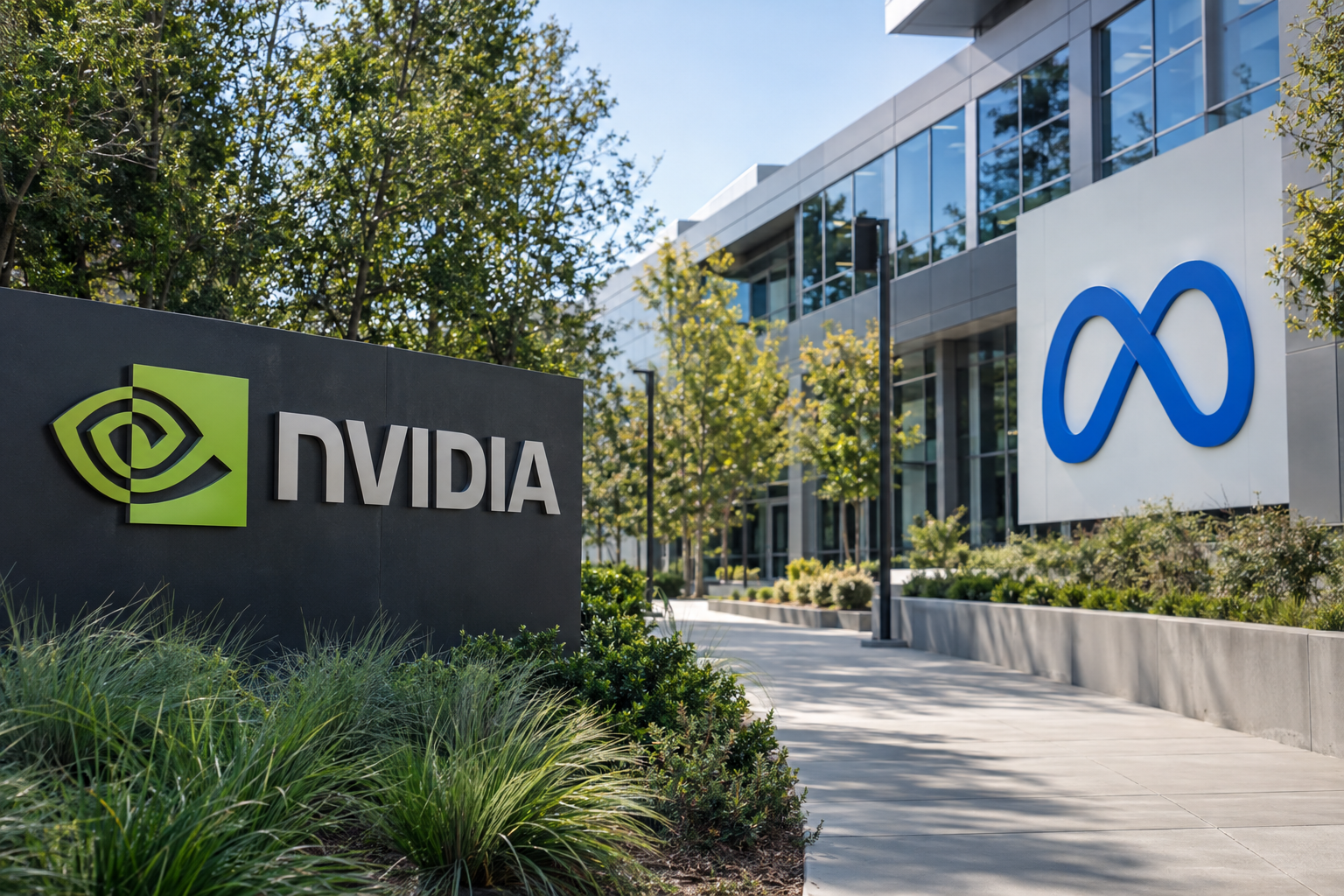
Nvidia will invest $3 billion in Meta as the companies broaden their artificial intelligence partnership, combining a share purchase with closer collaboration on the Muse agent platform. The companies said Tuesday that the investment would form part of a stock offering Meta announced Monday to support spending on AI infrastructure. The arrangement gives the expanded relationship a financial component alongside the work on Muse, although the available details do not establish a timetable for that collaboration.
Meta plans to raise $95 billion through the offering. Its announcement identified Nvidia, Advanced Micro Devices and Broadcom as interested in purchasing up to $5 billion in shares. Nvidia specified that it would buy $3 billion of the offering. Those figures describe different elements of the financing: the overall amount Meta plans to raise, the potential purchases involving the three companies, and Nvidia’s stated investment. The expressions of interest should not be treated as completed purchases.
The sequence places Nvidia’s commitment within a broader fundraising effort rather than presenting it as a separate source of financing outside the offering. Meta announced its stock sale Monday, followed by the companies’ statement Tuesday on the expanded partnership. Nvidia said its $3 billion purchase would come from that $95 billion offering. The investment is therefore part of Meta’s announced capital-raising plan, not an additional amount to be added to the offering’s stated size.
Read more: Anthropic IPO prospectus reveals $80 billion in first-half losses
Meta has linked the fundraising to its investments in artificial intelligence infrastructure. That stated purpose provides the financial context for Nvidia’s participation, but it does not amount to a breakdown of how the proceeds will be spent. The available information does not allocate the $95 billion among individual infrastructure projects or identify an amount reserved for Muse. It would therefore be premature to describe Nvidia’s entire investment as a budget for developing the agent platform.
Muse is nevertheless an explicit part of the expanded relationship. The companies said their partnership would include closer collaboration on the agent platform, placing that work alongside Nvidia’s equity investment. The two elements are related through the partnership announcement, but they measure different things: one is a specified financial commitment, while the other is a direction for joint work. No comparable financial figure for the Muse collaboration appears in the available details, leaving its scale unquantified.
The distinction is important when assessing what the announcement establishes. Viewed as a financing development, it identifies a buyer for $3 billion of Meta’s planned share offering. Viewed as a technology partnership, it signals that the companies intend to work more closely on Muse. Neither reading alone captures the full announcement. At the same time, the investment amount does not provide a measure of the platform’s development progress, its eventual use or the results the collaboration might produce.
Read more: Iran weighs Hormuz leverage as U.S. escalation looms
The references to Advanced Micro Devices and Broadcom require a different level of certainty. Meta’s announcement described those companies and Nvidia as interested in purchasing up to $5 billion in shares; Nvidia gave a specific amount for its own planned purchase. The available details do not establish separate commitments by the other two companies. Assigning either company a purchase amount, or treating the full expression of interest as secured financing, would go beyond what the available information establishes.
The figures also leave an important distinction between Meta’s fundraising ambition and the status of the transaction. A planned $95 billion offering is not the same as confirmation that the entire amount has been raised. Similarly, Nvidia’s statement that it will purchase shares describes a commitment rather than a report that the purchase has already been completed. The available information establishes the intended scale of the offering and Nvidia’s participation without providing a completed accounting of the wider financing.
For an assessment of the expanded relationship, the financial and operational questions therefore remain separate. The share purchase has an exact announced value; the closer work on Muse does not have a similarly specific measure in the available information. The partnership can be described as broader, but its financial size should not stand in for evidence of technological outcomes. That distinction keeps the significance of Nvidia’s commitment separate from expectations about what the companies might achieve together.
Execution of the announced share purchase and further details on the Muse collaboration remain matters to track. Any additional participation by Advanced Micro Devices or Broadcom would also need to be distinguished from their stated interest. For now, the concrete development is Nvidia’s commitment to buy $3 billion of Meta’s planned $95 billion stock offering, accompanied by plans to deepen work on Muse. The available details establish that direction without specifying the collaboration’s milestones or results.