Israel · Politics
Israel votes under shadow of 8-month Iran war
The first Israeli election since the October 7 attack presents a major test for Benjamin Netanyahu while nuclear oversight in Iran remains restricted.
By Nessa Dalric · 4 min read
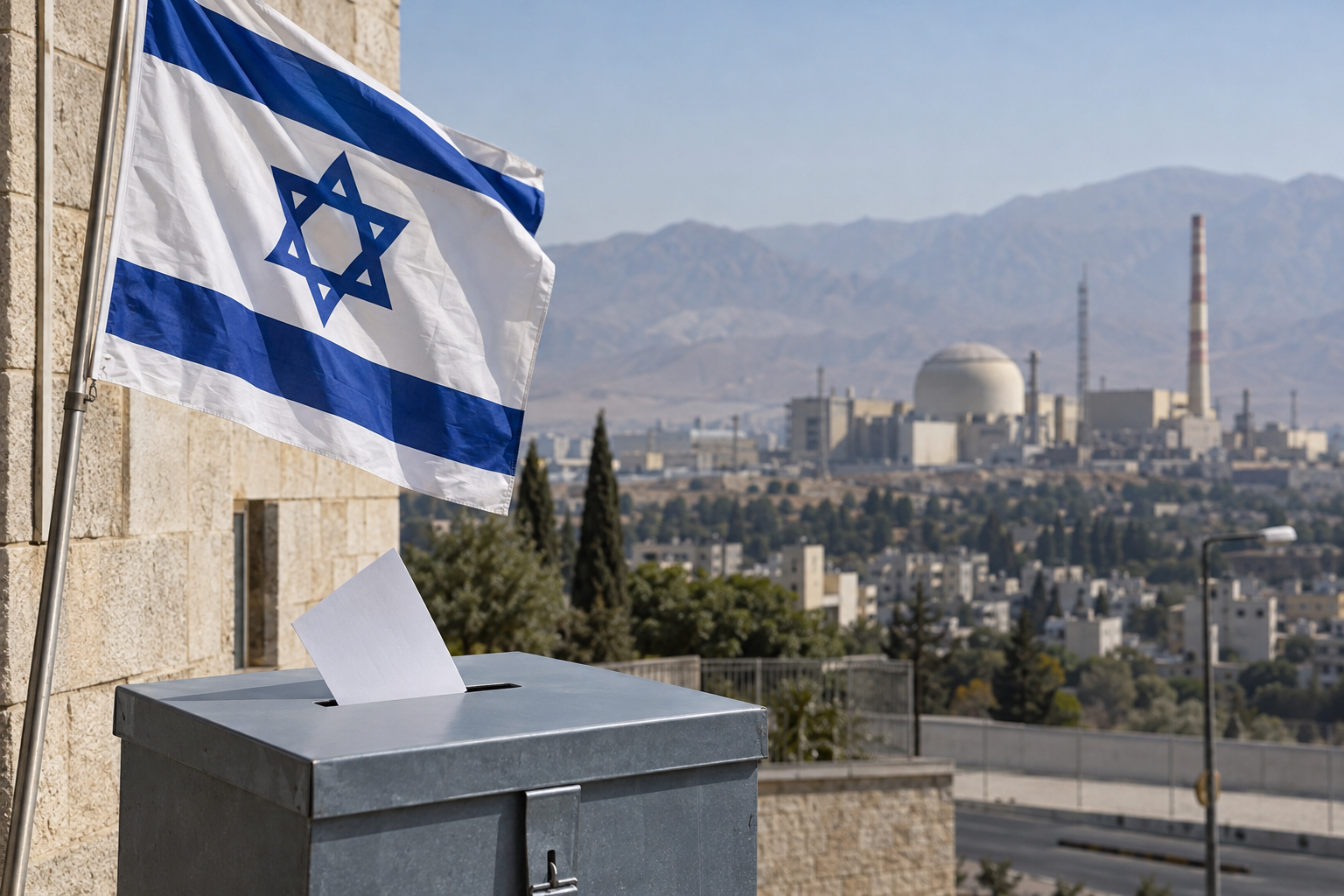
Israelis voted on October 27, 2026, in their first election since the October 7 attack, with the 8-month Iran war overshadowing the contest. The election presents a major political test for Benjamin Netanyahu, Israel’s longest-serving prime minister, against a backdrop of conflict and unresolved questions about access to Iranian nuclear facilities. It brings electoral judgment and wartime leadership into the same frame, although the electoral consequences of that combination cannot be established from the available information.
The central figures describe the security backdrop rather than the electoral balance: an 8-month war and a gap in access to key Iranian nuclear facilities dating to June 2025. The International Atomic Energy Agency has not had access to those facilities since Israel and the United States launched strikes on nuclear sites that month. Nuclear facilities have also come under attack in the latest war. These are distinct chronological references; the June 2025 strikes should not be treated as the beginning of the eight-month conflict.
For Netanyahu, the election places his continued leadership before voters at a particularly consequential moment. His status as the country’s longest-serving prime minister gives the contest a clear leadership dimension, but longevity alone does not establish electoral strength. Nor does the prominence of the Iran war indicate whether it will help or hurt him. Assessing that would require evidence of voter preferences and election results, rather than an assumption that a wartime contest necessarily favours either continuity or a change in leadership.
Read more: Iran weighs Hormuz leverage as U.S. escalation looms
The October 7 attack provides the other defining reference point. This is the first Israeli election since that attack, making the contest a political milestone as well as a test conducted during the Iran war. Those two contexts overlap, but they are not interchangeable. The fact that the election follows the attack does not establish which issue individual voters regard as decisive, or how they weigh the attack against the conduct and consequences of the current conflict.
The nuclear-access issue adds a separate, concrete uncertainty to that political setting. The IAEA’s lack of access concerns key facilities in Iran, not necessarily every nuclear location in the country. That distinction matters: the available information supports a finding of restricted access at important sites, but not a comprehensive description of the agency’s work across Iran. It also provides no basis for quantifying the condition of the affected facilities or determining what the strikes have achieved there.
The report that nuclear facilities have also been hit during the latest war makes the access question relevant beyond the June 2025 attacks. Yet the occurrence of strikes and an assessment of their effects are different matters. Without further information, the attacks cannot be used to establish the extent of damage or the status of nuclear activity at the sites. This leaves a security uncertainty in the election’s broader backdrop, without establishing its role in the campaign or supplying a measurable outcome against which claims of success or failure could be tested.
Read more: HSBC announces buyback of up to $1 billion as revenue misses estimates
Two different analytical readings of the contest therefore need to be kept separate. A leadership-centred reading focuses on the challenge facing Netanyahu after his long tenure. A security-centred reading focuses on the ongoing Iran war, with the unresolved nuclear-access question forming part of the broader background. Both provide contexts for the election; neither establishes how voters have responded. There is no basis in the available information for assigning a particular position to an opposition party or presenting an unreported government argument as an established campaign claim.
The wider regional backdrop also includes Egypt’s involvement in Saudi Arabia’s fight with the Houthis. That development adds to the regional fighting surrounding the Israeli vote, but the available account does not specify the form or scale of Egypt’s involvement. It would therefore be premature to describe a particular military commitment or infer its effect on the Israeli contest. Its relevance here is as part of the regional setting, rather than as evidence of a demonstrated shift in Israeli voter sentiment.
The distinction between a consequential election and a measurable electoral trend remains important. The information available establishes the timing of the vote, Netanyahu’s leadership position and the wartime context, but supplies no turnout figures, vote totals, seat projections or polling comparisons. Those omissions prevent a data-based judgment about the strength of competing political camps. They also mean that the prominence of security issues in the election’s backdrop should not be mistaken for evidence that voters agree on the appropriate political response to them.
A fuller assessment of Netanyahu’s electoral position will depend on the election outcome. Separately, any clearer account of the nuclear situation will require information about conditions at the affected facilities and whether the IAEA’s access changes. The vote itself cannot resolve those technical uncertainties. For now, the election combines a first post-October 7 electoral test with an ongoing Iran war whose nuclear dimension remains incompletely documented in the available information.