New York · Real Estate
Only one of 152 recent 485x projects exceeds 99 units
A preliminary analysis reported on Oct. 17, 2026, covering registrations over the previous six months, shows New York developers favouring smaller projects under the housing tax incentive, while industry leaders press for changes.
By Rian Keswicke · 4 min read
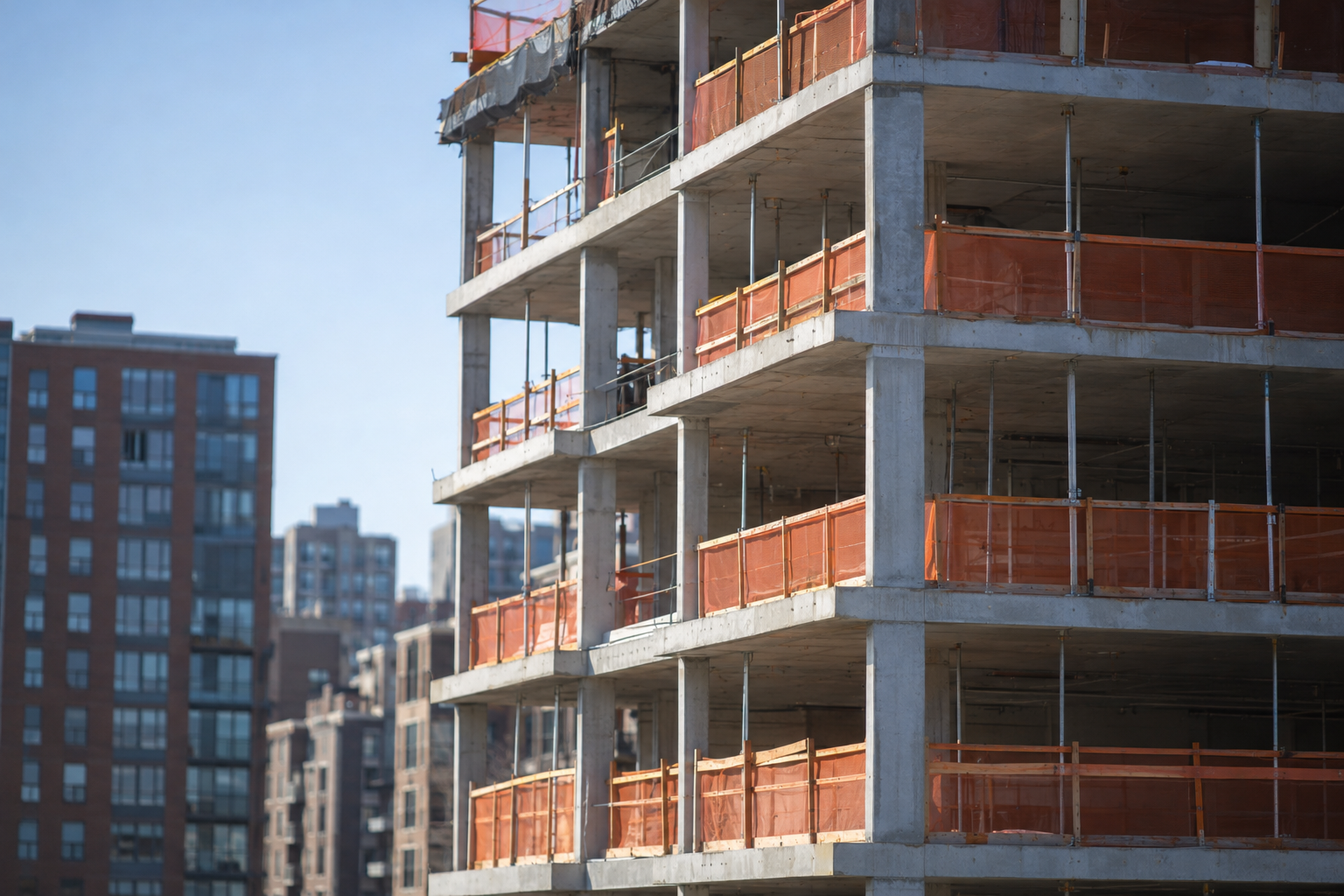
New York developers are largely avoiding larger housing projects under the 485x tax incentive, with recent registrations concentrated below or at 99 units. The pattern is raising questions about the programme’s ability to support development at greater scale, even as an unusually large project in Astoria demonstrates that some developers are planning larger schemes. Industry representatives are using project-level financial comparisons to make the case for changes to elected officials.
Of 152 projects registered for 485x in the six months preceding an Oct. 17, 2026 report, 20 had exactly 99 units and only one exceeded that size, according to a preliminary analysis by Nate Bliss, founder and chief executive of Latent Urban Ventures. The exception was BedRock Real Estate Partners and LMXD’s development at 35-10 Steinway Street in Astoria, where 560 units are expected. The figures measure registrations rather than completed homes, providing an indication of developers’ choices without establishing how much housing those choices will ultimately deliver.
The issue matters because a property tax abatement is generally necessary to make most rental developments financially viable in New York City. Access to an incentive, however, does not by itself establish that a project will offer a sufficient return. The emerging question around 485x is therefore not simply whether developers will apply for it, but whether they will use it for larger buildings. The recent registration pattern suggests that participation in the programme and willingness to build at scale are distinct considerations.
Read more: Trump pauses Russia sanctions, drawing bipartisan criticism
The broader application figures show a similar concentration: 49 projects with exactly 99 units have sought to use 485x, compared with only four larger developments. Those totals should be distinguished from Bliss’s preliminary review of registrations during the six-month period. Both sets of figures nevertheless point in the same direction, with substantially more activity at precisely 99 units than above that level. They do not, on their own, explain every developer’s decision or establish that all larger projects are financially unworkable.
Some developers are pursuing greater scale without putting all the homes into a single larger building. About a dozen are grouping 99-unit buildings on individual development sites, using a workaround that allows larger projects to take that form. This complicates any assessment based solely on the size of individual buildings: a concentration at 99 units does not necessarily mean each development site will contain only that many homes. It does, however, reinforce the importance of that building size in developers’ use of the incentive.
A financial comparison prepared by Helen Hwang of Meridian Investment Sales illustrates the industry’s concern. Her slide showed a projected yield on cost of 6.1 percent for an actual 99-unit project, against 5.2 percent if the project contained 150 units. In that example, increasing the number of homes was associated with a lower projected return on development cost. The comparison illustrates a potential financial concern alongside the preference visible in the application figures, rather than establishing why individual developers chose those project sizes.
Read more: U.S. Coast Guard rescues 16 after boat sinks off Baja California
The limits of that example are also important. It compares projections for a particular project, not realised returns across the programme, and cannot establish that every 150-unit development would produce the same outcome. Similarly, the registration analysis is preliminary. Taken together, the figures support a narrower conclusion: developers are repeatedly choosing 99-unit projects, while the financial example being circulated by the industry shows a less attractive projected yield at a larger size. Neither measure constitutes a complete assessment of 485x’s eventual housing output.
Industry leaders have been presenting Hwang’s slides in private meetings with elected officials as they seek revisions. Real Estate Board of New York President Jim Whelan argues that the programme is failing to generate the large developments the city needs. “We cannot solve a housing crisis 99 units at a time,” he said in a statement. His position places the emphasis on scale, treating the concentration of applications at 99 units as a policy concern rather than simply a matter of developers selecting different building formats.
The Astoria development provides a counterpoint to any suggestion that larger projects are entirely absent from 485x registrations. Its expected 560 units make it a substantial departure from the recent registration pattern. Yet its exceptional status also limits what it demonstrates about the programme’s broader appeal. BedRock and LMXD’s registration shows that a larger scheme is planned under the incentive, while the surrounding figures indicate that this remains an uncommon choice among the projects covered by the preliminary analysis.
The immediate policy discussion centres on the industry’s push to persuade elected officials that changes are necessary. Further registrations will help show whether the current concentration persists or whether more developers follow the larger-project route. For now, the available evidence separates use of the incentive from use of it at scale: developers are applying, but very few registrations in the six-month analysis exceed 99 units. That distinction is central to judging whether 485x can support the larger housing developments its industry critics are seeking.