Europe · World
Polish police reinforce school security and detain teenager over ‘Bloody Friday’ warning
Officers are increasing patrols around schools as online threats and attacks in Mazovia prompt class cancellations and a shift to remote teaching in several communities.
By Ilan Corven · 3 min read
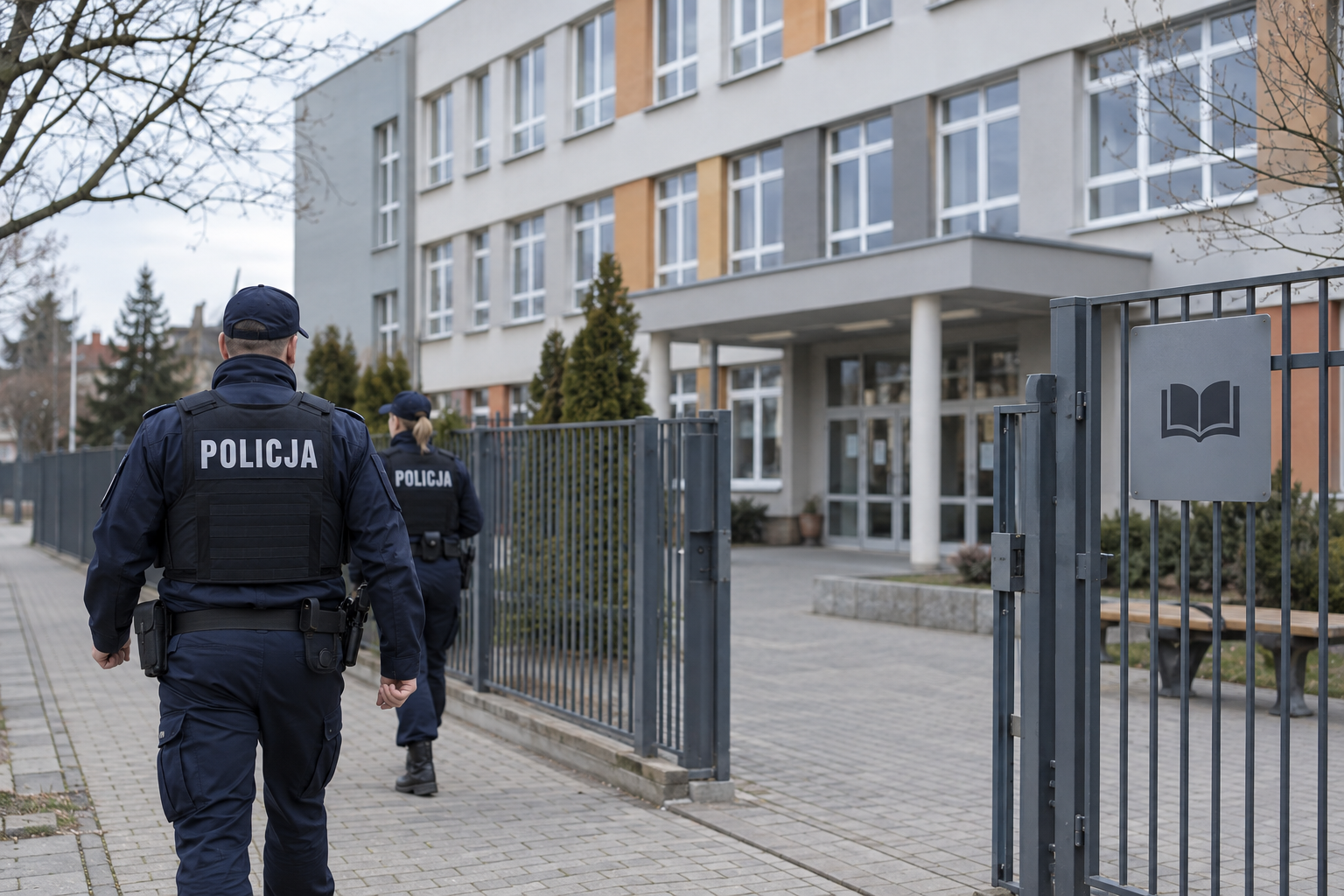
Polish police are reinforcing security around schools after warnings of alleged attacks planned for Friday 9 October spread online, intensifying concern following violence at schools in the Mazovia region. Officers detained a teenager suspected of making a video associated with the warnings, while authorities announced suspensions of in-person teaching in several communities. National Police Commander-in-Chief Marek Boroń said officers would be present around schools from Friday morning, both to protect school communities and to help ease the anxiety surrounding the threats.
The case handled by officers in Przasnysz involved a 17-year-old county resident whom Mazovian police described as the probable author of the circulating video. It came against a backdrop of separate incidents: a 19-year-old attacked nine people with a knife at a school in Ostrołęka on Wednesday, and a 15-year-old former pupil attacked three people in Leszczydole-Nowinach on Thursday. A 37-year-old school employee died following the latter attack. In another case, in Sierpc, police detained a 17-year-old who had two knives.
Screenshots and recordings circulated among pupils and parents on Thursday, carrying warnings of a so-called “bloody Friday”. The material alleged that attacks on schools were planned for 9 October. The warnings emerged after the incidents in Mazovia, giving families both actual violence and unverified claims about further attacks to contend with. The distinction is important: the online material described alleged future plans, whereas the attacks in Ostrołęka and Leszczydole-Nowinach were events that had already taken place.
Read more: Trump’s reported reluctance raises questions over future US support for Ukraine
Boroń said police patrols had begun appearing near school grounds on Thursday and officers were already communicating with school representatives. Friday’s response was expected to involve co-operation with principals, teachers and local authorities. Police said they were monitoring developments and would send officers to schools considered at risk. The deployment therefore combined a protective presence with direct contact with those responsible for running schools, rather than relying solely on the investigation into the material spreading through social media.
The police chief also said reports of possible threats had increased sharply after the Ostrołęka attack, and urged people to exercise caution when passing on claims about alleged attacks. That warning accompanied, rather than replaced, the stronger security measures. The increase he described concerned reports of potential danger; it did not itself establish that the reported plans were genuine. His comments reflected the different tasks facing police: responding to information that might require action while discouraging the further spread of unverified warnings.
In Przasnysz, officers took up the case after online material referred to alleged school attacks and its author announced a “massacre in Przasnysz”. Mazovian police said the detained 17-year-old lived in Przasnysz county and was probably responsible for the video. They said work involving the teenager was continuing. Their description left authorship as a matter under investigation, rather than an established conclusion. The detention was a concrete development in the response to the warnings, but did not by itself substantiate the alleged attack plans.
Read more: French students rally over school resources as Mélenchon declares Bastille ‘retaken’
The Sierpc detention involved a different reported concern: a 17-year-old had said he intended to harm someone at school, and police found two knives on him. Pupils and teachers helped bring about his detention by telling officers about his behaviour. This case involved both information about the teenager’s conduct and weapons found in his possession. It also showed the role of communication between school communities and officers alongside the more visible deployment of patrols.
The fatal attack in Leszczydole-Nowinach, near Wyszków, involved a former pupil who attacked a caretaker, the principal and a teacher with a sharp implement, believed to have been a knife. The 37-year-old employee died from her injuries, while the other two victims were injured. The accounts of this attack and the violence in Ostrołęka provide the immediate context for heightened concern. Their victim figures describe separate incidents, however, and should not be treated as evidence confirming the online claims of further attacks.
Authorities adopted different school arrangements for Friday. Primary schools in the Wyszków municipality were to suspend lessons because of the attacks and additional safety concerns, but were still expected to look after pupils. All secondary schools in Ciechanów were set to teach remotely, while schools in Pułtusk district would not hold in-person classes. These decisions distinguished between classroom teaching, remote instruction and pupil care: the suspension of ordinary lessons did not mean that every institution would cease providing services to children.
The immediate next steps centred on Friday’s police presence, continued contact with school leaders and local authorities, and the ongoing investigation involving the suspected video author. The differing school arrangements showed how the response extended beyond patrols, affecting where pupils would learn and whether they could attend for care. Boroń’s appeal for restraint in circulating claims remained relevant alongside those precautions: authorities were acting on safety concerns while the alleged plans behind the “bloody Friday” warnings remained unverified.