Europe · World
Trump’s reported reluctance raises questions over future US support for Ukraine
Zelenskyy’s criticism of US willingness to help comes ahead of Miami talks, alongside reports that a Russian strike killed at least 33 civilians in Kramatorsk.
By Ilan Corven · 5 min read
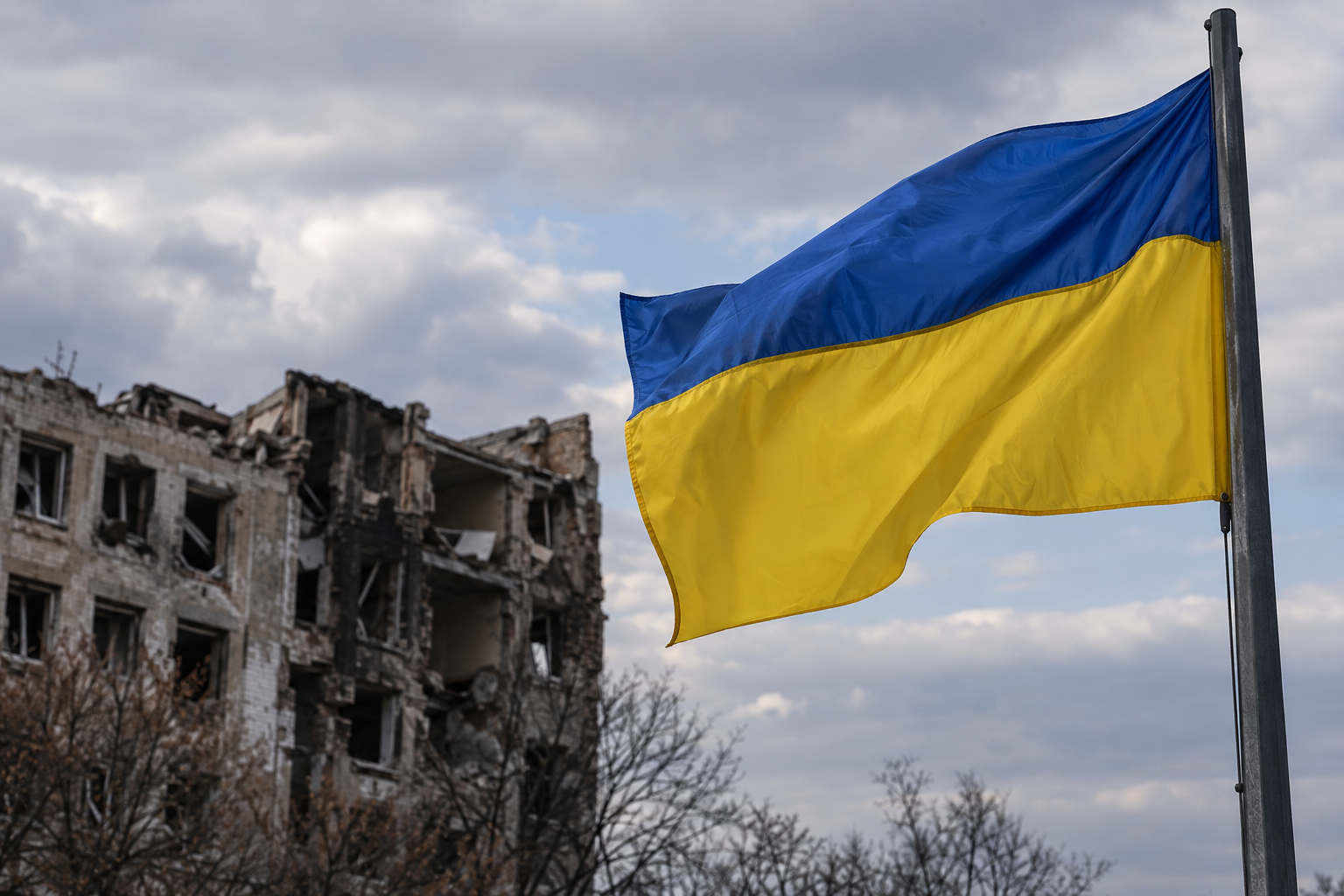
Donald Trump’s reported reluctance to help Ukraine is in focus as Volodymyr Zelenskyy criticised US “unwillingness” ahead of talks in Miami involving Jared Kushner and Steve Witkoff. The criticism places Washington’s readiness to assist Ukraine alongside the prospect of further diplomatic engagement. It also comes against a deadly backdrop: a Russian glide-bomb attack in Kramatorsk that killed civilians, underscoring the stakes for Ukraine while discussions remain ahead.
As of 9 October 2026, the reported death toll in Kramatorsk was at least 33 civilians. That figure provides a measure of the human cost alongside the diplomatic questions. The available information does not, however, quantify any prospective change in US assistance or identify a specific American decision to reduce it. The distinction is important: Zelenskyy’s criticism raises a question about Washington’s willingness to act, but does not by itself establish the scale or form of any change in support.
The reported criticism concerns political willingness rather than a documented adjustment to an assistance programme. Trump is described as unwilling to help, while the criticism attributed to Zelenskyy concerns the United States more broadly. Those formulations point towards the same concern without establishing precisely which action Kyiv believes Washington should take. Treating the reported reluctance as an announced withdrawal would go beyond what is known; treating it as inconsequential would overlook the significance of the Ukrainian leader’s public criticism.
Read more: French students rally over school resources as Mélenchon declares Bastille ‘retaken’
There is also no detailed breakdown of what assistance is at issue. Help could be discussed in different ways, but the information available does not specify an amount, a timetable or a particular commitment under dispute. That leaves an important limit on any assessment of the consequences. Without a defined decision to examine, it is not possible to measure how far American policy has changed, or to distinguish a disagreement over immediate action from a broader difference over future support.
The Kramatorsk attack gives the discussion an immediate civilian dimension. The reported toll is a minimum, and the available information does not establish whether it is final. The information identifies the attack as a Russian glide-bomb strike but supplies no further casualty breakdown or account of the damage. Even within those limits, the deaths make clear why the question of outside assistance is more than an abstract diplomatic argument: the discussion is taking place alongside a reported attack with substantial civilian casualties.
The Miami talks are a forthcoming diplomatic setting, although it is not specified whether they will address the uncertainty over assistance. Kushner and Witkoff are named in connection with those discussions, but no detailed agenda, proposed agreement or expected outcome is specified. Their involvement establishes a diplomatic context for Zelenskyy’s remarks; it does not establish that Washington has offered a new commitment. For assessing the future of US support, the relevant distinction will be between the continuation of discussions and any concrete decisions that emerge from them.
Read more: Polish police reinforce school security and detain teenager over ‘Bloody Friday’ warning
Zelenskyy’s criticism and the prospect of talks should not automatically be read as contradictory. A public complaint about insufficient willingness can coexist with efforts at diplomatic engagement. On the facts available, however, it would be premature to describe the remarks as a negotiating tactic or the Miami discussions as evidence that the disagreement is close to resolution. Both readings would require information about intentions and proposals that has not been supplied. The more limited conclusion is that criticism has been reported while further diplomatic discussions are planned.
Yulia Klymenko, a member of Ukraine’s parliament, is also listed to discuss Zelenskyy’s criticism ahead of the Miami talks and the Kramatorsk strike. Her inclusion identifies a parliamentary voice on the subjects under consideration, but no substantive remarks from her are provided. It would therefore be wrong to assign her a particular demand, forecast or interpretation of Trump’s position. The Ukrainian position that can be attributed directly remains Zelenskyy’s criticism of American willingness, rather than a more detailed account of what Kyiv expects next.
The uncertainty over Ukraine is unfolding alongside wider international concern about energy security and access to critical raw materials. In Brussels, a gathering is drawing more than 1,000 delegates, with over 50 countries represented. Those figures indicate the breadth of participation in a separate gathering amid resource pressures. They do not measure support for Ukraine, and there is no basis for treating the gathering as a response to Zelenskyy’s remarks. It nevertheless provides context for the range of security-related economic questions on the international agenda.
Helen Clark, the former New Zealand prime minister and outgoing chair of the Extractive Industries Transparency Initiative, is also identified in connection with discussion amid those energy and raw-material pressures. Her title provides a resource-governance dimension to that separate subject, but does not establish that she is attending the Brussels gathering. No statement from Clark about American assistance to Ukraine is provided, nor is any link established between the Brussels gathering and the Miami talks. Keeping those tracks distinct avoids suggesting that involvement in an international resource discussion amounts to a commitment on Ukraine.
There are competing ways to interpret the diplomatic picture, but not enough evidence to resolve them. Zelenskyy’s criticism points to dissatisfaction with Washington’s readiness to help. The planned discussions, meanwhile, show that engagement remains on the agenda. Neither fact cancels the other out. Talks alone cannot demonstrate that assistance will follow, just as a public expression of frustration cannot establish that future assistance has been ruled out. A detailed American explanation would be needed to assess the disagreement against Washington’s own stated position.
The figures available also need to be kept in their proper categories. The Kramatorsk death toll concerns civilian harm; the Brussels attendance figures describe the reach of a separate international gathering. None supplies a financial or operational measure of American support. That absence matters for a data-based assessment of the dispute. There is no stated assistance figure against which to compare Zelenskyy’s complaint, and no specified reduction from which to calculate an effect. The strongest conclusions are consequently about uncertainty, not a measurable policy shift.
The Miami discussions could provide clarity about American intentions, but whether assistance will be addressed is not established. A useful outcome for understanding the dispute would be a specific commitment, a defined point of disagreement or an explanation of what remains unresolved. None is yet established in the information available. Until then, forecasts of either a durable settlement of the disagreement or a decisive end to US help would run ahead of the evidence.
For Ukraine, the immediate picture combines a severe reported civilian toll with an unresolved question about an important diplomatic relationship. Zelenskyy has made his dissatisfaction public, while talks involving Kushner and Witkoff remain ahead. Trump’s reported reluctance therefore warrants scrutiny, but not an assumption that a particular change in assistance has already occurred. One question to watch is whether diplomatic contact yields an identifiable position on support—and whether that position addresses the unwillingness the Ukrainian leader has criticised.