U.S. politics · Politics
U.S. campaigns spend $137 million on AI-made ads ahead of midterms
Spending on AI-made political advertisements has risen from virtually nothing in the previous election cycle, although the total leaves questions about its distribution and impact unanswered.
By Nessa Dalric · 4 min read
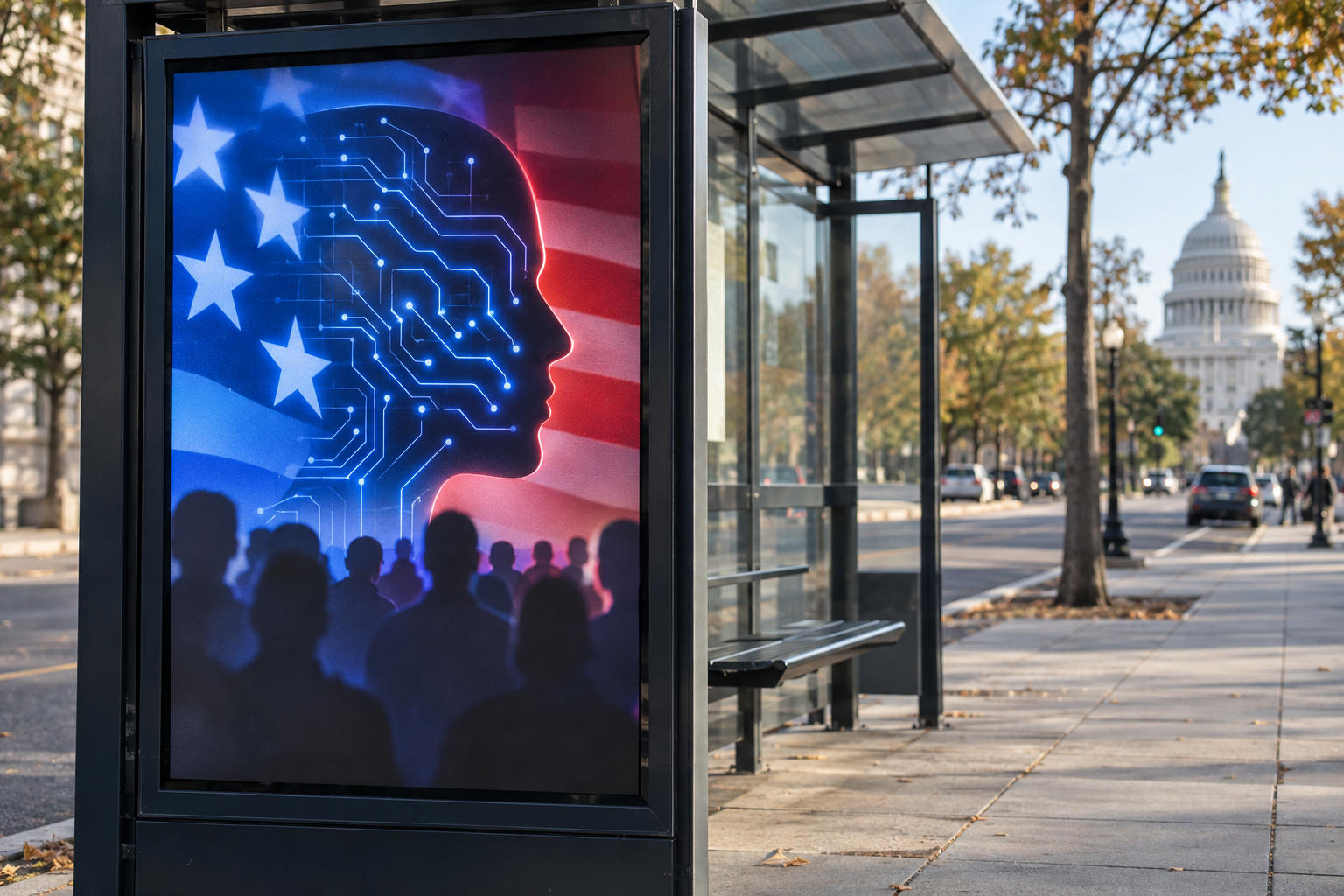
U.S. political campaigns have spent $137 million on advertisements made with artificial intelligence ahead of the 2026 midterm elections, compared with virtually nothing in the previous election cycle, according to information published on October 21. The spending marks a substantial change in campaigns’ use of AI-made advertising over a single cycle. It establishes a financial measure of that change, but does not establish how widely the technology has been adopted or whether the advertisements have influenced voters.
The central comparison is between $137 million in the current cycle and a previous-cycle baseline described as nearly zero. That is evidence of a sharp increase, rather than a precise measure of the rate of growth: no exact figure for the earlier period is supplied. The distinction matters because virtually no spending is not necessarily the same as none. A reliable percentage increase cannot be stated from those figures, nor can the spending be placed in a longer historical series using the supplied information.
The timing places the expenditure ahead of a midterm election, making the figure a measure of campaign activity before the outcome is known. The supplied information does not present it as a final accounting of the election cycle. No closing date for the expenditure tally or schedule for subsequent updates is provided. The $137 million therefore describes spending reported ahead of the election, rather than establishing where the total will stand when campaigning ends. It also provides no basis for projecting further expenditure.
Read more: AI warnings divide New York’s democratic socialists
The size of the total does not, by itself, show AI-made advertisements’ share of political advertising. There is no corresponding figure for overall campaign advertising expenditure or campaign budgets in the supplied information. Without those comparisons, the spending cannot be characterised as either a dominant part of campaign budgets or a marginal one. The supported conclusion is narrower: campaigns have spent $137 million on a category on which they spent virtually nothing in the previous cycle, making the change in expenditure clear even though its relative scale remains unknown.
Nor does the aggregate identify how the spending is distributed. No candidates, parties, individual campaigns or contests are named, and no breakdown accompanies the total in the supplied material. It is therefore not possible to say whether expenditure is concentrated among a limited group of campaigns or spread more broadly. The figure also cannot support a comparison between parties. It is presented as U.S. campaign spending, but the information does not establish the tally’s coverage of campaigns or contests or locate the political or electoral centres of that activity.
Another limitation concerns what qualifies as an AI-made advertisement. The supplied information uses that category without setting out a definition or explaining how spending was assigned to it. It does not distinguish between advertisements made wholly with AI and those incorporating AI-made elements. That leaves an important boundary unresolved: the spending figure measures a labelled category, but the available description does not establish how much of the production process involved the technology in each advertisement counted.
Read more: Carrefour warning adds business pressure to France’s cost-of-living unrest
Expenditure also needs to be distinguished from output. The $137 million is a monetary total, not a count of advertisements, and no advertisement count is provided. It cannot establish whether campaigns are producing more material, spending more on individual advertisements or changing the balance between production and distribution. Similarly, the figure does not demonstrate that AI has reduced campaigns’ costs. Assessing any savings would require information about comparable work and expenditure that is absent from the supplied material.
There are two different questions in assessing the development: how much campaigns are committing to AI-made advertising, and what that commitment achieves. The spending addresses the first. It does not answer the second. No audience figures, measures of voter response or evidence of electoral effects are supplied. A larger financial commitment should therefore not be treated as proof of greater persuasive power. Equally, the absence of those measures does not establish that the advertisements have been ineffective.
The total offers no basis for judging the accuracy or character of the advertisements themselves. No examples, campaign explanations or responses from opponents are included in the supplied material. It would be unsupported to describe the expenditure as funding misleading material, just as it would be unsupported to present it as evidence of better campaign communication. Those assessments would require scrutiny of the advertisements rather than inference from the technology used to make them. Spending and content are separate questions, even when both bear on evaluating campaign practices.
A fuller assessment would require more than an updated headline total. A consistent definition, a clearer accounting period and comparable campaign-level figures would help establish the breadth and durability of the shift. Evidence about content and audience response would address a different question: what campaigns received for their expenditure. For now, the supported finding is the change within one election cycle—from virtually nothing to $137 million—while the distribution, efficiency and electoral consequences of that spending remain unestablished by the supplied information.