Middle East · World
U.S. reduces embassy staffing as warnings of Iranian threats intensify
The State Department is reducing staffing at 4 Middle East embassies following intelligence that Iran has intensified efforts to target American personnel.
By Ilan Corven · 5 min read
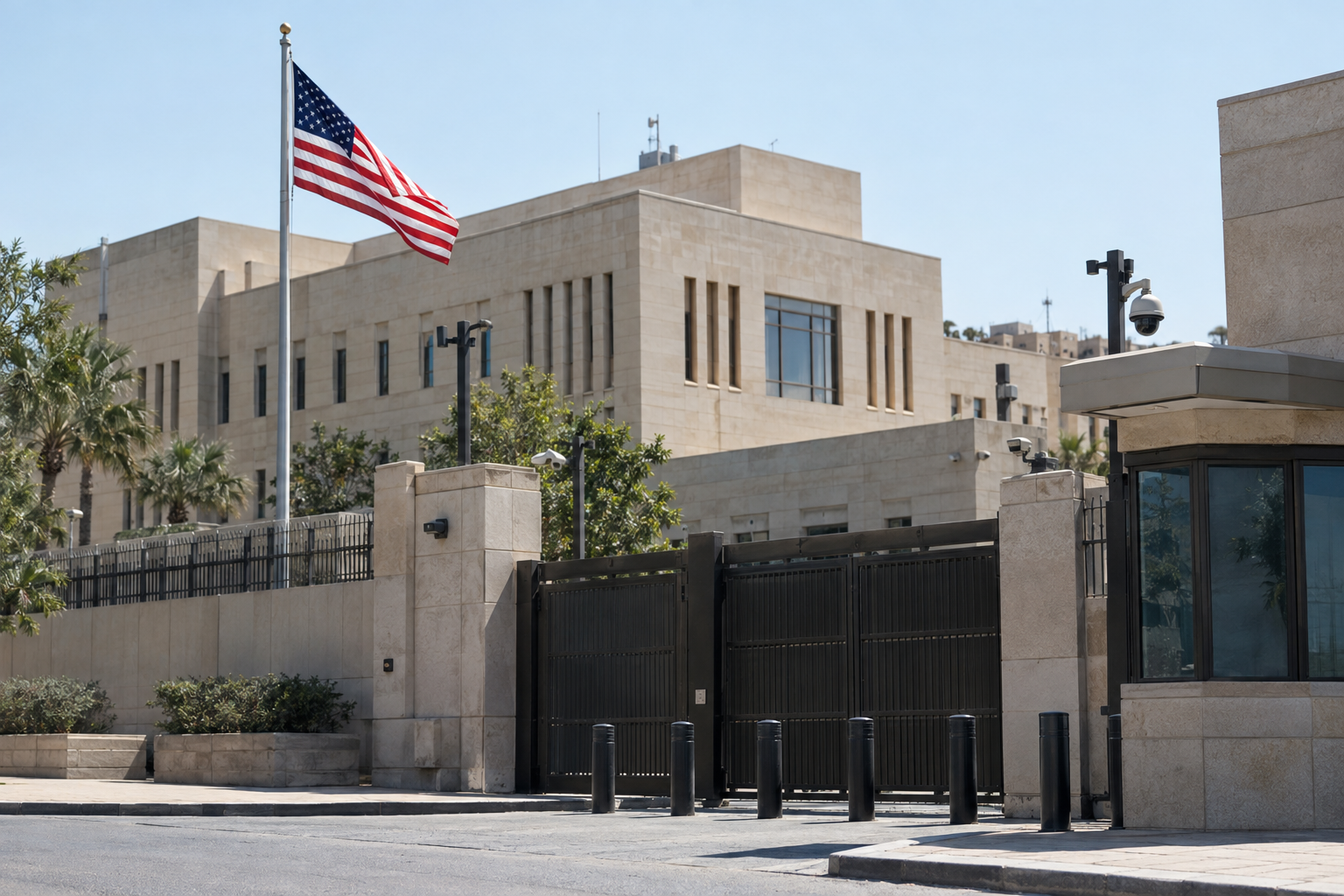
WASHINGTON — The United States is reducing its diplomatic staffing in the Middle East after receiving intelligence that Iran has intensified efforts to target American personnel, against a backdrop of warnings about regional escalation. The move comes as American missions tighten security ahead of the U.S. midterm elections. Iran’s foreign minister, meanwhile, has warned that further escalation around the Strait of Hormuz or elsewhere in the region could endanger civilians, regional states and the global economy.
The State Department’s action covers 4 U.S. embassies in the Middle East. That figure measures the number of diplomatic posts affected, not the number of employees leaving or the proportion of the American diplomatic presence being withdrawn. The available details do not identify the embassies or specify the scale of the personnel reductions. They therefore establish the reach of the staffing decision across diplomatic missions without showing how extensively each mission’s workforce or activities will be affected.
A related intelligence warning was described in a memo from Director of National Intelligence Jay Clayton. According to the available account of the memo, agencies had received intelligence that Iran had “substantially increased efforts to target U.S. personnel” in the region. The memo also indicated that the threats applied to “certain other countries”. The assessment thus described a concern broader than the Middle Eastern posts covered by the staffing decision, although the available account does not identify those additional countries or detail the threats there.
Read more: Israeli forces displace around 1,200 Palestinians in Hebron
The distinction between the intelligence warning and the administrative response is important. The warning concerns American personnel in the region and elsewhere; the confirmed staffing action concerns embassies in the Middle East. Those are related developments, but they are not interchangeable measures of the threat. The number of affected embassies does not establish how many locations Iran may be targeting, how many people may face danger or whether officials assess the risk as equal across the diplomatic posts involved.
The accounts dated Oct. 24, 2026, describe the staffing reductions and heightened embassy security ahead of the U.S. midterm elections. That timing provides a domestic political backdrop to the security decision, but the reported basis for reducing staff is intelligence about Iranian targeting efforts. The available information does not establish that the election calendar prompted the move or that the threats were designed to influence voting. Keeping those questions separate avoids assigning an electoral motive to a security assessment that has been described in different terms.
Clayton’s description signals an increase in the assessed level of Iranian activity, rather than simply the continuation of an unchanged threat. But the available details provide no numerical measure of that increase, no baseline against which to compare it and no description of the period over which it occurred. The assessment’s language is consequently significant as an official warning, while remaining insufficient to quantify the change. The embassy count is the clearest concrete measure of the American response in the available information.
Read more: Lula and Flavio Bolsonaro clash over living costs and corruption in final runoff debate
The nature of the alleged targeting also remains unspecified in the available information. There is no description of an individual operation, an identified intended victim or the intelligence methods that led agencies to their conclusion. Those limits do not negate the warning, but they constrain what can be said about its immediacy and scope. The reported staffing reduction links the State Department’s action to the intelligence; it does not, by itself, reveal the operational details behind the assessment.
Iranian Foreign Minister Abbas Araghchi presented a broader warning about escalation in an opinion column published during the week of the Oct. 24 account. He said any further escalation around the Strait of Hormuz or elsewhere in the region would put civilian lives, the well-being of regional states and the global economy at great risk. His comments addressed the potential consequences of regional escalation rather than the specific security of American personnel. They did not, in the remarks available, directly address the embassy staffing reductions.
The American and Iranian warnings therefore emphasise different risks rather than offering directly comparable accounts of the same incident. The reported U.S. assessment points to intelligence about intensified Iranian efforts against American personnel. Araghchi stresses the harm that additional escalation could bring across the region and beyond. His warning cannot be treated as a specific denial of Clayton’s assessment, nor does it provide independent confirmation of that assessment. The available statements leave the underlying intelligence allegations and the broader escalation warning on separate tracks.
Araghchi’s reference to the Strait of Hormuz gives his warning a specific geographical focus, but he also extended it to events elsewhere in the region. That formulation matters because it does not confine his concern to a single location. At the same time, the available information does not connect a particular threat around the strait to any of the affected embassies. It would therefore go beyond the available facts to describe the staffing decision as a response to an incident there.
A reduction in personnel is also distinct from the closure of an embassy. The reported State Department action concerns staffing, and the available information does not establish that any of the affected missions is shutting down. Nor does it explain which categories of employees are involved or what diplomatic functions may be altered. Those distinctions are central to assessing the practical consequences: a count of affected posts alone cannot show the extent of any interruption to their work.
The warning’s extension beyond the Middle East raises a further question about the geographical limits of the American response. Clayton’s memo referred to threats in other countries, while the staffing reduction described in the available information is regional. The available details do not explain whether additional diplomatic posts are under review or whether different security measures are being considered elsewhere. The broader language of the intelligence assessment should not be read as evidence that further personnel reductions have already been ordered outside the region.
The next points to clarify are the identities of the affected missions, the size of the reductions and the conditions under which staffing might be restored. None is specified in the available details, and no timetable for a subsequent decision is given. Information on those issues would help distinguish the immediate personnel response from any longer-lasting change in the American diplomatic presence. It would also make it possible to assess the operational significance of the embassy figure more precisely.
For now, the confirmed development is a reduction in embassy staffing linked to intelligence about increased Iranian targeting efforts. The wider outlook remains less defined: the intelligence warning extends beyond the posts affected, while Iran’s foreign minister is warning of consequences reaching beyond diplomatic security. Assessing what follows will require further information about decisions and developments not detailed in the available accounts. The present record supports concern about escalation, but not a prediction of its course or scale.