Europe · World
2,800 troops to join Ukraine-support force’s first exercise in Poland
The French- and British-led force will rehearse deployment with troops from 10 European countries, but would enter Ukraine only after a ceasefire is agreed.
By Ilan Corven · 4 min read
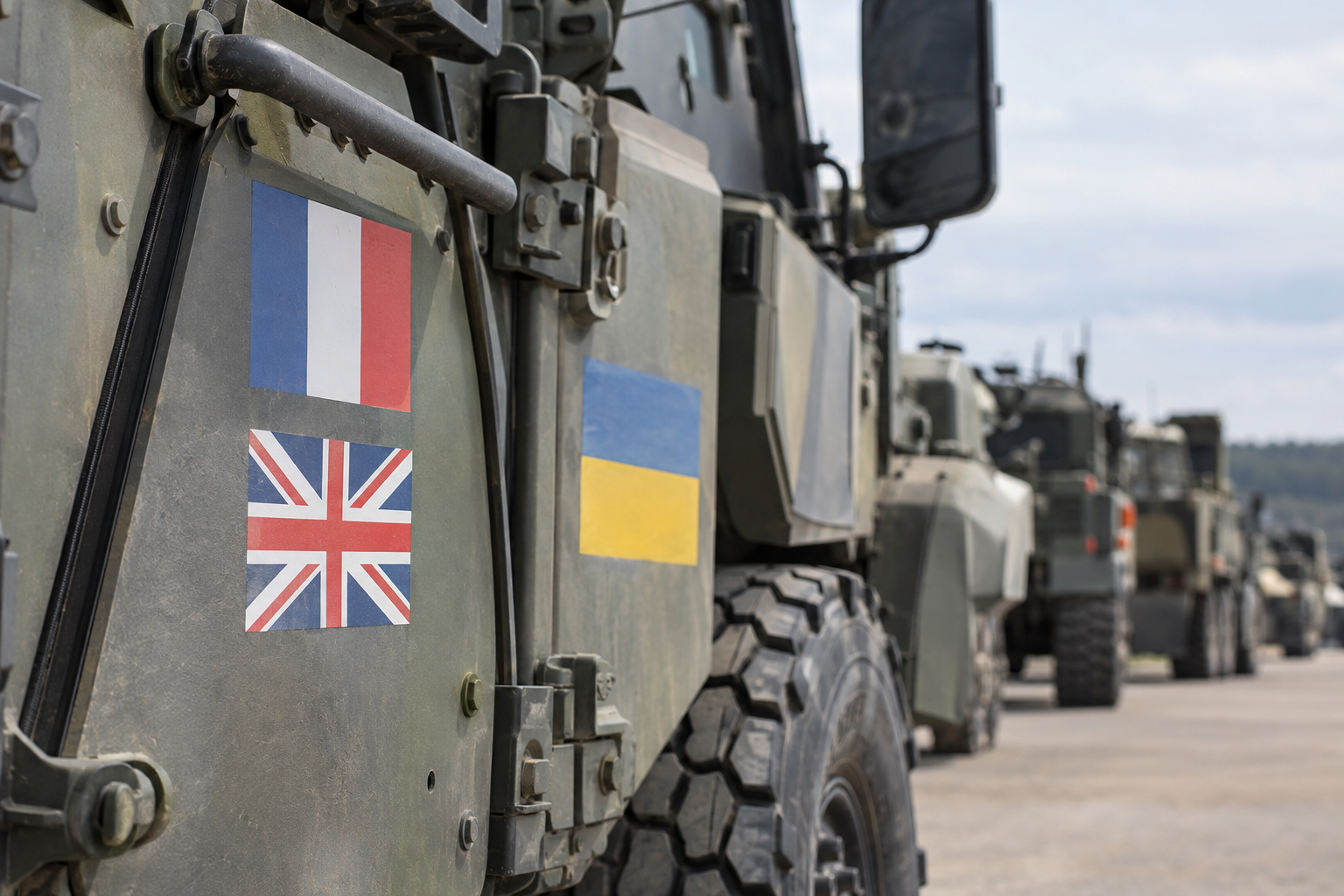
Some 2,800 troops from 10 European countries will take part in Poland this month in the first exercise of a multinational force intended to support Ukraine after fighting stops, the French and British governments said on Tuesday. The exercise will test preparations for a deployment that remains conditional on a ceasefire, rather than mark the start of a military mission inside Ukraine while the war continues.
Scheduled for November 9 to 22, the exercise will centre on air and land operations around Nowa Deba in southeast Poland, some 100 kilometres west of the Ukrainian border. France will provide the largest contingent, with 1,100 troops, while the UK will send 300 soldiers. Poland will both host the exercise and contribute personnel. A separate maritime simulation led by Turkey from Istanbul will examine readiness for possible mine-clearing operations in the Black Sea, extending the preparations beyond the activities in Poland.
The Multinational Force - Ukraine, or MNF-U, was established in 2025 under French and British leadership and already has an operational headquarters in Paris. It is not a NATO operation and has limited US involvement. Its intended responsibilities are to assist Ukraine’s armed forces, help secure Ukrainian airspace and enable economic activity to resume in the Black Sea. Those objectives place military support and conditions for economic recovery within the same framework, although the force has no offensive role and cannot deploy before a ceasefire is agreed.
Read more: U.S. strikes Iranian targets in Strait of Hormuz as Tehran asserts self-defense right
The participating countries in Poland are Belgium, Estonia, Germany, France, Lithuania, the Netherlands, Poland, Spain, Sweden and the UK, according to the joint announcement released by the French defence ministry. The figures show France supplying the biggest national contribution to this first rehearsal, alongside a smaller British contingent and forces from the other participants. Turkey’s role is distinct: it will direct the maritime simulation, but its troops will not join the land exercise. The exercise therefore combines activity in Poland with separately directed preparations for operations at sea.
Called Koalicja, the Polish word for coalition, the exercise is designed to establish how quickly and effectively national contingents could deploy across land, sea and air once hostilities have ended. French General Armel Dirou will lead it jointly with Britain’s Lieutenant General Tom Bateman. Dirou described the rehearsal as an important step towards demonstrating that the force could deploy after the fighting stops. His emphasis was on preparing the mission’s practical arrangements and addressing the logistical and cultural differences between the participating militaries.
The equipment planned for Poland also reflects the exercise’s stated scope. Only light equipment, including drones, is expected to be used, with activities covering defence against drones and self-defence rather than the deployment of heavy weapons. No tanks are expected. Dirou sought to distinguish the exercise from a demonstration of military strength. Alongside those activities, Bateman said the participants would test coordination, practise moving personnel, equipment and supplies, and assess whether the force’s different components could work together effectively rather than operate as separate national units.
Read more: Americans vote for control of Congress in major test for Trump
Bateman also drew a distinction between the force’s intended mission and either peacekeeping or monitoring a ceasefire. He said its purpose was reassurance and support for rebuilding Ukraine’s armed forces, strengthening their capacity to deter further Russian aggression and defend against it if necessary. That description makes Ukrainian military capability central to the proposed mission. It also separates the condition for deployment—a ceasefire—from the force’s responsibilities once deployed: the plan is for support after hostilities, not for a contingent whose principal task is observing whether a truce holds.
UK Defence Minister Wes Streeting described the initiative as a real force, rather than a hypothetical plan, ready to assist Ukraine when combat ends. The headquarters in Paris and the forthcoming multinational rehearsal are concrete elements of that preparation. But operational readiness and an actual deployment remain different questions. The exercise can test the movement and integration of forces; it does not remove the requirement for an agreement to stop the fighting before the mission can begin in Ukraine.
Those preparations come as the war triggered by Russia’s full-scale invasion in 2022 approaches its five-year milestone, with neither side appearing close to a decisive breakthrough. Moscow has shown little willingness to settle for peace, and the exercise’s scale and duration risk aggravating Russia despite the commanders’ emphasis on its non-offensive purpose. The contrast is between European preparations for a post-conflict role and a war whose end remains uncertain, rather than between an agreed settlement and arrangements already being implemented under it.
The next step is the November rehearsal, when commanders will assess deployment procedures, coordination and the ability of the national contingents to function together. In parallel, the Turkish-led simulation will test preparations for eventual Black Sea mine clearance. For the French- and British-led force, these are tests of readiness for a possible future mission. Whether that readiness can translate into deployment will still depend on the condition set out by its organisers: a ceasefire agreement and an end to hostilities.