Poland · Politics
Poland’s court crisis deepens political divide before 2027 election
Eight judges backed by Donald Tusk’s coalition need a quorum of 10 in the 15-member Constitutional Tribunal as the dispute draws right-wing opposition parties together.
By Nessa Dalric · 4 min read
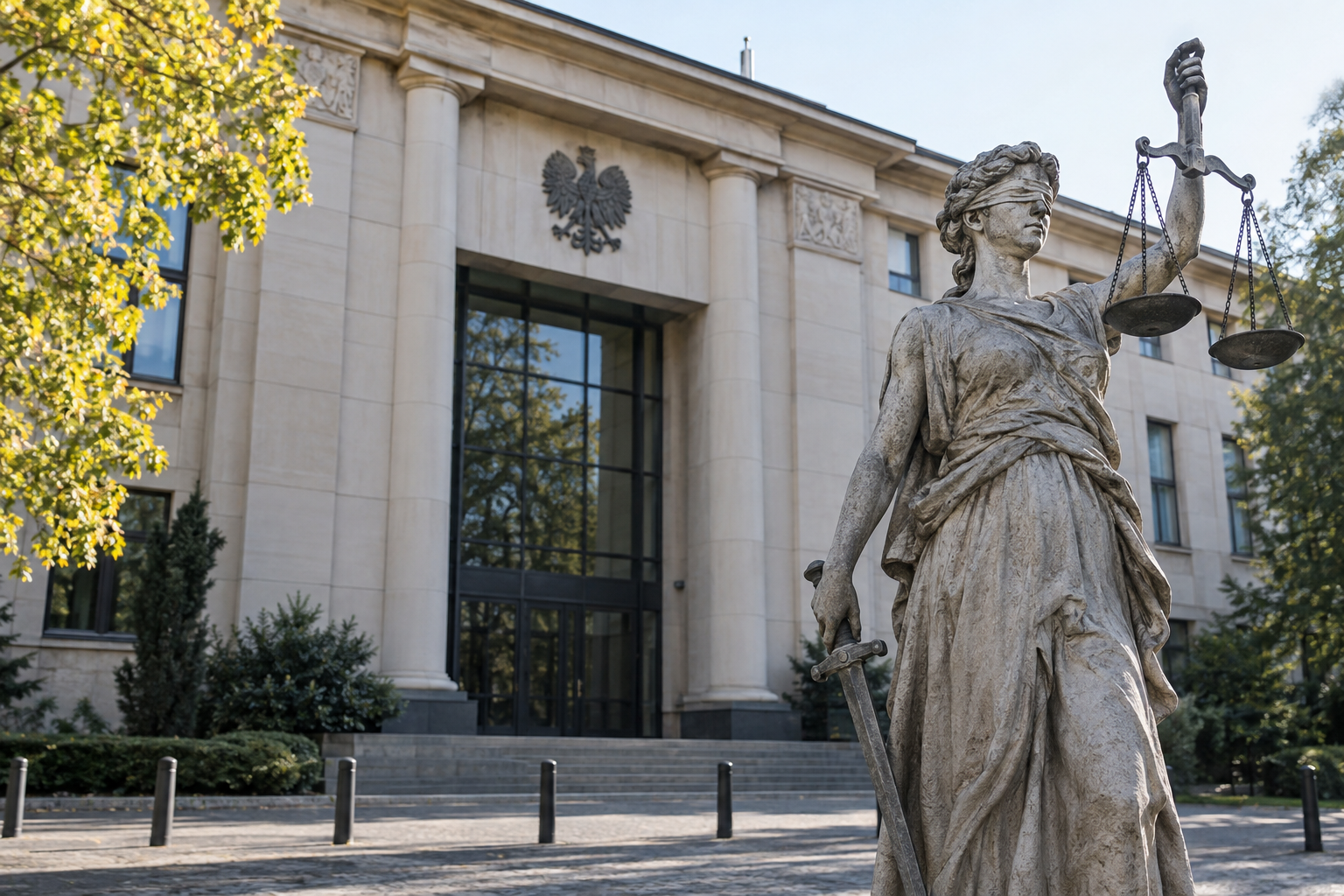
WARSAW — A struggle for control of Poland’s Constitutional Tribunal is sharpening political divisions before the 2027 parliamentary election, pitting Prime Minister Donald Tusk’s government against President Karol Nawrocki and giving right-wing opposition parties a shared cause. Tusk presents his attempt to reverse changes made under Law and Justice, known as PiS, as an effort to restore the rule of law. His opponents describe it as a coup. With police and protesters outside the tribunal, the confrontation has moved beyond contested appointments to a physical dispute over access to the court.
The immediate test comes on Tuesday, when eight judges supported by the governing parliamentary coalition plan to meet to approve the tribunal’s budget and consider disciplinary action against its president, Bogdan Święczkowski, and deputy, Bartłomiej Sochański. The meeting requires 10 of the court’s 15 judges, leaving the coalition-backed group dependent on participation by at least two judges selected during PiS’s rule from 2015 to 2023. Those requirements make attendance consequential: the eight cannot secure the necessary quorum without cooperation from judges appointed under the previous government.
The dispute offers opposition leaders an opportunity to demonstrate unity despite differences over policy. Former Prime Minister Mateusz Morawiecki and libertarian leader Sławomir Mentzen were among right-wing politicians attending a rally at the tribunal. Anna Bryłka, vice president of Mentzen’s Confederation party, said removing Tusk’s government was their central shared objective, notwithstanding differences between their programmes. Tusk’s Civic Coalition leads in polling, but its smaller governing partners risk failing to enter the next parliament. That could create an opening for PiS and other right-wing parties if their leaders can cooperate.
Read more: U.S. strikes Iranian targets in Strait of Hormuz as Tehran asserts self-defense right
The roots of the confrontation lie in appointments made in October 2015. The Civic Platform-led parliamentary majority selected five tribunal judges, with three intended to occupy vacant seats and two chosen for positions that would become available after the parliamentary election. PiS was ahead in polling and subsequently won that election. The tribunal later found that the two appointments for future vacancies were improper. The incoming PiS majority nevertheless invalidated all five selections, chose replacements and had them sworn in by President Andrzej Duda, who was aligned with the party.
That response put the legitimacy of the three replacements for properly appointed judges in question. During the following eight years, PiS changed the tribunal through disputed appointments, changes in leadership and restrictions on procedure. In December 2025, the European Union’s highest court ruled that appointment irregularities dating back a decade meant the tribunal failed to satisfy requirements for independence and impartiality. That ruling provides a legal backdrop to Tusk’s campaign, although it has not settled the domestic struggle over who can exercise authority inside the court.
Tusk returned to government in 2023 pledging to restore the rule of law, but encountered resistance from Duda and then Nawrocki, who won the presidency in 2025 with PiS support. The latest confrontation followed Nawrocki’s selective administration of the oath to the eight judges appointed by parliament, an approach critics regard as unconstitutional. Święczkowski barred the new judges from the building. On Friday, Anna Korwin-Piotrowska invoked her position as the longest-serving judge to suspend Święczkowski and Sochański, escalating the competing claims to judicial authority.
Read more: Americans vote for control of Congress in major test for Trump
Nawrocki interrupted an official journey to Senegal, reversing course over Spain on Friday to return to Warsaw. He reached the tribunal at 1 a.m. on Saturday. Footage showed him pushing past Korwin-Piotrowska to enter, while his camp maintained that she and other judges had unlawfully made physical contact with him. Święczkowski rejects the authority of those seeking to take control and maintains that he remains tribunal president. He has pledged to return to its gates each day to demand admission as the dispute over access continues.
On Monday, Tusk argued that a settlement did not require constitutional amendments: Nawrocki should recognise judges legally elected by parliament and permit them to begin work. He also accused the president of pursuing a confrontation that could impose serious costs on Poland. PiS deputy leader Przemysław Czarnek instead demanded Tusk’s resignation and a new election called by the president. Zbigniew Bogucki, who heads Nawrocki’s chancellery, presented the dispute as a defence of Polish democracy, underscoring how both camps claim to be protecting democratic government.
For Tusk’s allies, the electoral implications extend to Poland’s relationship with the EU. Borys Budka, a Civic Coalition member of the European Parliament and former justice minister, warned that a right-wing government would dismantle independent checks and take Poland out of the bloc. That is a partisan warning rather than an established outcome, although PiS leader Kaczyński raised the possibility of leaving the EU last week. Ben Stanley, a political scientist at Warsaw’s SWPS University, said the crisis gave both political camps an opportunity to consolidate support.
Tuesday’s planned meeting offers the next test of whether the coalition-backed judges can secure the quorum needed to conduct tribunal business. Beyond that meeting, the opposition’s capacity to turn a common grievance into electoral cooperation remains uncertain. Stanley cautioned against assuming that support for Nawrocki and PiS would produce lasting unity, pointing to substantial ideological differences among right-wing parties and the time remaining before the election. The tribunal dispute has brought those parties closer together, but their ability to sustain that alignment through the parliamentary contest is still untested.