Opinion · Opinion
Albanese’s test: sharing potential AI gains and budget burdens
With interest rates rising again and Labor weakening in opinion polls, the case for fairness must distinguish potential AI benefits from choices over who would bear any budget adjustment.
By Editorial Board · 4 min read
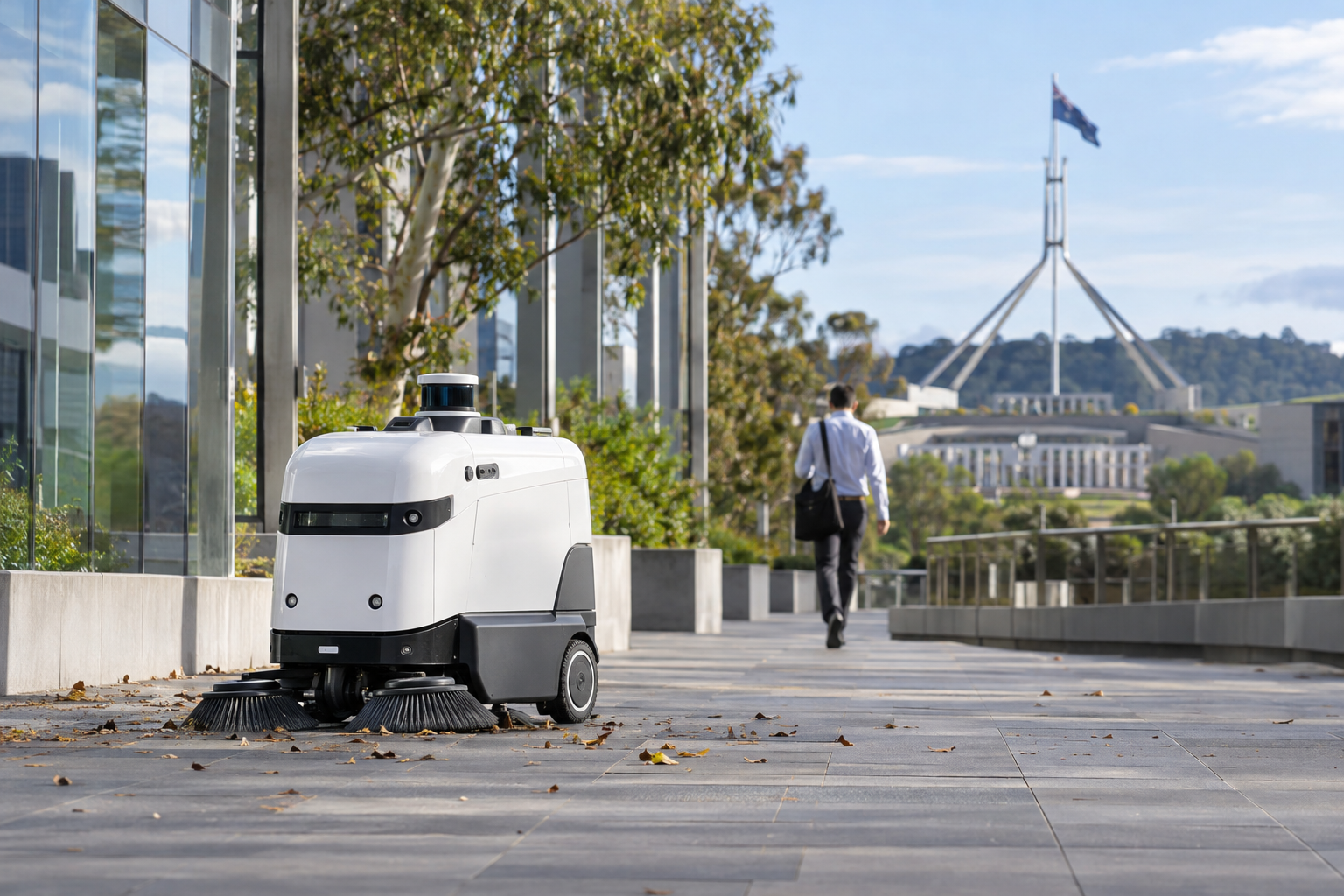
Anthony Albanese faces a distributional question as much as an economic one: who should benefit from technological change, and who should carry the burden if public finances require repair? The political backdrop makes that question harder to defer. Labor is weakening in opinion polls, while the Reserve Bank of Australia has raised interest rates again. Yet an argument for sharing gains and sacrifices more fairly needs more than an attractive symmetry. It needs a clear distinction between demonstrated pressures, prospective benefits and policy choices.
The federal election is due by 2028, and the possibility that Albanese could lose his parliamentary majority gives those choices an electoral horizon. That is a risk, not a forecast. The available material supplies no polling percentages, interest-rate level, budget balance or estimate of AI’s economic contribution. It therefore cannot establish the scale of either a technological dividend or a fiscal adjustment. Any claim that one could readily pay for the other would go beyond the evidence, however convenient that claim might be politically.
The American comparison offers a warning about the distance between a promise and an outcome. Donald Trump promised to avoid new wars; a major war followed, petrol prices rose sharply and Republicans suffered a severe midterm setback. The sequence makes the political importance of household costs difficult to ignore. It does not, by itself, isolate the reasons for the election result. Nor does it establish that Australian voters will respond identically. Its relevance is narrower: economic assurances become vulnerable when the experience of voters moves in the opposite direction.
Read more: Turning Ukraine’s warning for Asia into a policy test
For Albanese, the renewed rise in interest rates and Labor’s polling weakness are the immediate developments. Their coincidence does not prove that monetary policy explains the party’s position, or that a particular budget response would reverse it. A responsible analysis should resist turning political pressure into an unsupported economic prescription. The stronger question is whether the government can explain how its choices would distribute costs, rather than relying on the prospect of future growth to make present disagreements disappear. Fairness requires that explanation even when the electoral answer remains uncertain.
On AI, the strongest argument for broadly shared gains is conditional but important. If the technology produces substantial economic benefits, judging success solely by the aggregate outcome would leave unanswered who actually receives them. A larger economy and a more widely shared improvement in living standards are not interchangeable objectives. A further analytical question concerns the conditions under which gains arise: a distribution policy would also need to consider whether it preserves incentives to develop and adopt useful technology. Neither proposition establishes a particular tax, spending programme or entitlement from the evidence available here.
That distinction matters for attribution as well as policy. The supplied material does not establish an Albanese proposal for dividing AI gains, an opposition alternative or a quantified business position. It would be misleading to present these analytical arguments as a documented contest between those parties. Trump’s promise on war is an identifiable political commitment; a detailed Australian dispute over AI distribution is not documented here. The fair approach is to identify the questions a policy would have to answer without inventing advocates, opponents or commitments for it.
Read more: California voters reject proposed 5% billionaire wealth tax, projections show
Any proposal for budget repair would present a parallel choice, but not an identical one. The strongest case for restraint is that a government proposing to strengthen public finances must make credible decisions about resources rather than merely promise a better outcome. The strongest fairness objection asks whether those decisions place disproportionate demands on people less able to absorb them. Those concerns can coexist. Without figures for the budget position or a specified adjustment plan, however, there is no evidential basis here for endorsing a particular scale of repair or naming the groups that would bear it.
The connection between AI and the budget should consequently be treated as a question of design, not an accounting shortcut. Any future technological gains would need a credible evidential basis before they could underpin promises about public resources. Equally, the prospect of growth should not substitute for explaining a proposed fiscal burden. A fairer approach would make both sides visible: what benefits are expected, how uncertain they are, what adjustment is proposed and why its distribution is justified. That is a standard for assessing policy, not proof that a particular package already meets it.
There is also a difference between electoral reassurance and an economic commitment that can be assessed. Albanese could face pressure to offer relief while defending a credible approach to public finances. The American example suggests the danger of promises that events subsequently contradict, but it supplies no ready-made Australian solution. The more defensible course would be to state trade-offs plainly and avoid presenting uncertain AI gains as guaranteed compensation for burdens imposed elsewhere. Such clarity would allow competing proposals to be judged on comparable terms rather than on their most appealing claims.
What comes next should therefore be judged by evidence and allocation, not simply by the language of innovation or discipline. Before the election due by 2028, the relevant tests are whether proposals identify their beneficiaries, explain their burdens and distinguish forecasts from realised outcomes. Sharing AI’s potential rewards and any demands of budget repair more fairly is a coherent objective. Whether Albanese delivers it cannot be settled by current polling or a foreign election result. It will depend on choices whose scale, financing and distribution still need to be demonstrated.