Art · Art
AWT Focus expands to ten exhibitions at ten venues across Tokyo
Art Week Tokyo’s curated platform is moving beyond a single museum, making travel between neighbourhoods part of an event bringing together a record 56 museums and galleries.
By Calla Brenmoor · 4 min read
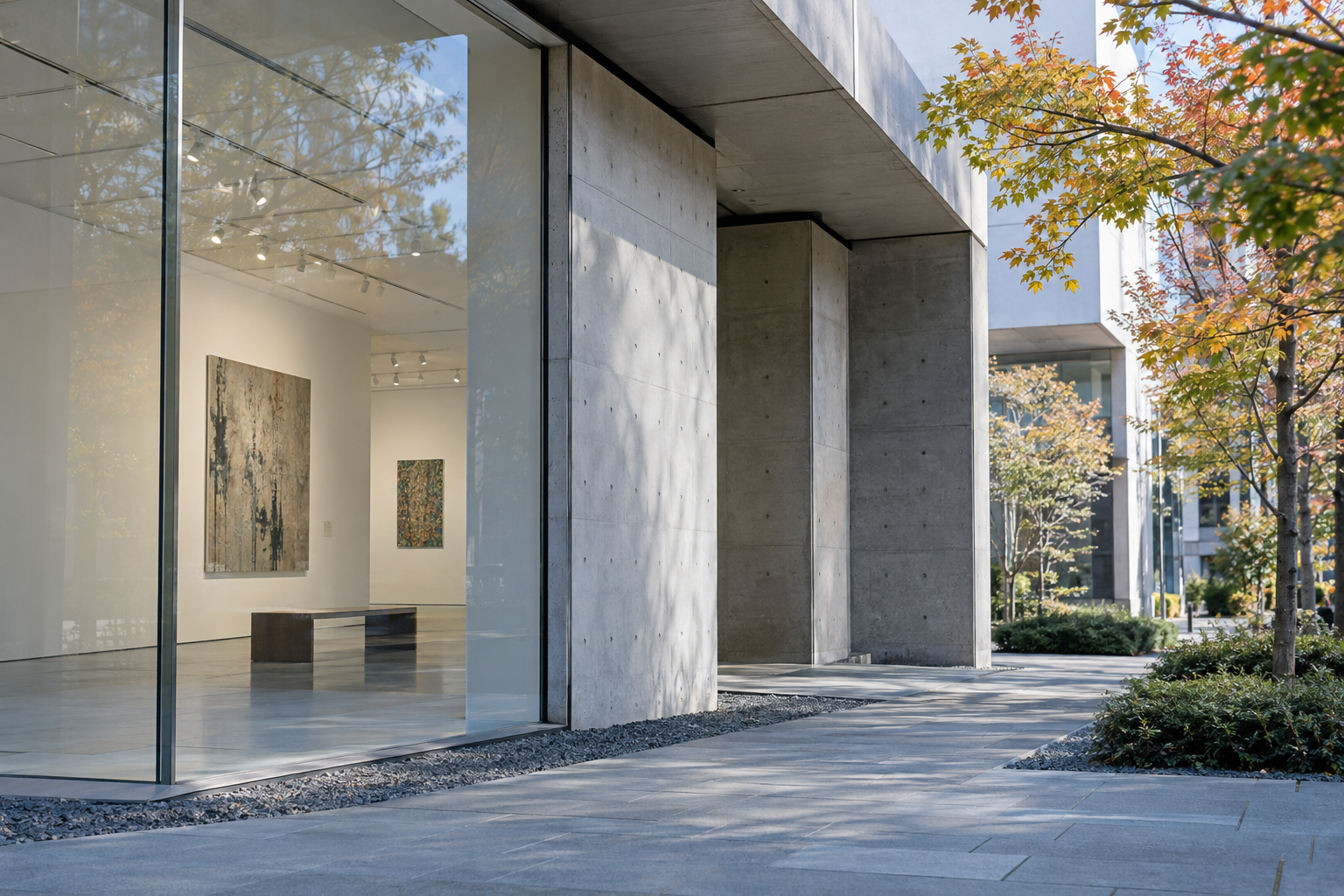
Art Week Tokyo is redistributing its centrepiece exhibition platform across the Japanese capital, replacing a single-site presentation with a programme that asks visitors to encounter art through different neighbourhoods. AWT Focus will encompass ten exhibitions at ten venues in 2026, with curators developing distinct projects rather than working under one overarching theme. The change makes the locations and surroundings of galleries part of the programme’s curatorial approach, not simply destinations on an itinerary.
Running from 4 to 8 November, Art Week Tokyo’s fifth full edition will include a record 56 museums and galleries. The AWT Focus programme has been organised in collaboration with Curated by, the Vienna gallery festival. Launched in 2023, Focus was staged last year at the Okura Museum of Art, where curator Adam Szymczyk assembled work by more than 50 artists for What Is Real? Its new structure more closely follows the wider event, which has no central venue and connects participating institutions through free shuttle buses.
The expansion follows increases in attendance, although those figures describe earlier editions rather than demand for the new format. Organisers recorded overall audience growth of 33% between 2022 and 2023 and another 15% in 2024. Atsuko Ninagawa, Art Week Tokyo’s co-founder and director, says the event was designed to change in response to the city. She sees the distributed Focus programme as a means of reaching different audiences and introducing varied worldviews, while crediting the wider event with building relationships that museums and galleries can develop independently.
Read more: National Gallery director takes a combative line on trigger warnings
The projects range across generations and artistic traditions. At Yutaka Kikutake Gallery, New York-based curator Augusto Arbizo’s The Quiet brings together six Japanese and international artists whose painting practices encourage sustained attention. At Take Ninagawa, Maria Brewińska has worked with the 91-year-old Koji Kamoji on Everyday Life, examining relationships between artistic practice and survival. Kamoji moved from Japan to Poland in 1959 and became an important participant in the Polish avant-garde. Elsewhere, Jeremy Strick presents Mary Weatherford’s first exhibition in Japan, combining recent works on paper with a neon painting.
For Multiple Spirits, the feminist collective established by Mai Endo and Mika Maruyama, the dispersed structure allows exhibitions to respond to differences in their surroundings and the people moving through them. Its Waitingroom presentation, Patchwork of Ruffled Wings, connects zines, textiles and other works across girls’ and queer cultures, artistic activity and social movements. Founded in Austria and working between Vienna and Tokyo, the collective also complicates a straightforward distinction between domestic and international perspectives. It favours a structure that accommodates several practitioners’ viewpoints rather than one dominant curatorial position.
Seoul-based curator Jaemin Shin approaches the city through systems of documentation and ownership. At Misa Shin Gallery, Natsumi Aoyagi’s Possible Words, Possible World comprises two multimedia installations, using materials including poetry, moving images, recorded sound and AI-generated imagery. Shin previously worked with the Tokyo-based artist and poet on Patchwork! in Seoul in 2025. She identifies parallels between registration systems and patriarchal structures in Japan and Korea, while crediting Aoyagi’s work with revealing Tokyo as less fixed and more permeable than she had previously understood it.
Read more: U.S. strikes Iranian targets in Strait of Hormuz as Tehran asserts self-defense right
While organisers emphasise the potential for lasting networks, curator Ekow Eshun is cautious about anticipating the cultural connections an exhibition will produce. His presentation at Space Un, How Much Light Must I Consume?, is Julianknxx’s first in Japan. It includes multimedia works inspired by salt and special choral performances, with the central work drawing on oral traditions from Comoros, near Mozambique. Eshun places weight on unexpected discoveries rather than predetermined responses. Returning after participating last year, he also sees the event as an opportunity to exchange ideas with other curators.
Beyond AWT Focus, exhibitions available during the week extend the programme’s engagement with the city and its inhabitants. Seeds and Roots: How to Cultivate a City, at Tokyo Opera City Art Gallery until 20 December, examines urban ecosystems, including organisms living alongside concrete and plastic. Rather than proposing a return to an earlier natural environment, it explores coexistence with ecological change. At KaiKai Kiki Gallery, Utanhole’s ongoing solo gallery debut takes a different approach to contemporary life: large paintings and drawings contrast youthful, apparently innocent figures with destructive settings, examining emotional responses and desires within youth culture.
Other exhibitions offer encounters with material, perception and technology. Miho Dohi’s fourth solo presentation at Hagiwara Projects, running until 12 December, features new assemblages combining ordinary materials and industrial components. At Pace Gallery, Alicja Kwade’s La Pêche miraculeuse continues until 25 December, exploring the spaces within and between objects through sculpture and works on paper. At Watari-um, a retrospective marking 20 years since Nam June Paik’s death runs until 23 November. Drawing on the museum’s collection, it considers his performance and philosophical interests alongside his pioneering use of television and video.
The new AWT Focus brings separate curatorial propositions into a shared citywide event, making movement through Tokyo part of its approach. Greg Dvorak and Kenji Ono make geography explicit in The Constitution of Japan 2026, drawing on the different post-war histories of eastern and western Tokyo at Mujin-to Production, with a second site at Aoyama | Meguro. Beyond the week itself, Ninagawa says the event has helped build institutional connections and international visibility, with overseas visitors developing projects from their encounters. For visitors, the new format makes choosing routes through Tokyo inseparable from choosing which artistic perspectives to explore.