Art · Art
National Gallery director takes a combative line on trigger warnings
Director Gabriele Finaldi’s rejection of trigger warnings puts the London museum’s approach to access in focus as it plans a $1 billion modern-art wing alongside an $11.2 million deficit announced earlier in 2026.
By Calla Brenmoor · 4 min read
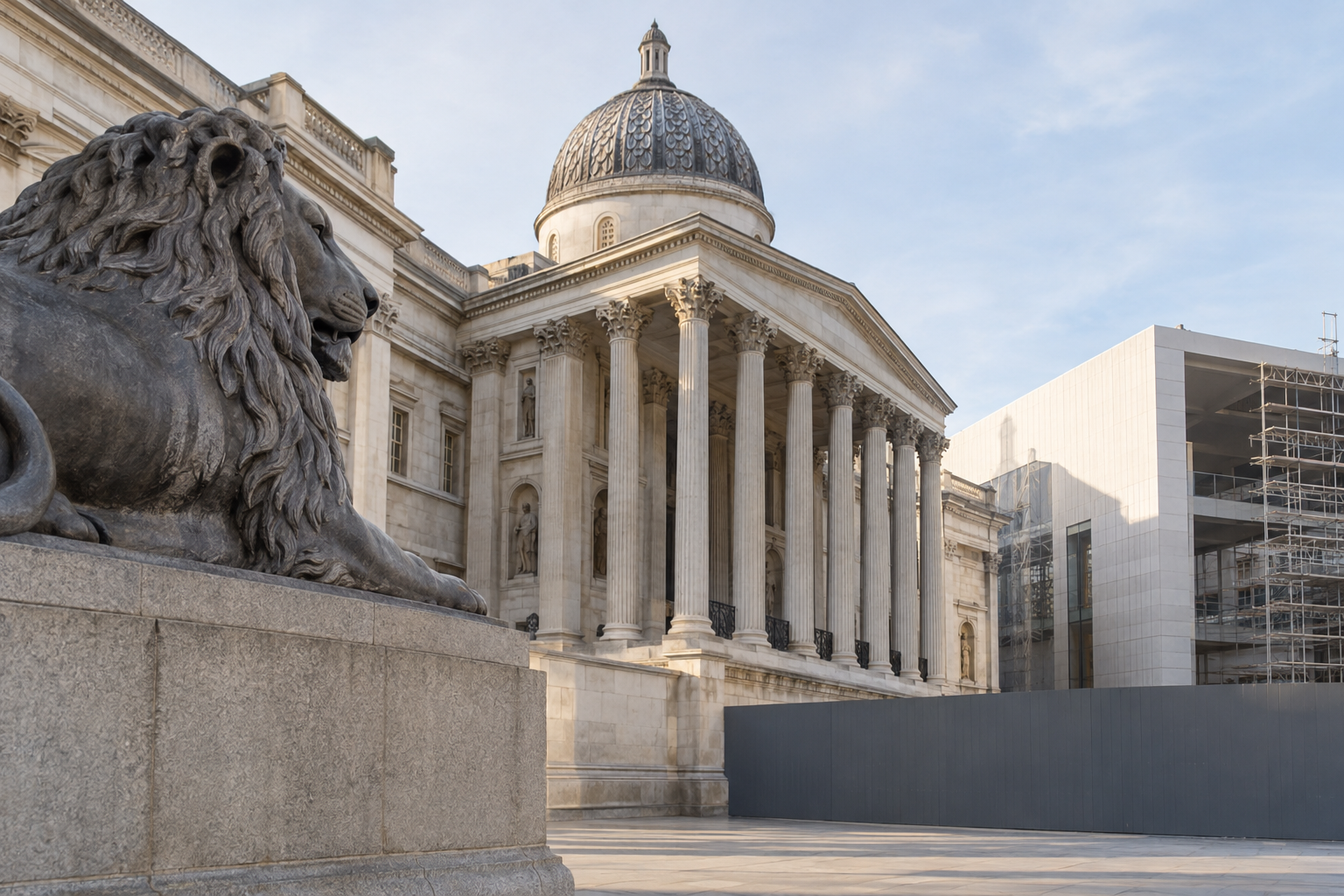
London’s National Gallery director, Gabriele Finaldi, has taken a confrontational position on trigger warnings, saying people who sometimes rely on content warnings to manage post-traumatic stress disorder should “keep away”. His remarks place a difficult question about access alongside the museum’s efforts to broaden its audience: how should a national collection present potentially distressing imagery without discouraging visitors who want advance notice of what they will encounter? The discussion concerned religious imagery, including Crucifixion scenes, rather than a newly announced warning system.
The remarks come against a mixed institutional backdrop. The gallery announced an $11.2 million deficit earlier in 2026, while pursuing plans for a modern-art wing costing $1 billion. Its programme for 2027 includes what is described as the largest-ever exhibition devoted to Piero della Francesca, alongside the first-ever presentation bringing together a 1973 painting by Helen Frankenthaler and the Renaissance work by Jacopo Bassano that inspired it. Those plans give the discussion about audiences a wider significance than a disagreement over labels alone.
Finaldi has also described sustained work on education and outreach in London’s less affluent boroughs. That activity points towards an institution seeking to make its collection accessible beyond its existing audience. His language on warnings strikes a different note, suggesting a boundary around what visitors should expect when entering the museum. The tension is not necessarily between showing difficult works and removing them: advance notice and exclusion are different responses to the same material, and the distinction matters when considering access.
Read more: AWT Focus expands to ten exhibitions at ten venues across Tokyo
Religious subject matter features in the discussion. A Crucifixion scene can confront visitors with suffering while also carrying historical and artistic significance. A warning need not settle how that work should be understood, just as the absence of one does not explain its meaning. One substantive question is therefore how much preparation a museum should offer before an encounter with an image, rather than simply whether the collection contains material capable of causing distress.
There are also limits to what the remarks establish. The available account does not identify an existing National Gallery trigger-warning scheme being withdrawn, nor does it describe a detailed new policy for notices beside paintings. It would therefore go beyond the available information to describe the comments as the reversal of an established practice. Their significance lies instead in the director’s stated attitude towards visitors seeking warnings, and in the force of his response during a discussion about how the collection should be experienced.
The competing consideration is that some people use content warnings to help manage post-traumatic stress disorder. For those visitors, the issue can be preparation rather than an objection to the presence of religious or violent imagery. Finaldi’s reported response leaves little room for that distinction. Yet the available account does not establish how many visitors have requested warnings, what wording they might want, or whether any particular display has prompted a formal demand. The disagreement cannot responsibly be presented as a measured trend in audience preferences.
Read more: U.S. strikes Iranian targets in Strait of Hormuz as Tehran asserts self-defense right
The financial figures likewise require care. The $11.2 million deficit and the proposed $1 billion wing describe different aspects of the gallery’s position: a financial shortfall and the scale of an expansion plan. They do not, on their own, show how the building project will be financed or how it relates to the deficit. Read together, however, they underline the contrast between financial pressure and institutional ambition, providing a wider context for considering the gallery’s approach to attracting and accommodating audiences.
The planned Frankenthaler and Bassano presentation offers another way of thinking about access. Bringing the 1973 painting together with the work that prompted it would allow visitors to consider a connection across artistic periods through the objects themselves. It also places Renaissance and modern art together in the gallery’s exhibition programme. That is a different kind of preparation from a warning, but it could demonstrate how accompanying context can shape an encounter without changing the artworks.
The Piero della Francesca exhibition and the outreach work described by Finaldi similarly put the gallery’s exhibition and educational activities alongside its building plans. Neither resolves the argument over warnings. They do, however, make it too simple to characterise the institution solely through the director’s combative remark. The gallery is promoting educational access while its director expresses resistance to one potential means of helping visitors navigate challenging imagery. Those positions can coexist, but the language used to explain them affects how that distinction is understood.
The exhibitions are planned for 2027, while the modern-art wing remains a plan. The available account supplies no timetable for any warning policy. The immediate question is consequently one of institutional tone as much as display practice: whether the gallery can defend direct engagement with difficult art while addressing visitors who seek preparation rather than avoidance. Finaldi’s remarks give a clear indication of his resistance to warnings; the gallery’s broader programme provides a wider context in which to assess that stance.