Aerospace · Business
Boeing reports 34-cent adjusted loss per share as Max ramp-up waits
Boeing’s third-quarter revenue exceeded expectations, but its adjusted loss was larger than forecast and it said it would not significantly ramp up 737 Max production until late 2027.
By Tobin Ellmere · 3 min read
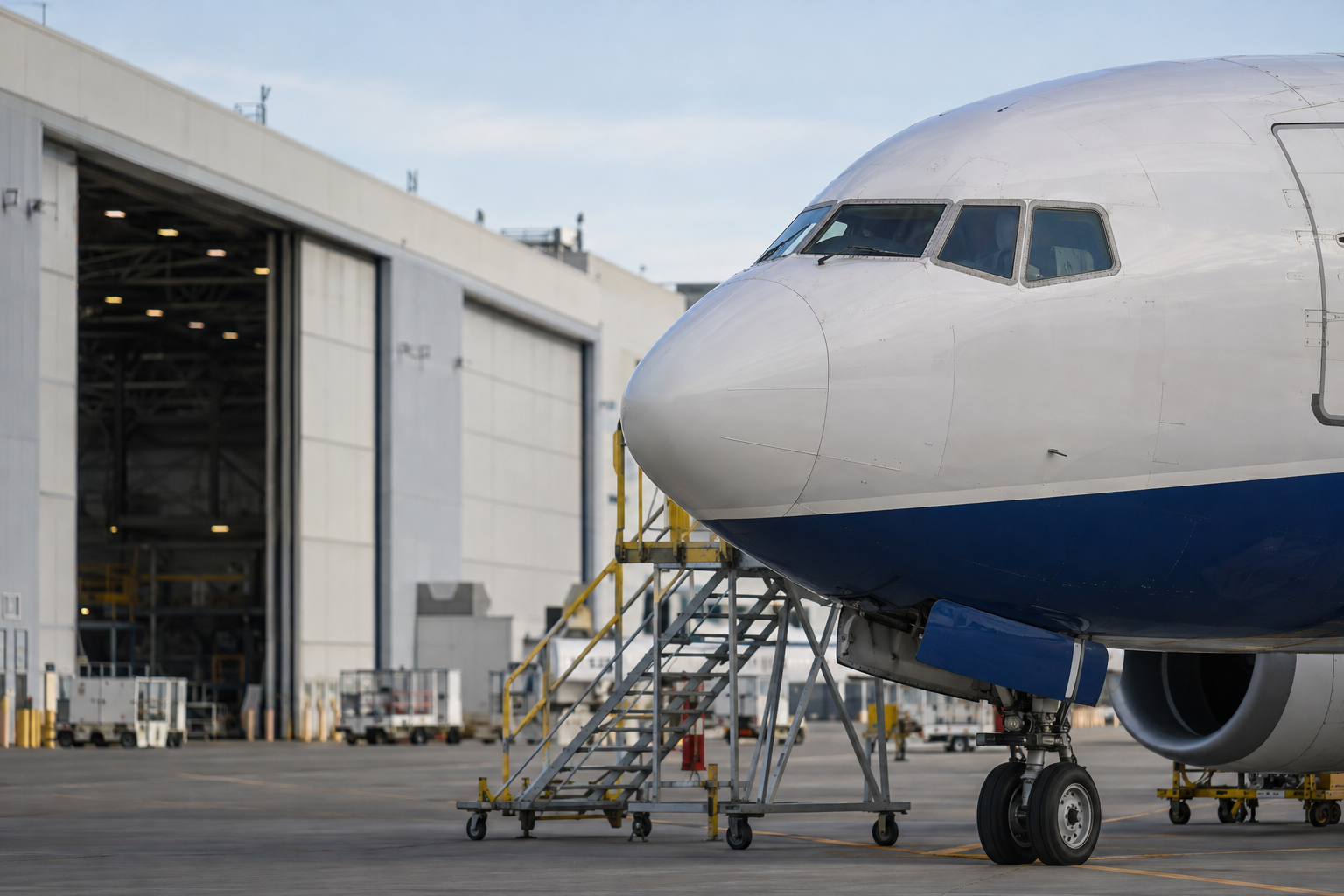
Boeing reported a larger-than-expected adjusted quarterly loss and said it would not substantially increase production of its 737 Max until late 2027, putting a significant expansion in output more than a year away. Shares fell about 10% in trading on Oct. 27, the day the company reported its third-quarter results. The decline contrasted with gains in major technology-led US stock indices, separating Boeing’s performance from the broader market’s advance.
The aircraft maker posted an adjusted loss of 34 cents per share for the third quarter of 2026, against an expected loss of 21 cents. Revenue reached $24. The results therefore offered contrasting signals: Boeing generated more revenue than anticipated but failed to meet the earnings forecast. The stronger revenue figure did not translate into a smaller-than-expected adjusted loss, leaving the earnings result weaker than the sales comparison alone would suggest.
Within its commercial aircraft business, revenue declined 3% to $10. Boeing delivered 161 commercial airplanes during the quarter, one more jet than in the corresponding period a year earlier. That combination is important to interpreting the results: a modest increase in the number of aircraft handed over did not coincide with higher revenue for the commercial division. The delivery tally showed little change from a year earlier, while the division’s revenue moved lower.
Read more: HSBC announces buyback of up to $1 billion as revenue misses estimates
The production timetable adds a longer-term consideration to those quarterly figures. Boeing’s statement rules out a significant 737 Max ramp-up before late 2027 rather than promising one in the immediate period following these results. The distinction is between a substantial increase and production changes more generally; the statement does not establish that output will remain unchanged until then. It nevertheless limits how soon a major expansion can feature in an assessment of the company’s commercial aircraft outlook.
The group and divisional figures also need to be read separately. Total revenue exceeded a forecast, while commercial aircraft revenue declined against the previous year. Those are different comparisons, and the stronger group result relative to expectations does not reverse the commercial division’s reported annual decline. Similarly, the delivery total measures aircraft handed over, not the pace at which Boeing plans to produce the 737 Max. Taken together, the figures describe several aspects of performance rather than a single measure of progress.
For investors looking for a more favourable reading, the revenue result provided evidence that Boeing had surpassed expectations on sales. The less favourable interpretation centred on the larger-than-expected adjusted loss, lower commercial aircraft revenue and the wait for a significant Max production increase. The share decline accompanied that combination, although the trading move does not identify the weight investors assigned to each element. The results support a mixed assessment of the quarter rather than an improvement across the reported measures.
Read more: Iran weighs Hormuz leverage as U.S. escalation looms
The wider market backdrop was more positive. The S&P 500 was up 0. The Dow was down 0.03% at 52,348.13. Investors were preparing for further corporate earnings and the start of the Federal Reserve’s two-day policy meeting. Boeing’s fall thus came during a session in which the principal indices were not moving uniformly lower, with technology shares supporting the broader advance.
Kyle Rodda, a senior financial market analyst, attributed part of the previous session’s improved sentiment to Anthropic’s initial public offering filing. He cautioned, however, that the broader moves were largely technical, with markets positioning for a 10-day period encompassing earnings, central bank decisions, US politics and geopolitical risks. His assessment provided a counterpoint to the positive index performance: the market’s gains came alongside several unresolved influences on the outlook for the remainder of 2026.
Rodda said results from Microsoft, Apple and Amazon would help clarify the outlook for artificial intelligence investment, particularly concerns about a slowdown. He also pointed to central bank meetings and the Federal Reserve’s signals on possible future rate increases. Elsewhere in corporate earnings, United Parcel Service shares rose 1. That gain contrasted with Boeing’s decline, underscoring the differing share performances accompanying individual companies’ results.
For Boeing, the next assessments of performance will have to distinguish quarterly earnings and deliveries from the longer production timetable. The third-quarter figures leave revenue above expectations but adjusted earnings below them, alongside a commercial business reporting lower revenue despite slightly more deliveries. Boeing’s statement puts a significant 737 Max output increase no earlier than late 2027. That leaves the scale and timing of production changes central to interpreting the outlook Boeing has set out.