Cultural heritage · Art
British Museum chair sees scope for alternating Parthenon Marbles displays
George Osborne wants an agreement to share displays between Athens and London, but Greece’s demand for permanent return remains a central obstacle.
By Calla Brenmoor · 3 min read
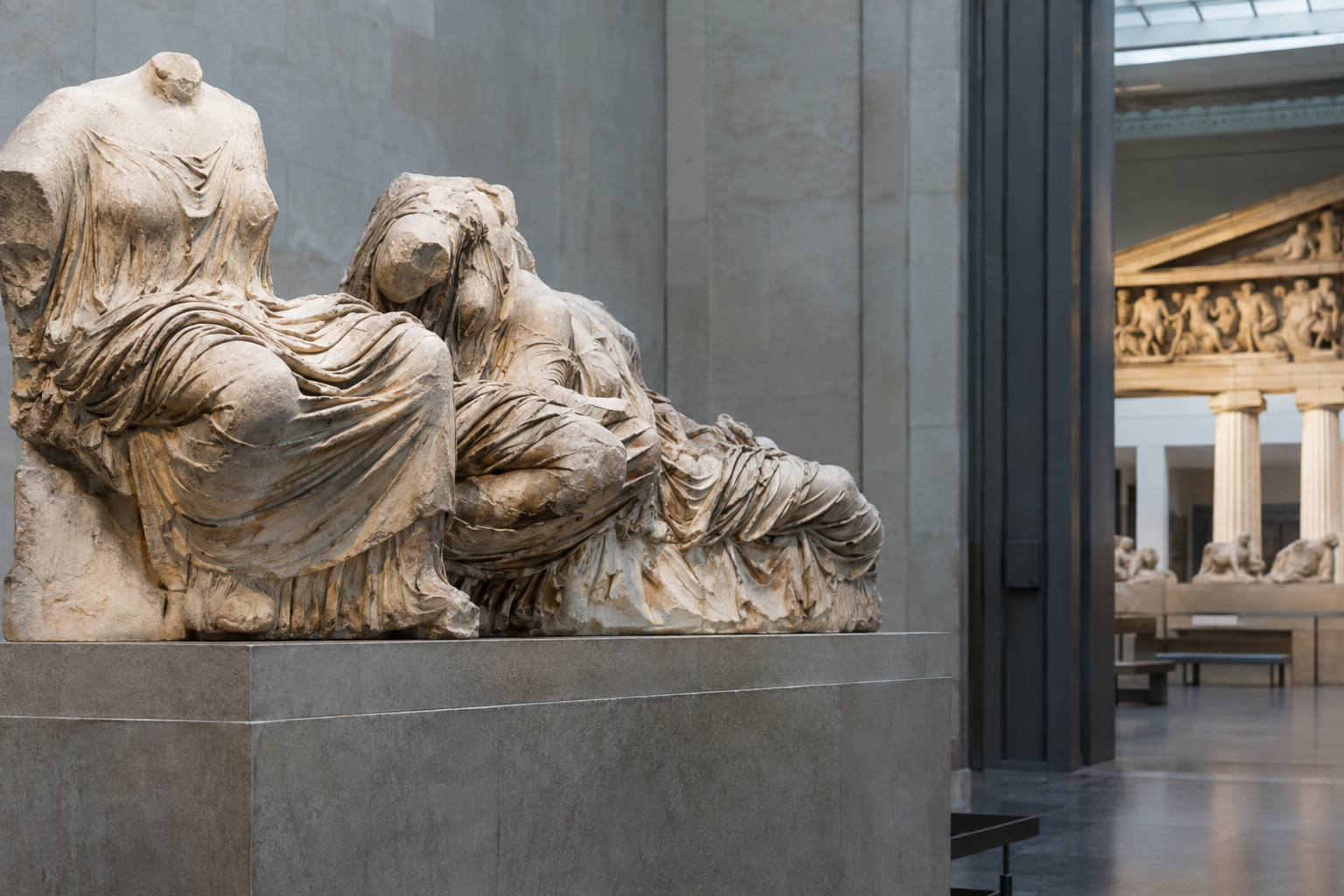
George Osborne, chair of the British Museum’s trustees, has renewed his support for an agreement that would allow the Parthenon Marbles to be displayed alternately in Athens and London. He said the museum’s board would support a rotation arrangement involving loans. Greek authorities, however, remain opposed to temporary arrangements requiring recognition of the museum’s legal claim and insist on permanent repatriation, leaving a fundamental difference over what any agreement should achieve.
In remarks reported on 15 October 2026, Osborne said he believed an agreement could be reached before his term as chair ends in three years’ time. The sculptures date from the fifth century BC and have been housed at the British Museum since 1817. Osborne had already advocated a sharing agreement in 2022. Those dates place his proposed timetable against a much longer history of possession and contested ownership: the current initiative concerns where the sculptures could be shown, while Greece continues to seek their permanent repatriation.
Osborne, a former UK Conservative chancellor, presented the proposal as an effort to find common ground without abandoning the museum’s position on how the sculptures arrived in Britain. “I enter this discussion in really good faith, and I’d like to reach an agreement. I also think the timing is good,” he said. He described the prospect of the marbles spending time in Athens as a departure for the museum, while maintaining that their acquisition was legitimate.
Read more: Four Antonello da Messina paintings reported stolen from Sicilian museum
The practical basis of his proposal is a rotating display that Osborne says could operate through loans under British law. He said the trustees would support an arrangement allowing the sculptures to spend periods in each city. That distinction is central to understanding the offer: a loan would enable a change in location without necessarily resolving the disagreement over ownership. The board’s willingness to consider display in Athens therefore does not amount to acceptance of Greece’s case for permanent return.
Greek authorities have long rejected temporary loans that would oblige them to acknowledge the British Museum’s legal claim to the sculptures. Officials also remain opposed to Osborne’s latest rotation proposal. Their position makes the terms of any agreement at least as important as the opportunity to exhibit the works in Athens. For Greece, access through a loan is not equivalent to repatriation; for the museum, alternating displays are the arrangement its chair is advancing while continuing to defend its possession.
The historical dispute centres on the removal of the sculptures from the Parthenon temple on the Acropolis in Athens by Lord Elgin, the Scottish nobleman who was then ambassador to the Ottoman court. The British Museum’s trustees reject the allegation that the works were stolen. They maintain that Elgin acted with the knowledge and permission of the lawful authorities in Athens and London at the time. Greece has long claimed ownership of the antiquities, a position that remains separate from Osborne’s proposed display arrangements.
Read more: Reported ship attacks near Hormuz reach wartime weekly record as oil flows slow
The competing arguments also concern the setting in which visitors should encounter the sculptures. Osborne defended the British Museum’s approach of presenting objects from different civilisations alongside one another. His proposal would preserve a London role for the marbles while allowing them to be seen in Athens as well. It is consequently a case for sharing their display between two settings, rather than choosing one location permanently, and leaves intact the museum’s argument for showing them within its wider collection.
Greek prime minister Kyriakos Mitsotakis has continued to press for their return, emphasising the relationship between the surviving sculptures and the building they once adorned. “The surviving sculptures should be viewed together, at the same time, within sight of the monument for which they were created,” he said in September 2026. He was referring to the purpose-built Acropolis Museum in Athens, which displays plaster copies of the marbles held in London. His argument favours reunion near the Parthenon rather than alternating access between cities.
A separate issue is the renovation of the British Museum’s Western Range galleries under its masterplan. Osborne indicated that the marbles would move elsewhere within the museum during the work. That prospect should not be confused with the proposed Athens arrangement: he said they would remain publicly accessible even if no agreement were reached. The renovation therefore provides a reason for changing their location inside the institution, but does not itself establish a route to their display in Greece.
The next challenge is to reconcile the trustees’ support for rotation with Greece’s insistence on permanent repatriation. Osborne’s three-year horizon expresses confidence that an agreement is possible, but the positions he and Greek authorities have set out remain different in substance. His initiative offers movement on where the sculptures could be displayed; Greece rejects loans requiring recognition of the museum’s legal claim and continues to demand permanent return. Whether an agreement can bridge those differences remains unresolved.