Gulf security · World
Reported ship attacks near Hormuz reach wartime weekly record as oil flows slow
Twelve vessels reported attacks in a record wartime week near Hormuz, as renewed pressure on shipping threatens the recovery in Gulf oil exports.
By Ilan Corven · 5 min read
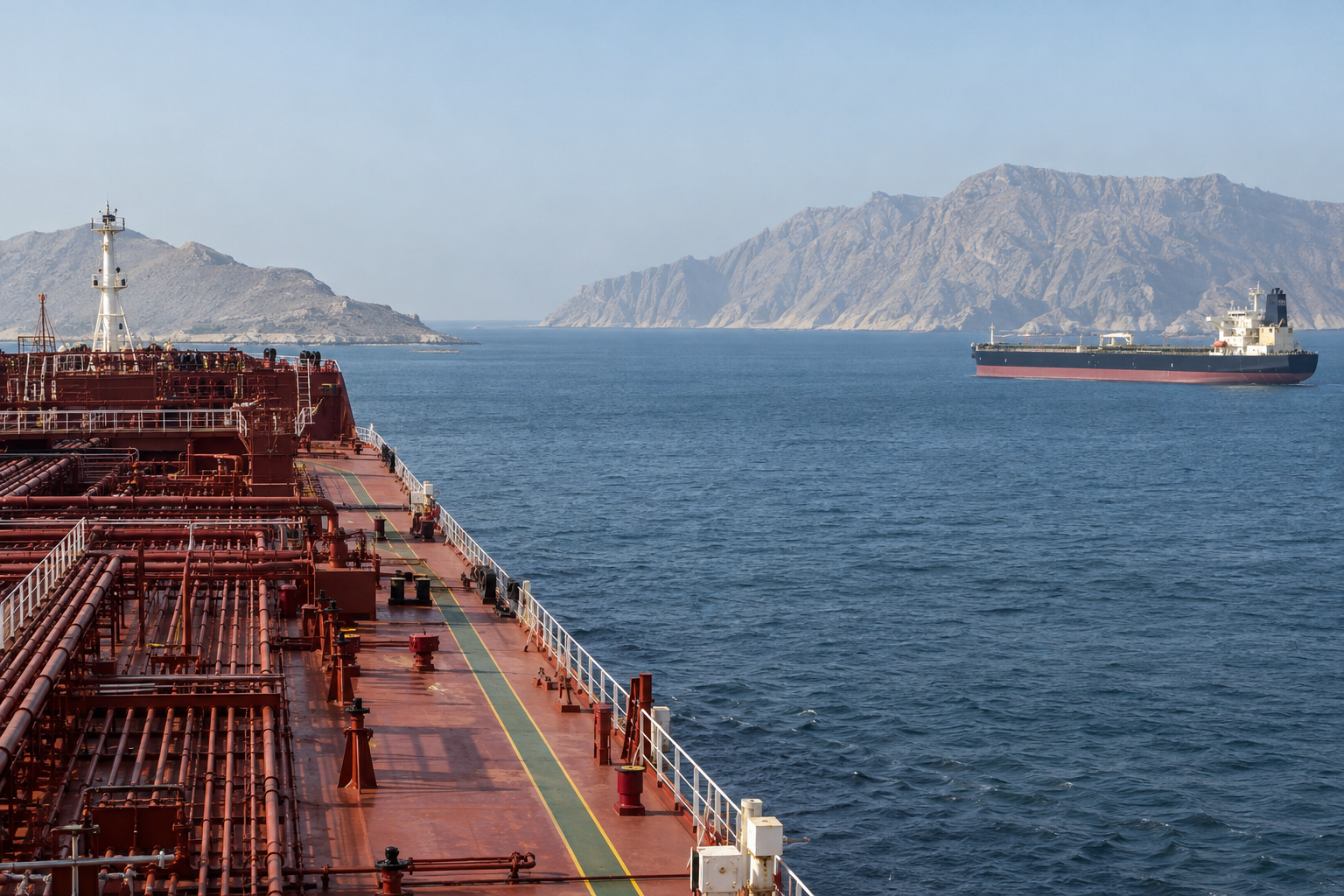
Reports of attacks on ships in and around the Strait of Hormuz have reached their highest weekly level since the US-Israeli war with Iran began, while oil shipments through the waterway have fallen back from their recent recovery. The increase puts renewed pressure on a shipping system that has helped Gulf Arab exporters move crude despite the conflict, with attacks also reported well beyond the strait itself.
Twelve vessels reported attacks between 5 and 11 October, according to incident reports from the UK Maritime Trade Operations agency, compared with 10 in the previous week. Six vessels were reported struck on Sunday, the highest daily count reported to the agency during the war. Four attacks have been reported so far this week. Together, the figures show a concentration of incidents just as US-supported shipping movements had been helping restore oil flows towards their pre-war level.
The weekly totals require some caution. The chronology uses the first date listed in each UKMTO incident report, but the agency’s records do not all use the same basis: some identify when an attack occurred, while others give the date it was reported. The timeline is therefore approximate. The record concerns attacks reported to the agency, rather than a definitive accounting of every strike or its exact timing, an important distinction when comparing activity across individual weeks.
Read more: Japan withdraws earthquake warning minutes after forecasting widespread strong shaking
Oil shipment data nevertheless point to a setback for the recovery seen in September.6 million barrels per day passed through the strait on 13 October, according to trade intelligence company Kpler, below the 15 million reported at the end of September. The pre-war baseline was some 17 million barrels per day. Those observations indicate that the recent improvement has not been sustained, although they do not by themselves establish how much of the change resulted from attacks.
The deterioration has coincided with a substantial increase in American assistance to vessels navigating the waterway. US Navy data show that the number receiving help during the first 10 days of October was up 85% from the corresponding period in August. Such assisted passages were an important part of the September recovery in Middle Eastern oil shipments. The latest figures suggest that expanded support and increased attacks are now occurring alongside each other, rather than assistance eliminating the threat to commercial movements.
Most oil recently shipped from Gulf Arab states has travelled through a tanker shuttle arrangement. Vessels load cargo, pass through the strait and then transfer the oil to larger tankers in the Gulf of Oman. The shuttle tankers follow a route near Oman’s coast, while the US military has increased the number it guides through the southern part of the strait to avoid Iranian strikes. The arrangement has supported exports, but it has also become a focus of disagreement over navigation.
Read more: EU leaders to discuss China, Ukraine and next budget
Iran rejects that coastal route as unauthorised and says vessels should instead use a passage nearer its own shore. Martin Kelly, chief executive of Orbital Risk Intelligence, said Tehran had adapted its approach as the assisted movements weakened its control over the waterway. He described attacks occurring almost daily, sometimes repeatedly within a day, with the purpose of stopping vessels already making the passage and discouraging other ships from attempting it. His assessment presents the violence as an effort to reassert control over shipping.
The US military offers a different emphasis, pointing to the continuation of commercial navigation despite the strikes. Central Command, which is responsible for American military operations in the Middle East, said ships were still moving through Hormuz under protection coordinated by US forces and regional partners. That account and the attack figures describe different aspects of the same situation: the passage remains in use, but continued traffic does not mean that vessels are operating without exposure to attack.
The human consequences were evident in Sunday’s strike on the Nicaragua-flagged tanker Petro Dolphin. Footage filmed from a nearby smaller boat showed the tanker burning. Maritime intelligence company Vanguard said a drone hit the vessel near Sohar Anchorage in Oman, more than 250km (150 miles) from the strait. The Forward Seamen’s Union of India said eleven Indian seafarers had been rescued, while two remained missing. The incident illustrates that the danger extends beyond the narrow passage where much of the protective effort is concentrated.
Commercial vessels other than tankers have also been hit. The container ship GFS Pride sank after an unidentified projectile struck it in the strait on Tuesday; twenty-one crew members were evacuated safely. Iran’s Islamic Revolutionary Guard Corps released footage appearing to show the same vessel sinking. It asserted that the ship had been transporting 2,500 containers of contraband and had taken a route it regarded as unauthorised. Those assertions represent the IRGC’s account of the vessel and its passage.
Iran’s naval messaging has also indicated a wider geographical scope for operations. The IRGC navy said its strikes would extend beyond Hormuz and subsequently announced a changed deployment across the region. Kelly said Iran was expanding its attacks to vessels near the shores of Gulf Arab states and in the Gulf of Oman. That assessment places the recent incidents within a broader challenge to shipping, rather than treating them solely as attempts to obstruct vessels at the strait itself.
Other reported strikes underline that wider reach. Vanguard said a tanker north of Qatar was hit by several projectiles on Thursday 8 October, more than 500km (310 miles) from Hormuz, with multiple casualties reported. The company also recorded an attack on another tanker near the UAE town of Al-Jazirah al-Hamra on Friday 9 October. Footage of that incident showed crew moving across the deck and putting on lifejackets while a large plume of dark smoke rose above the vessel.
The export recovery has also been uneven. Iranian oil shipments were not part of the improvement supported by assisted passages in September: those exports have stopped entirely because of the US blockade of Iranian ports and vessels. Gulf Arab shipments had benefited from the recovery, while Iran’s exports remain stalled. The distinction matters when assessing the regional supply picture, because the restoration of some traffic through Hormuz does not amount to a return to pre-war conditions for all exporters using the waterway.
The immediate question is whether assisted passages can sustain oil movements while attacks continue and spread farther from Hormuz. The available figures show that traffic has not stopped, but also that the late-September recovery has lost momentum despite increased naval help. With attacks continuing this week, the next shipment readings and maritime incident reports will indicate whether the latest setback persists. For global energy supplies, the central risk remains the combination of reduced flows and continuing threats to the vessels carrying them.