Japan · Business
Japan’s $550 billion U.S. pledge highlights competing chip investment priorities
A commitment made in exchange for lower tariffs puts overseas investment alongside Japan’s semiconductor revival ambitions, while experts question its value for the domestic industry.
By Tobin Ellmere · 3 min read
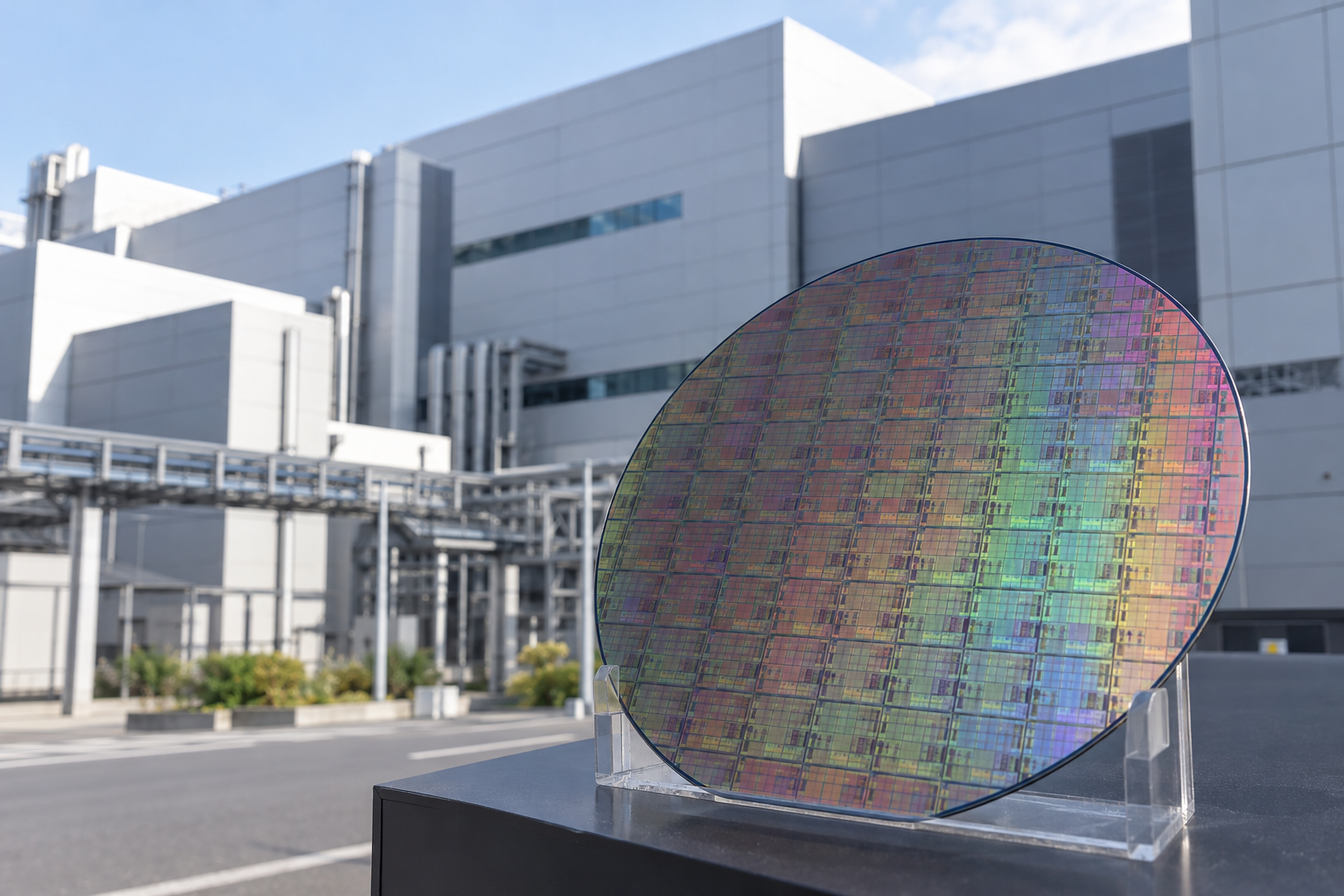
Japan’s chip investment is divided between home and abroad against the backdrop of its $550 billion investment commitment to the United States. The pledge to President Donald Trump’s administration was made in exchange for lower tariffs, giving it a trade-policy purpose as well as an investment dimension. For Japan’s chip ambitions, however, spending abroad and strengthening production at home are not interchangeable objectives, and experts question how much the commitment will contribute to a domestic revival.
Alongside the broad investment pledge, a U.S. semiconductor project envisages two new plants in New York, with funding of up to $21 billion. Those figures describe different commitments: $550 billion is the overall pledge to the Trump administration, while up to $21 billion is the funding described for the plant project. They should not be read as equivalent measures of semiconductor spending, nor does the overall commitment establish how much investment will ultimately support Japan’s chip industry.
Experts assessing the pledge say it is unlikely to do much to restore Japan’s semiconductor sector. That assessment highlights the difference between the size of the pledge and its expected contribution to domestic renewal. A commitment that supports activity in the United States may serve Japan’s trade interests without directly rebuilding its domestic industry. That distinction is central to the competing demands on investment: securing lower tariffs does not, by itself, demonstrate success in renewing the country’s semiconductor capabilities.
Read more: China’s innovative-drug out-licensing deals reach US$130 billion through September 2026
A different emphasis comes from Akazawa, who has characterised the U.S. chip project as significant for the Japan-U.S. edge in artificial intelligence. That view frames the plants in terms of a shared technological objective rather than solely through their contribution to production within Japan. It need not contradict the experts’ caution about domestic renewal. A project can be important to cooperation with the United States while offering a less direct answer to the separate question of how Japan rebuilds its own chip sector.
The wording of the New York funding figure also matters. Up to $21 billion describes an upper limit, not a statement that the full amount has already been spent. The two plants are planned additions, rather than completed facilities. Those qualifications make the project an expression of overseas semiconductor ambition, but not evidence of an operating result. Assessing its eventual contribution will require distinguishing the announced funding and construction plans from what the project ultimately delivers.
For the home-versus-abroad debate, the central issue is therefore not merely the scale of the U.S. pledge. It is which objectives particular investments are intended to meet. Spending directed towards plants in New York has a different geographical focus from spending intended to revive industry in Japan. The available figures do not establish that the overseas project displaces a specific domestic investment, so they do not support a simple claim that every commitment abroad represents an equivalent loss at home.
Read more: Carrefour warning adds business pressure to France’s cost-of-living unrest
The tariff element adds another consideration. Because the $550 billion commitment was offered in return for lower tariffs, judging it only as a semiconductor programme would overlook its stated trade purpose. Equally, a trade rationale does not resolve the experts’ concern about the limited benefit to Japan’s chip revival. These are different tests of the commitment and the project: one concerns the tariff exchange with the United States, another concerns the Japan-U.S. edge in artificial intelligence, and a third concerns the rebuilding of Japan’s domestic semiconductor industry.
Japan’s wider technology activity provides a separate backdrop to that debate. The four-day CEATEC technology event in Chiba featured artificial intelligence and other digital technologies, with a record 246 startup companies and universities participating, along with 194 overseas firms. The participation figures illustrate the breadth of the gathering and its international presence. They are not semiconductor investment figures, however, and should not be treated as evidence that funding for a domestic chip revival is already in place.
The contrast underscores the need to keep different indicators separate. Participation in a technology exhibition, planned funding for American factories and an investment pledge linked to tariffs each describe a different form of activity. None alone measures the recovery of Japan’s semiconductor sector. The CEATEC gathering brought startups, universities and overseas firms into the same technology setting, while the investment debate raises a more specific question: where financial commitments will translate into the industrial capabilities Japan wants to strengthen.
Assessing the commitments will require examining their execution alongside evidence of progress towards Japan’s domestic objectives. For the New York project, the relevant benchmarks are the planned plants and the funding ultimately deployed within the stated ceiling. For the broader pledge, the question is how its trade purpose relates to industrial outcomes. The experts’ scepticism and Akazawa’s emphasis on the Japan-U.S. artificial-intelligence edge leave a clear distinction to assess: overseas strategic value is not the same measure as semiconductor renewal at home.